A sternum tattoo sits on thin skin directly over the breastbone, which puts it in the highest pain band on the body and makes the first weeks of healing unusually dependent on what you wear. This guide covers what the session actually feels like, how the sub-areas differ, healing week by week, and the clothing decisions that matter more here than for almost any other placement.
Sternum Tattoo Pain: What to Expect
Expect the very high band — the top of our tattoo pain chart. There is almost no fat or muscle between skin and bone anywhere on the sternum, so the needle’s vibration carries straight into the breastbone. The sensation also varies noticeably across the area: The neck sits one band below the sternum, in High.
| Sub-area | Typical pain | Why |
|---|---|---|
| Center line (over the breastbone) | Very high | Skin directly on bone; the most intense stretch of the placement |
| Under-chest curve | High to very high | Thin, sensitive skin; the area flexes with breathing |
| Toward the ribs (sides) | Very high | Transitions onto the ribcage, which moves with every breath |
| Upper sternum, near the collarbones | High | Slightly more padding, but close to the clavicle’s sensitive ridge |
For context against every other body area, see the full tattoo pain chart — and note that this post uses the same pain bands rather than invented scores out of ten. The neighboring collarbone placement shares much of the same anatomy.
Why the Sternum Hurts More
The same three factors that rank every painful placement apply here at once: bone directly under thin skin, a sensitive nerve supply serving the chest wall, and no way to brace. You cannot tense a muscle to steady the area the way you can on an arm, and you cannot stop breathing — the surface rises and falls under the needle for the entire session. Artists who work the sternum often coach slow, steady breathing for exactly this reason.
Sternum Tattoo Healing Week by Week
Days 1 to 2: Redness, swelling, and a burning tightness across the chest; the area may feel bruised when you twist or stretch. Days 3 to 7: Dryness and the first peeling; the skin pulls when you raise your arms. Weeks 2 to 4: Peeling and itching as the surface closes; this is when clothing friction does the most damage, so the choices below matter most here. Weeks 5 to 8: The tattoo looks healed, though skin continues settling underneath for another month or two.
The stages mirror every other placement — our week-by-week healing guide covers what is normal and what is not — but the friction problem is what sets the sternum apart. The FDA’s tattoo safety guidance covers the warning signs that apply to every placement.
Bras, Binders, and Clothing Friction
This is the section to plan around before you book. For most people, everyday clothing presses directly on a healing sternum piece: underwires, sports bra bands, binders, and even snug shirts all sit exactly where the new tattoo is. Constant rubbing during weeks one to four can pull peeling skin off early, patch the ink, and extend healing.
- Plan the first one to two weeks around loose, soft layers — camisoles, bralettes without wires, or nothing over the area when you are home.
- If you wear a binder, talk to your artist before booking; most suggest scheduling around a period when shorter binding sessions are possible.
- Sleep on your back for the first week or two — our guides to sleeping with a new tattoo and the closely related rib placement cover the practical setups.
- Sweat adds to friction: postpone workouts that trap moisture against the chest during early healing.
Design Considerations Before You Commit
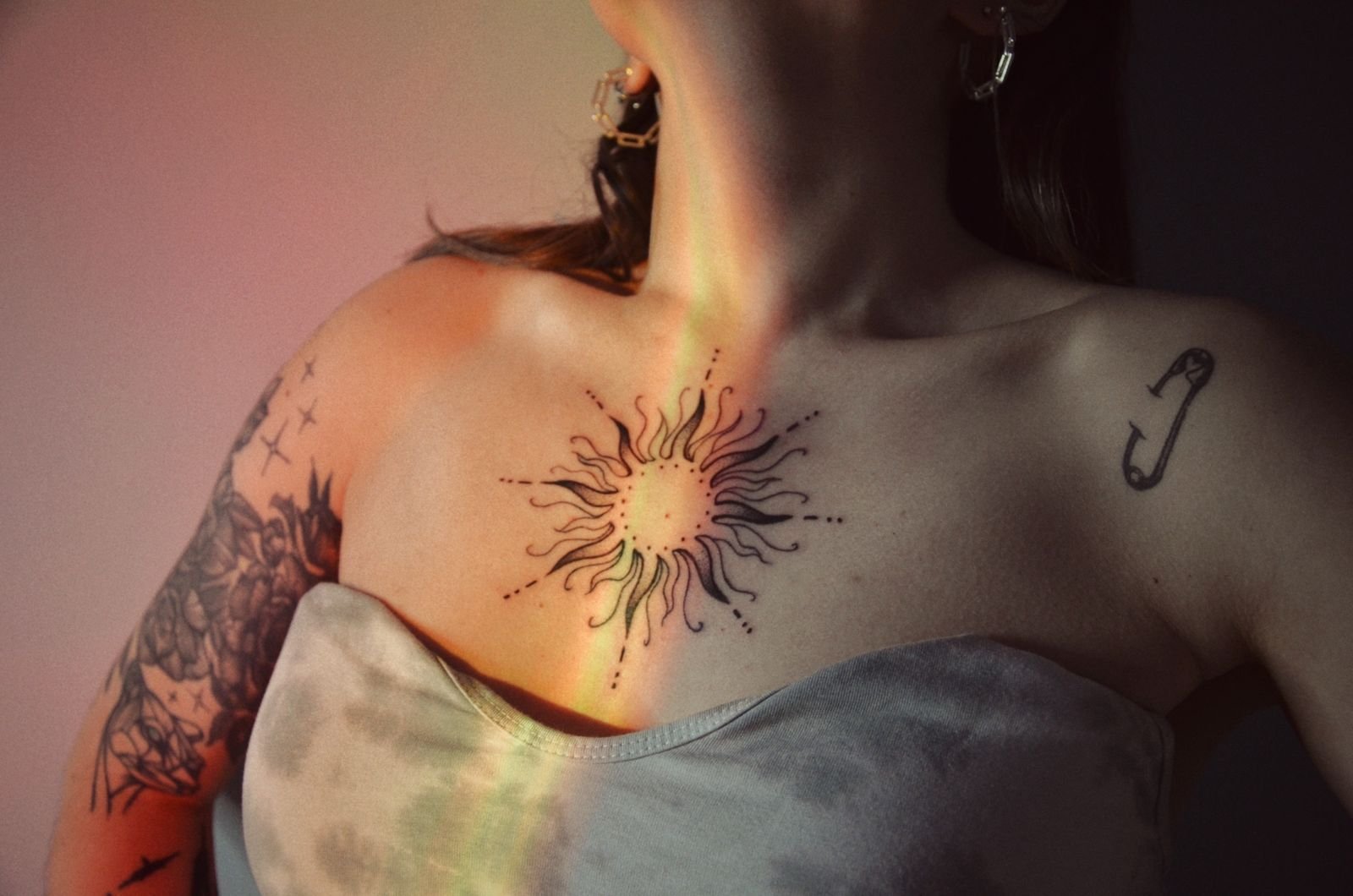
The sternum rewards symmetry — the body’s own center line frames mirrored designs, which is why ornamental and butterfly-style pieces dominate the placement. Two practical points: the skin moves with breathing, so extremely fine parallel lines can heal unevenly compared with bolder structure, and the area visible in a low neckline may matter for your work life. Our placement guide weighs visibility questions for every major area.
Session Strategy
Book conservatively: many artists split larger sternum pieces across two or more sittings rather than pushing through one long session on the body’s least braceable surface. Eat a real meal beforehand, sleep properly, and agree on a break signal before the needle starts. Some people ask about numbing products for this placement — our honest guide to tattoo numbing cream covers when they help and why some artists decline them.
How Long a Sternum Tattoo Takes
Session length depends far more on design density than on size. A fine line ornamental piece down the centre line may finish in two to three hours; a filled mandala spanning sternum to under-chest is usually split across sittings. Because this is one of the hardest placements to sit still on, artists tend to plan shorter sessions here than they would for the same design on a thigh.
Plan for the possibility of two visits rather than assuming one. Booking a single marathon session on the sternum and then tapping out at hour three leaves you with a half-finished piece and a healing period before you can continue.
Sternum Tattoo Designs That Work With the Body
The sternum is one of the few placements with a built-in axis, and designs that use it tend to age better visually than designs that fight it.
| Design approach | How it sits | Worth knowing |
|---|---|---|
| Symmetrical ornamental | Centred on the breastbone, mirrored either side | The classic fit; the body frames it automatically |
| Underboob / under-chest curve | Follows the natural curve beneath the chest | Skin here moves and stretches more; discuss sizing with your artist |
| Sternum-to-navel column | A vertical strip down the torso | Crosses several skin textures; usually multi-session |
| Chest-to-rib wrap | Starts central and extends onto the ribcage | Pain climbs sharply as it moves outward onto bone that moves |
| Small central piece | A single motif at the top or centre of the sternum | Lowest commitment, shortest session, easiest heal |
Two design cautions specific to this area. Very fine parallel lines can heal unevenly because the surface rises and falls with breathing during the session. And the skin over the sternum changes shape with posture and weight far more than an outer arm does, which matters for pieces spanning the full chest.
Aftercare Specific to the Sternum
The general routine is the same as anywhere — our full aftercare guide covers washing, drying, and moisturising. What changes here is the friction problem, and three habits make the difference.
- Wash and dry with the chest exposed. Pulling a shirt on over a damp fresh tattoo is one of the most common ways the healing surface gets disturbed.
- Moisturise thinly. A heavy layer under clothing traps moisture against skin that is already in a warm, enclosed area — our post on over-moisturising covers what that looks like.
- Change what touches it daily. Sleeping in the same shirt two nights running presses the same fabric seam into the same spot.
Sweat deserves particular attention on the sternum, because it pools in the chest hollow rather than running off. That is the main reason artists advise pausing intense workouts through early healing — our guide to exercising after a tattoo covers the timeline.
Swimming, Sun, and Long-Term Care
Once healed, the sternum is one of the better placements for longevity. It is usually covered, it sees little direct sun in daily life, and it does not flex the way a joint does, so line work holds its shape well. The exception is summer: low necklines and swimwear expose exactly this area, and a piece that spends nine months protected can take concentrated ultraviolet exposure in the other three.
Treat sunscreen as ongoing maintenance rather than a healing task, and hold off on swimming pools, hot tubs, and the sea until the surface has fully closed — our post on swimming after a tattoo covers why submersion during healing carries real infection risk.
Is a Sternum Tattoo Right for You?
It suits you if the design genuinely wants a symmetrical, central canvas, you can arrange one to two weeks of loose clothing, and you are comfortable sitting through one of the sharper placements on the body. It is a poor choice for a first tattoo, for anyone who cannot adjust their clothing during healing, and for designs that would sit equally well somewhere easier.
If the placement appeals but the pain is the sticking point, the honest comparison is with the rest of the body: see the most painful tattoo spots for where the sternum ranks, and the least painful spots if you would rather start somewhere gentler.
FAQ
Do sternum tattoos hurt more than rib tattoos?
They are in the same top band, and people who have both split fairly evenly on which was worse. The sternum concentrates the sensation into a smaller area directly over the breastbone, while ribs spread it across a surface that moves with every breath. Neither is a comfortable first tattoo.
How long does a sternum tattoo take to heal?
The surface usually settles within two to four weeks, with full healing beneath the skin taking two to three months. Clothing friction is the main variable — the more the area rubs during weeks one to four, the slower and patchier the heal.
Can I wear a bra while my sternum tattoo heals?
For most designs, underwires and tight bands sit directly on the tattooed skin, so artists commonly suggest going without, or switching to loose bralettes or soft camisoles, for at least the first one to two weeks. Ask your artist about your specific design — placement height changes everything.
Do sternum tattoos fade quickly?
No faster than average once healed. The area is usually covered, gets little sun, and does not flex the way joints do. The bigger risks are during healing — friction and moisture under clothing — rather than long-term wear.
The ribs are the closest comparison to the sternum — both sit in the very high band, and both move as you breathe. See our rib tattoo pain guide for how the two differ in practice.
The Bottom Line
A sternum tattoo is a very-high-pain, high-planning placement: bone directly under thin skin during the session, and weeks of clothing negotiation afterward. It is also one of the most striking placements on the body, and once healed it holds ink well, protected from sun and friction. Go in with split sessions, soft layers ready, and a design that respects the area’s symmetry, and the placement rewards the effort.
This article provides general educational information about placement, pain, and healing. It does not replace personalized advice from your tattoo artist or a qualified healthcare professional.