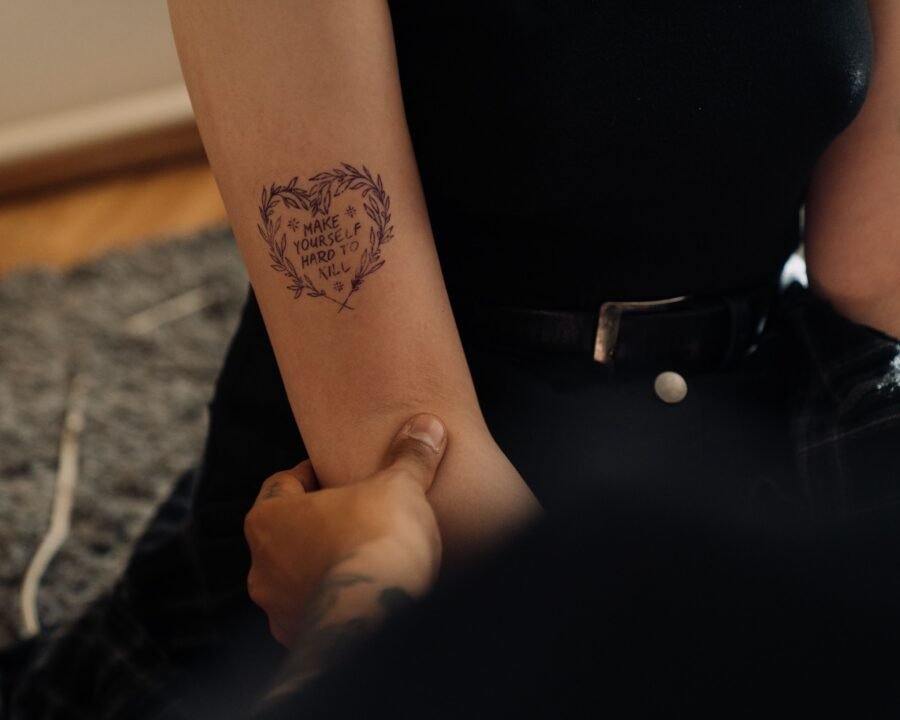
How long does a tattoo take to heal? The answer depends on which layer of skin you mean. The surface usually closes within two to three weeks, which is the point most people call healed. The deeper layers, where the ink actually sits, keep repairing for roughly three to six months.
That gap between looking healed and being healed is the part most aftercare advice skips, and it is the reason a tattoo can seem finished at week three and still look slightly dull at week eight. Always follow the personalized instructions your artist gave you, since they know the size, depth, and placement of the work they did.
How Long Does a Tattoo Take to Heal?
Most tattoos take two to three weeks to heal on the surface and three to six months to heal completely. Small, simple tattoos on flat, low-friction areas heal fastest. Large, heavily saturated pieces and tattoos over joints, hands, or feet take the longest.
Those are typical ranges rather than guarantees. Healing speed varies between people, and the same person can heal two tattoos at different rates depending on where they sit on the body. Some placements run these stages under harder conditions than others; see hand tattoo healing time for the clearest example.
Surface Healing Versus Deep Healing
A tattoo is a controlled wound in two layers at once. The epidermis, the outer layer, is broken during the session and closes first. The dermis underneath is where the pigment is deposited, and it repairs far more slowly.
Surface healing is what you can see: the redness settles, the flaking finishes, and the skin stops feeling raw. Deep healing is what you cannot see, and it continues quietly for months after the tattoo looks finished. This is why a piece can look slightly cloudy or muted for weeks after the peeling ends, then sharpen up on its own.
Tattoo Healing Timeline at a Glance
- Days 1 to 2: tenderness, redness, swelling, warmth, and some clear or ink-tinged fluid.
- Days 3 to 7: soreness eases while the skin turns dry, tight, and often itchy.
- Weeks 2 to 4: peeling, light flaking, and a temporary dull or cloudy appearance.
- Months 2 to 6: no visible healing left, but the dermis is still settling and color continues to sharpen.
Stage 1: The First 24 to 48 Hours
This is the most active phase. The area is an open wound, and mild swelling, warmth, redness, and a small amount of weeping are all expected. The fluid is usually plasma mixed with surplus ink, which is why the first wash can run colored.
Your artist will have covered the tattoo with either a traditional wrap or an adhesive film. How long that stays on depends on which one you were given, and the two are not interchangeable. If you were sent home in film, our guide to how long to leave second skin on a tattoo covers the timing in detail.
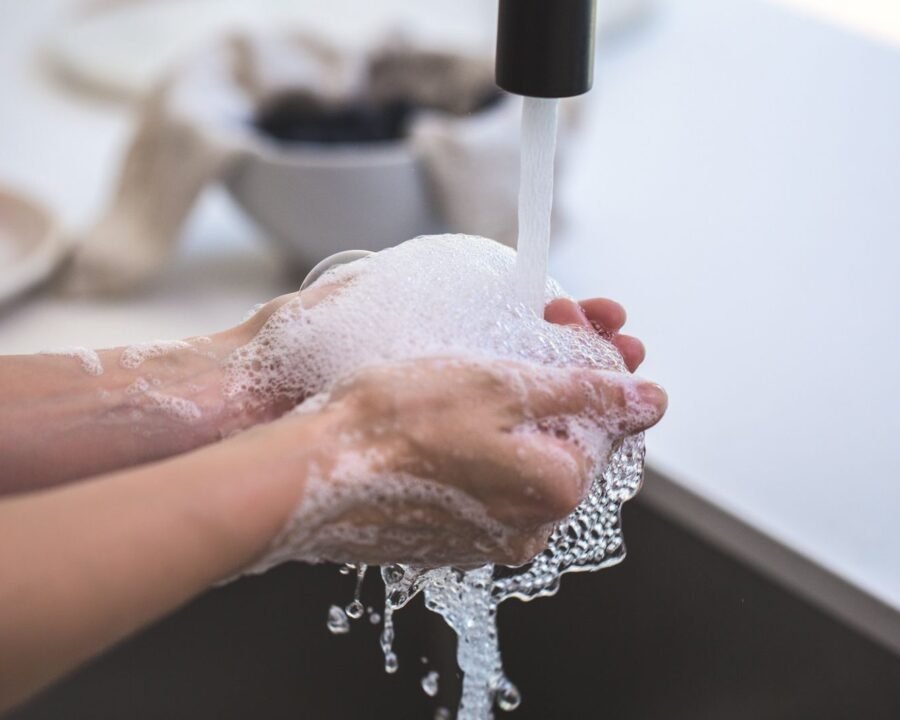
The first wash matters more than almost anything else in this window. Clean hands, lukewarm water, and a gentle fragrance-free cleanser are the whole method. See which soap to use on a new tattoo if you are unsure what to reach for, and how long after a tattoo you can shower for timing.
Stage 2: Days 3 to 7
Soreness should be clearly improving by now. The trade-off is dryness. As the surface begins to close, the skin tightens and starts to itch, which is normal and not a sign that anything has gone wrong.
The main risk in this stage is your own hands. Scratching or picking at this point can lift pigment before the skin is ready to release it, and that is one of the few aftercare mistakes that leaves permanent patchiness. If the itching is hard to ignore, why a healing tattoo itches explains what helps and what makes it worse.
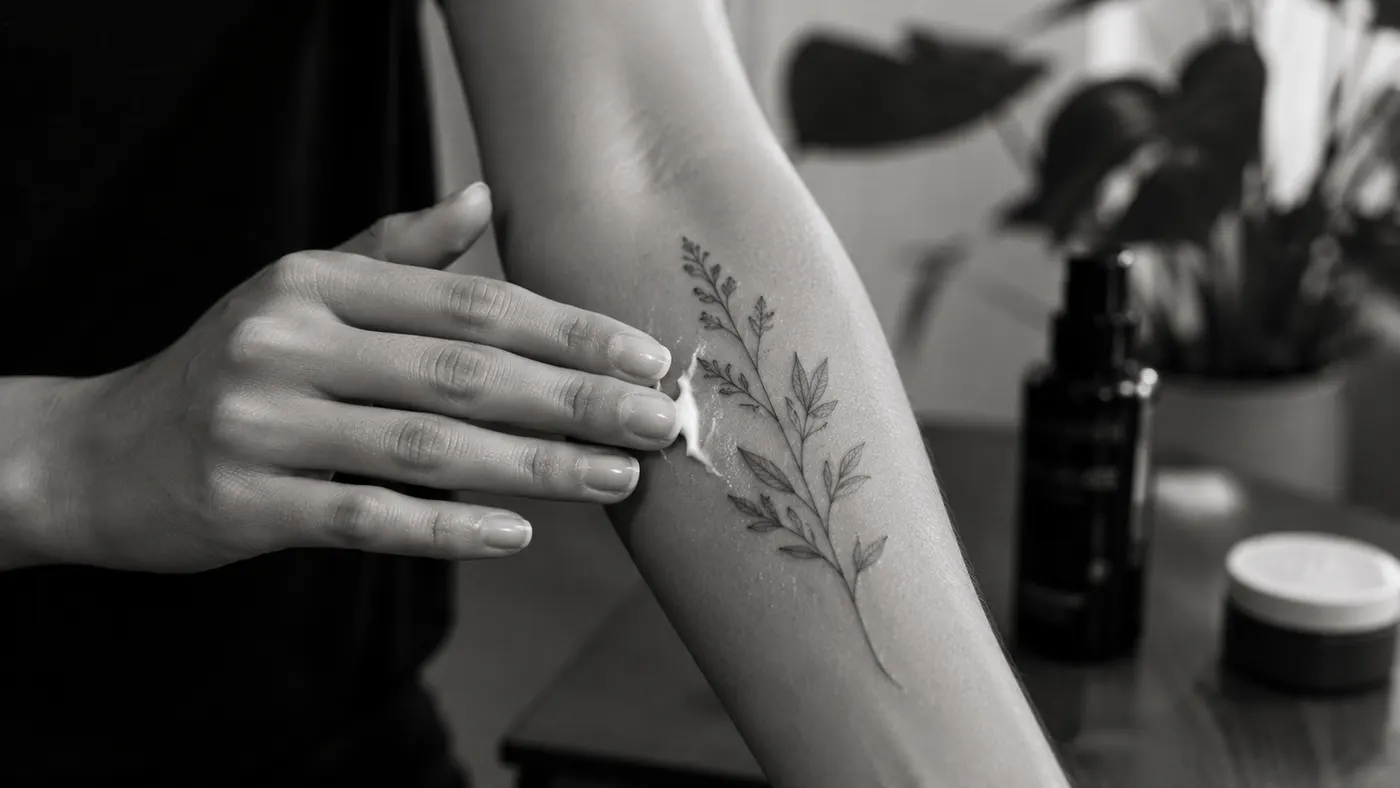
Moisturizing begins here, and restraint is the point. A thin layer is enough. Heavy application traps moisture against the skin and causes its own problems, covered in the signs of an over-moisturized tattoo.
Stage 3: Weeks 2 to 4
Peeling is the defining feature of this stage. Flakes of colored skin come away, often in alarming quantity, and the tattoo underneath can look dull, cloudy, or uneven. This is normal and temporary. What you are seeing is a layer of dead epidermis sitting over the pigment, not faded ink.
Light scabbing can also appear, particularly on areas that took heavy line work. Thin scabs are expected. Thick, raised, or spreading scabs are worth asking your artist about. Our guide to tattoo peeling covers where the line sits.
Most people reach the end of visible healing somewhere in week three or four. Water restrictions still apply until the surface is fully closed, which is the reasoning behind the two to four week wait before swimming.
Stage 4: Month Two to Month Six
From the outside, nothing is happening. Underneath, the dermis is still remodelling and the immune system is still settling the pigment into place. Color usually deepens slightly and lines look crisper by the end of this window.
This is also when sun protection starts to matter permanently rather than temporarily. Ultraviolet exposure is the single largest cause of long-term fading, and a healed tattoo benefits from sunscreen for the rest of its life.
What Changes How Long a Tattoo Takes to Heal
- Size and saturation: more trauma to the skin means a longer repair. A palm-sized piece of solid black heals more slowly than fine line work of the same dimensions.
- Placement: areas that bend, rub, or carry pressure heal slowest. Elbows, knees, hands, feet, and ribs all sit at the slow end.
- Technique: a heavy hand traumatizes the skin more than a light one, and healing times follow.
- Aftercare: consistent washing and light moisturizing shorten healing. Neglect and over-application both lengthen it.
- Your own health: sleep, nutrition, smoking, and underlying conditions all influence how quickly skin repairs.
How to Tell When a Tattoo Is Fully Healed
A fully healed tattoo has no flaking, no raised texture, no shine, and no tenderness. Run a clean fingertip over it: healed skin feels identical to the skin beside it. If the tattooed area still feels slightly raised, glossy, or different in texture, the dermis is not finished.
Color is the other tell. A tattoo that has finished healing looks the same brightness in the same light day to day. If it still shifts between sharp and cloudy, it is in the late peeling phase rather than the healed one.
What Slows Healing Down
- Picking, scratching, or pulling at flakes and scabs.
- Soaking the tattoo in baths, pools, hot tubs, or open water before the surface has closed.
- Applying thick layers of ointment or moisturizer instead of thin ones.
- Tight clothing that rubs the area throughout the day.
- Direct sun exposure on unhealed skin.
- Skipping washes, or washing with scented or exfoliating products.
Normal Healing Versus Signs of Infection
Normal healing trends in one direction: everything gets less noticeable over time. Redness fades, soreness eases, swelling settles. A tattoo that is healing normally never gets dramatically worse after the first two days.
Signs that warrant contacting your artist or a doctor include pain that increases rather than decreases, spreading redness, swelling that worsens after day two, a foul smell, thick or colored discharge, a hot feeling in the surrounding skin, or fever. None of these are things to wait out. This article is general information and is not a substitute for medical advice.
Frequently Asked Questions
Can a tattoo heal in 3 days?
No. Three days is not enough time for even the surface layer to close. At day three most tattoos are just moving out of the tender, weeping phase and into the dry, itchy one. Expect two to three weeks for surface healing at minimum.
What helps a tattoo heal faster?
Consistent gentle washing, thin layers of fragrance-free moisturizer, loose clothing, and leaving it alone. There is no product that meaningfully accelerates healing beyond keeping the area clean and lightly moisturized. Most attempts to speed it up, particularly heavy ointment use, slow it down instead.
How do you know if a tattoo is healed?
The tattooed skin feels exactly like the skin next to it: no raised texture, no shine, no tenderness, and no flaking. Color also stops shifting from day to day. If the surface still feels glossy or slightly raised, deep healing is still in progress.
How long does a tattoo take to heal with second skin?
Adhesive film does not shorten total healing time, but it does change the experience of the first week by keeping the surface moist and protected. Surface healing still takes roughly two to three weeks. Our complete second skin aftercare timeline covers what to expect at each point.
Why does my tattoo still look dull after a month?
A layer of new epidermis sits over the pigment while the dermis finishes settling, and that layer scatters light. Most tattoos sharpen noticeably between month one and month three without any intervention. If it is still noticeably patchy after six months, that is worth raising with your artist.
What should you not do after getting a tattoo?
Do not pick or scratch, do not soak it, do not expose it to direct sun while it is healing, do not over-moisturize, and do not shave over it until the surface has fully closed. Our full tattoo aftercare guide covers the complete list.
The Bottom Line
Plan for two to three weeks of visible healing and three to six months of invisible healing. The first week asks the most of you, the second and third ask for patience while it peels, and everything after that happens without your involvement. If the tattoo is trending worse rather than better at any point, that is the signal to ask your artist rather than wait.