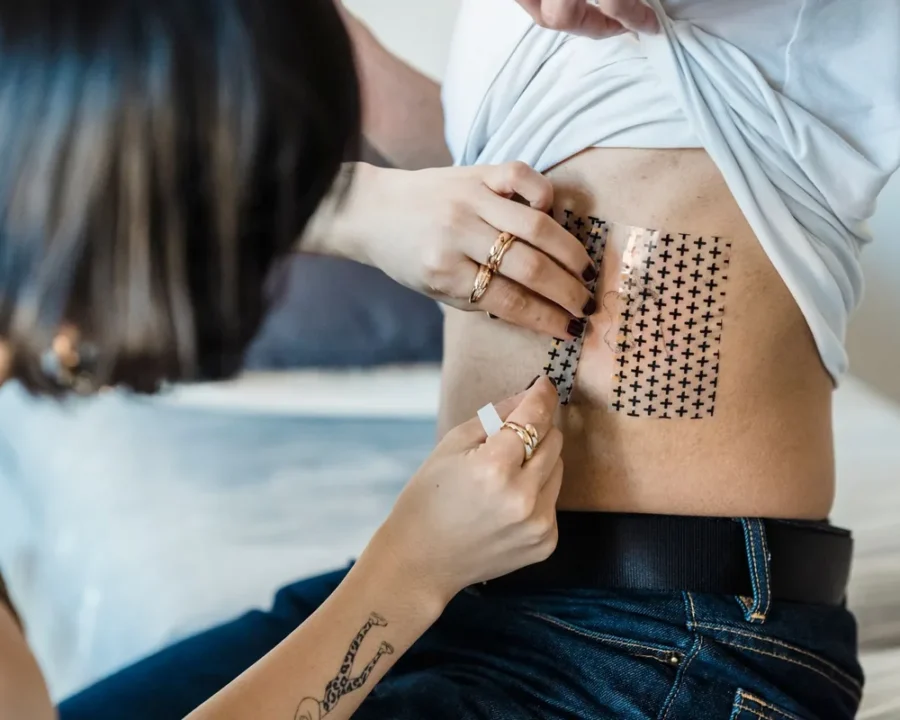
A tattoo ink allergy is more than routine soreness or the normal redness that follows a fresh tattoo. It is an immune response to one or more pigments in the ink — and it can appear the same day you get inked, or it can surface weeks, months, or even decades later, long after the tattoo looks fully healed. If your tattooed skin is persistently itchy, raised, scaly, or developing small bumps in only one color of ink, an allergic reaction may be the cause. This guide covers exactly what the symptoms look like, which colors carry the highest risk, what to do about it, and whether you can ever safely get another tattoo.

Photo: cottonbro studio / Pexels
What Is a Tattoo Ink Allergy?
When your immune system identifies a component of tattoo ink as a threat, it launches an inflammatory response in the skin. That response is a tattoo ink allergy — technically a form of allergic contact dermatitis (ACD), as described by the American Academy of Dermatology (AAD).
Tattoo inks contain a mix of pigments, carrier solutions, and preservatives. According to the U.S. Food and Drug Administration (FDA), more than 50 different pigments and shades are currently used in tattoo inks, and none of the color additives in those inks has been approved by the FDA for injection into the skin. Some are industrial-grade colors originally formulated for printer’s ink or automobile paint. This is a key reason allergic reactions happen: the body is being asked to host a foreign substance it was never designed to contain.
It is worth knowing upfront that a tattoo ink allergy is different from a normal healing reaction or an infection. All three can cause redness and discomfort in the first few days, but their timelines, patterns, and treatments differ — we break this down in a table below.
Tattoo Ink Allergy Symptoms: Local vs. Systemic
The AAD distinguishes between two types of reactions. Understanding which one you are dealing with determines how urgently you need care.
Local (Mild to Moderate) Symptoms
A local reaction is confined to the tattooed area — specifically, to one color of ink within the design. According to the AAD, signs include:
- Persistent redness and swelling (not improving after the first week)
- Intense itching within the inked area
- Small pimple-like bumps inside the tattoo
- Raised, scaly patches of skin
- Deep lumps beneath the surface (granulomas — nodules the body forms around material it perceives as foreign, as noted by the FDA)
- Blisters or fluid-filled sacs
- Skin that crusts or flakes off
- Watery fluid leaking from the area
The critical distinguishing pattern: these symptoms appear in only one color section of the tattoo, not across the whole design. If your red ink is reacting but your black ink is fine, that points to an allergy to a specific pigment rather than an infection or general irritation.

Photo: Towfiqu barbhuiya / Pexels
Systemic (Serious) Symptoms — When to Call 911
A systemic reaction means your immune response has spread beyond the tattooed skin. The AAD lists these as red-flag warning signs that require immediate emergency care:
- Trouble breathing
- A racing heartbeat
- Tightness in your chest
- Dizziness or lightheadedness
- A stomachache
- Intense swelling beyond the tattooed area
- Serious pain
- Flushing across the skin
- Hives spreading to areas outside the tattoo
Mayo Clinic notes that when hives or angioedema (deep-tissue swelling) involves the tongue or throat, it can become life-threatening by blocking the airway. If you experience any of the systemic symptoms above alongside a tattoo reaction, call 911 or go to the nearest emergency room — do not wait to see if it passes.
Which Ink Colors Are Most Likely to Cause an Allergic Reaction?
According to the AAD, red ink is the most common culprit — but any color can trigger a reaction. Here is a breakdown of the colors most often associated with allergic reactions and the pigment types involved:
| Ink Color | Common Pigment Types | Allergy Risk Notes |
|---|---|---|
| Red | Azo dyes (naphthol, mercury-based in older inks) | Most frequently reported by AAD; can cause delayed reactions years later |
| Yellow | Cadmium sulfide (older), azo pigments | Can react to sunlight (photoallergy), causing a rash when exposed to UV |
| Blue / Green | Cobalt, chromium | Less common than red; some sensitivity in people allergic to metals |
| Black | Carbon (soot), iron oxide | Generally low allergy risk; black henna (PPD) in temporary tattoos is a known allergen |
| White | Titanium dioxide | Can cause granulomas (lumps beneath the skin) in some individuals |
The FDA notes that many pigments used in tattoo inks were not originally formulated for skin contact — some are the same industrial colorants used in paint and printing. This explains why the immune system can treat them as foreign bodies and attack them even after years of apparent tolerance.
Why Does a Tattoo Ink Allergy Sometimes Appear Years Later?
This surprises many people: the AAD confirms that a tattoo ink allergy can appear immediately, weeks later, years later, or decades afterward. The FDA also acknowledges that people may develop an allergic reaction to tattoos they have had for years.
There are a few reasons for delayed onset:
- Sensitization over time. Mayo Clinic explains that people often become sensitized to allergens only after repeated or prolonged exposure. Your immune system may not flag the pigment as a threat until it has been present for years.
- Sun exposure. UV radiation can alter pigment molecules under the skin, making them suddenly appear “new” to the immune system. Yellow inks are particularly prone to this sun-triggered reaction (photoallergy), according to the AAD.
- Medical treatments. The AAD specifically identifies antiretroviral therapy for HIV and joint-replacement surgery as triggers that can awaken a dormant allergy to existing tattoo ink — likely because these treatments shift the immune system’s activity.
- Pigment breakdown. As ink particles age and break down in the skin, they can release components that were previously encapsulated, triggering a new immune response.
Bottom line: a tattoo that looked and felt fine for five or ten years is not automatically safe from a future reaction.
Tattoo Ink Allergy vs. Normal Healing vs. Infection
Because redness, swelling, and tenderness follow every new tattoo, it is easy to confuse three very different things. Here is how to tell them apart:
| Normal Healing | Infection | Ink Allergy | |
|---|---|---|---|
| Timing | First 1–2 weeks only | Days to months post-tattoo | Immediately, weeks, years, or decades later |
| Location | The whole tattoo | The whole tattoo or beyond | Often isolated to one ink color |
| Redness / swelling | Fades within 1–2 weeks | Gets worse over time | Persists or returns; may be raised |
| Discharge | Clear fluid (plasma + ink) is normal | Pus, unusual smell | Watery fluid; no pus unless infected |
| Fever | No | Possible | Only with a severe systemic reaction |
| Action needed | Normal aftercare | See a doctor right away | Mild: monitor & see dermatologist; severe: ER |
If you are caring for a fresh tattoo and want to make sure you are following the right aftercare routine, our complete tattoo aftercare guide walks through every healing stage. For reactions specifically linked to the adhesive bandage rather than the ink, see our post on allergic reactions to second skin — a separate issue from ink allergy.
What to Do If You Have a Tattoo Ink Allergy
Photo: Sergey Meshkov / Pexels
Mild or Moderate Reaction
The AAD recommends the following steps if you notice a reaction confined to the tattooed area with no symptoms elsewhere in your body:
- Tell your tattoo artist. They may recognize the reaction pattern and have seen it with a specific ink brand or color before.
- Do not pick, scratch, or pop blisters. Breaking the skin barrier increases infection risk.
- See a board-certified dermatologist if the reaction lasts longer than one to two weeks or is getting worse rather than better. A dermatologist can confirm the diagnosis and prescribe topical corticosteroids to reduce inflammation.
- Keep the area moisturized. Use a fragrance-free, dye-free lotion. Check out our guide to the best tattoo aftercare products for sensitive skin options.
- Protect from the sun. UV exposure can worsen certain pigment reactions, especially with yellow inks. Keep the tattoo covered or apply SPF 30+ sunscreen once the skin has healed.
Serious Reaction
If you have any of the systemic symptoms listed earlier — trouble breathing, racing heartbeat, hives spreading beyond the tattoo, severe swelling — this is a medical emergency. Call 911 or go to an emergency room immediately. Do not attempt to treat a systemic allergic reaction at home.
Can You Get Another Tattoo After an Allergic Reaction?
The short answer: sometimes, with precautions — but it depends on what triggered the reaction.
If the allergy was to a specific pigment (for example, red azo dye), you may be able to get future tattoos that avoid that color entirely. A dermatologist can help identify the exact allergen through patch testing. However, the FDA notes that tattoo pigments can be difficult to remove once they are in the skin — if the reaction is severe or persistent, removal via laser may become necessary, and even that is not guaranteed to be complete.
Before any future tattoo, a dermatologist may recommend patch-testing a small area of skin with the intended ink a few weeks before the full session. The AAD acknowledges patch testing as a risk-reduction strategy for people who already know they are allergy-prone, though it does not eliminate risk entirely.
If pain or skin sensitivity is also a factor in your decision-making, our interactive tattoo pain chart lets you tap any body area to see how it ranks on the pain scale — useful when choosing a placement that gives your sensitized skin the best chance.
Who Is at Higher Risk of a Tattoo Ink Allergy?
Certain factors raise your likelihood of developing an allergic reaction, based on what is known from the AAD and Mayo Clinic:
- Known allergies or sensitive skin. If you already react to metals, fragrances, or certain cosmetics, your immune system is primed to respond to new foreign substances.
- Family history of allergies. Mayo Clinic notes that a family history of allergic reactions increases your personal risk of hives and angioedema.
- Autoimmune conditions. People with psoriasis, eczema, lupus, or similar conditions may be more likely to see those conditions flare inside or around a new tattoo, according to the AAD.
- Specific medical treatments. As noted above, starting antiretroviral therapy for HIV or undergoing joint-replacement surgery can trigger a reaction in an existing tattoo.
- Large areas of colored ink. More ink means more pigment — and potentially more exposure surface for the immune system to react to.
If you have sensitive skin and you are thinking about getting inked, using a tattoo numbing cream may reduce the session discomfort, but it will not reduce the risk of an ink allergy — that is determined by your immune response to the pigment, not the pain of the needle.
Granulomas and Other Uncommon Reactions
Beyond the classic allergic rash, the FDA identifies several other reactions that can occur with tattoo inks:
- Granulomas. Nodules that form around tattoo pigment particles when the body tries to wall them off as foreign material. They can appear as firm bumps under the skin within the tattoo outline.
- Keloids. People prone to raised scarring may develop keloids — scars that grow beyond the original wound boundaries — anywhere a needle punctures the skin.
- MRI complications. Some tattoo inks contain metallic components that can cause localized burning or swelling during an MRI scan. This is rare and usually mild, but you should always tell the MRI technician about your tattoos.
- Lymph node swelling. The AAD notes that researchers have found tattoo ink particles can migrate through the body and cause long-term swelling in nearby lymph nodes. If you feel persistent swelling in your neck, armpit, or groin near a tattoo, see your doctor to rule out other causes.
Frequently Asked Questions
How can I treat an allergic reaction to tattoo ink?
For a mild or moderate reaction — redness, itching, bumps, or raised skin limited to one color of ink — the AAD recommends telling your tattoo artist, keeping the area clean, and seeing a board-certified dermatologist if the reaction persists beyond one to two weeks. A dermatologist may prescribe a topical corticosteroid cream to reduce inflammation. For a serious, systemic reaction (trouble breathing, racing heartbeat, hives spreading beyond the tattoo), call 911 or go to an emergency room immediately.
How long does a tattoo ink allergy last?
It varies widely. A mild allergic reaction confined to the tattooed area may settle down in two to four weeks with treatment, similar to the timeline for contact dermatitis described by Mayo Clinic. However, because the pigment stays in your skin permanently, the reaction can recur or become chronic if the trigger is not removed. In some cases, laser tattoo removal is the only way to eliminate the source of the ongoing immune response.
What does it look like if you are allergic to tattoo ink?
According to the AAD, a tattoo ink allergy typically appears as persistent redness, swelling, and itching within a specific color of ink. You may also see small pimple-like bumps, raised or scaly patches, deep lumps, blisters, skin that crusts or flakes, or a watery fluid leaking from the area. The key visual tell: the reaction is usually limited to one ink color, not spread across the whole tattoo.
What happens if your body rejects tattoo ink?
The body does not fully “reject” tattoo ink the way it might reject an organ transplant, but it can form an immune response against it. This looks like the allergic symptoms above. In some cases, the body forms granulomas — firm nodules of immune tissue trying to wall off the foreign pigment. The FDA notes that these nodules can be difficult to treat because removing the pigment from the skin is not straightforward.
Can a tattoo ink allergy appear years later?
Yes. The AAD confirms that allergic reactions to tattoo ink can appear immediately, weeks later, years later, or even decades after getting the tattoo. Delayed reactions are often triggered by cumulative sensitization to the pigment over time, sun exposure altering the pigment’s chemistry, or changes in immune function (such as starting new medications). The FDA also acknowledges that people can develop an allergic reaction to tattoos they have had for years.
Is red ink really more likely to cause an allergic reaction?
Red ink is the most commonly reported culprit in AAD data, largely because many red pigments use azo dyes and, in older inks, mercury-based compounds. However, any ink color can cause an allergic reaction — yellow, blue, green, and white inks all have documented cases. The AAD emphasizes that most allergies are to a specific pigment in a specific color, which is why the reaction appears in only one part of the tattoo.