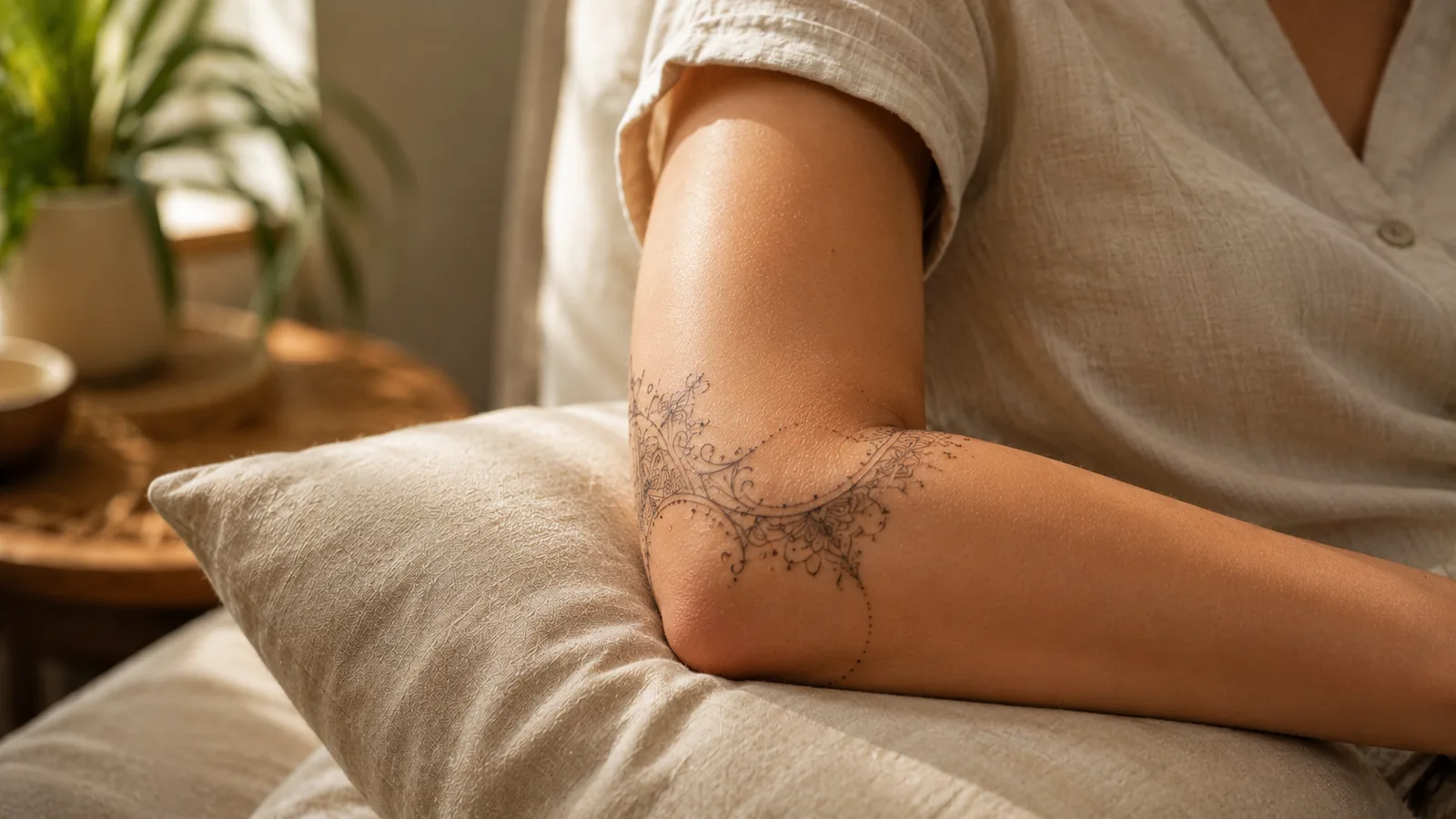
Elbow tattoos can be inconvenient to heal because the skin bends, stretches, folds, and contacts clothing throughout the day. An outer-elbow tattoo faces pressure from desks, armrests, and sleeping positions, while an elbow-ditch tattoo sits inside a warm crease that repeatedly closes whenever you bend your arm.
The visible surface commonly becomes calmer over several weeks, but deeper skin recovery continues longer. Your tattoo’s size, saturation, exact placement, aftercare routine, and daily activity will affect the timeline. Follow your artist’s instructions and concentrate on whether tenderness, redness, swelling, and irritation are gradually improving.
Elbow Tattoo Healing Timeline
| Healing period | What you may notice | What to do |
|---|---|---|
| First 24–72 hours | Tenderness, swelling, warmth, mild redness, or clear fluid mixed with ink | Follow covering instructions and reduce unnecessary arm movement |
| Days 4–7 | Tightness, itching, dryness, flaking, and discomfort when bending | Wash gently, moisturize lightly, and avoid clothing friction |
| Week 2 | Peeling, light scabbing, reduced swelling, and continued sensitivity | Do not scratch, pick, or forcefully stretch the skin |
| Weeks 3–4 | A calmer surface that may temporarily look dull or cloudy | Continue avoiding pressure, soaking, and direct sunlight |
| After one month | The surface may appear healed while deeper recovery continues | Resume demanding activities gradually and assess touch-ups later |
This is a general timeline rather than a guaranteed deadline. Cleveland Clinic explains that tattoo size and location affect healing and that deeper layers of skin may continue recovering for several months. Our tattoo healing stages guide explains the overall process.
Outer Elbow vs. Elbow Ditch Healing
The outer elbow is the bony point on the back of your arm. It is frequently pressed against tables, chairs, car doors, mattresses, and armrests. Its skin also stretches whenever you bend your arm.
The elbow ditch is the crease inside the joint. This area folds onto itself, collects sweat, and receives less airflow when the arm remains bent. Thick layers of moisturizer may feel especially uncomfortable inside the crease.
A tattoo wrapping around the entire elbow experiences both sets of challenges. Pay attention to where clothing, furniture, and skin folds contact the design.
Rule 1: Keep Moving, but Avoid Repetitive Bending
You do not have to keep your arm completely straight throughout recovery. Normal gentle movement helps you perform necessary daily activities. However, repeatedly bending and straightening the elbow can increase pulling and irritation while the tattoo is fresh.
During the earliest stage, reduce activities involving:
- Repetitive lifting and carrying.
- Pull-ups, rowing, or climbing.
- Throwing movements.
- Leaning your weight onto the elbow.
- Long periods with the arm tightly folded.
- Tight sleeves moving across the tattoo.
Never force your arm straight if swelling or tightness makes the movement painful. Contact your artist if you are unsure whether your mobility is normal.
Rule 2: Stop Leaning on the Outer Elbow
People frequently place their elbows on desks without noticing. Direct pressure can make a fresh outer-elbow tattoo sore and can cause rubbing against contaminated surfaces.
Keep the tattoo away from:
- Desks and tables.
- Chair armrests.
- Vehicle door panels.
- Gym benches and mats.
- Dirty countertops.
- Rough bedding and furniture.
Use your forearm or the opposite arm for support instead. Do not place a reusable cushion against the tattoo unless it is clean and does not rub the area.
Rule 3: Wear Loose Sleeves
Choose a clean, loose, breathable shirt that does not grip the elbow. Tight long sleeves can repeatedly scrape the tattoo as you move, while rough fabric may catch on peeling skin or scabs.
Short sleeves can prevent fabric contact but leave the tattoo exposed to sunlight, dust, and accidental contact. Select clothing according to your environment rather than assuming uncovered is always safer.
Do not roll a sleeve tightly around your elbow. The rolled fabric can form a restrictive band that presses directly against the tattoo.
Rule 4: Clean the Crease Carefully
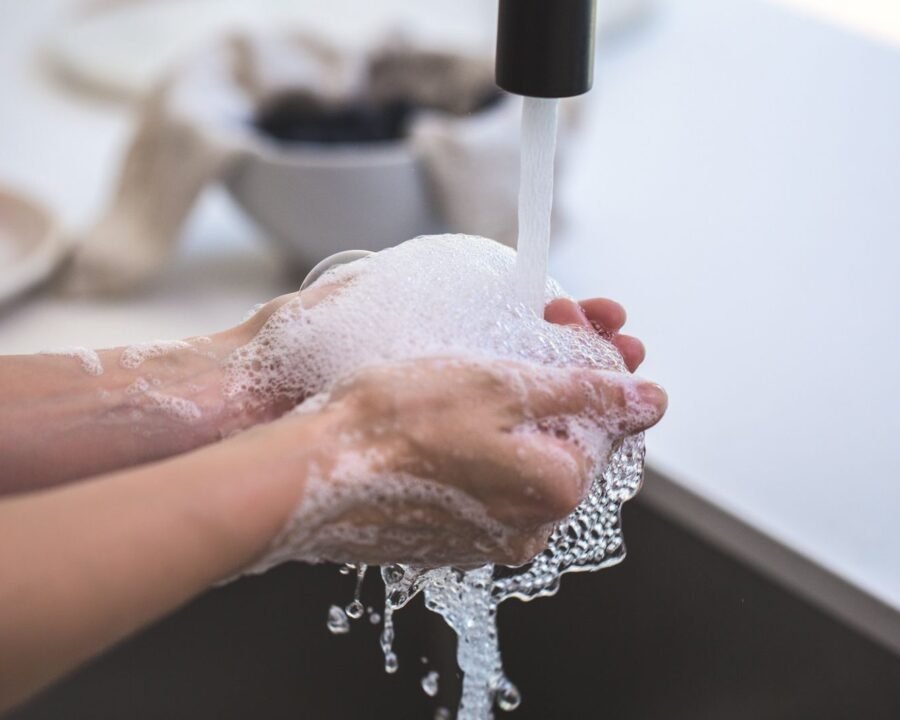
Wash your hands before touching the tattoo. Use lukewarm water and a mild, fragrance-free cleanser according to your artist’s instructions.
When cleaning an elbow-ditch tattoo:
- Bend the arm only enough to access the crease.
- Use clean fingertips rather than a washcloth.
- Avoid scrubbing or stretching the skin.
- Rinse away the cleanser completely.
- Pat the area dry using a clean disposable paper towel.
- Allow the crease to finish drying before closing the arm tightly.
- Apply only a thin layer of recommended moisturizer.
Avoid prolonged showers and do not soak the tattoo in baths, pools, hot tubs, lakes, or oceans. Read Can You Shower After a Tattoo? for more detail.
Rule 5: Do Not Over-Moisturize the Elbow Ditch
The inside of the elbow can hold sweat and moisture when the arm remains bent. Applying a thick layer of lotion may leave the tattoo wet, sticky, or uncomfortable.
Use a small amount of fragrance-free moisturizer only when needed or recommended. The product should absorb into the skin rather than remain as a visible coating.
If the crease looks persistently soggy, excessively shiny, or bubbly, review our guide to the signs of over-moisturizing a tattoo.
Rule 6: Protect the Tattoo While Sleeping
Choose a position that prevents your body weight from pressing against the elbow. Sleeping on the opposite side or on your back may be more comfortable, depending on the tattoo’s placement.
Use clean bedding and fresh sleepwear. Avoid placing the fresh tattoo directly against a rough pillow or blanket. Try not to sleep with the elbow tightly folded for the entire night if that position presses skin together inside the ditch.
Do not wrap the elbow in household plastic before sleeping. Follow only the covering instructions supplied by your artist. See How to Sleep With a New Tattoo for additional guidance.
Rule 7: Return to Exercise Gradually
Exercises that heavily involve the elbow can create sweat, friction, stretching, and pressure. This includes weightlifting, climbing, swimming, boxing, tennis, basketball, wrestling, and many contact sports.
Wait until the movement can be performed without pulling, rubbing, or irritating the tattoo. Begin with a lighter workout and stop if the skin becomes painful, unusually red, or excessively sweaty.
Shared gym equipment can also expose healing skin to contaminated surfaces. Never place an uncovered fresh elbow tattoo directly against a bench or exercise mat. Our guide explains when you can work out after a tattoo.
Second Skin on an Elbow Tattoo
Adhesive tattoo coverings may wrinkle or loosen around a moving joint. Small creases do not always mean the covering has failed, but exposed edges and active leaks can break the protective seal.
Follow the instructions for the specific product used by your artist. Do not add random tape, replace a used covering, or repeatedly press contaminated edges back onto the skin.
Contact your artist if:
- The covering exposes part of the tattoo.
- Fluid is actively leaking out.
- Water or dirt enters beneath the covering.
- The adhesive causes significant burning or a spreading rash.
- The covering becomes painfully tight.
Read Second Skin Came Off Early and Air Bubbles Under Second Skin for related guidance.
How to Handle Elbow Tattoo Itching
Mild itching and flaking can occur as the surface heals. Elbow movement may make the itching more noticeable because the skin repeatedly stretches.
Do not scratch, pick, or peel the tattoo. Scratching can injure healing skin, remove scabs prematurely, and introduce bacteria from your fingernails.
A clean, cool compress may provide temporary comfort, but do not soak the tattoo or place ice directly on it. Read Why Is My Tattoo Itchy? if the itching is persistent or accompanied by other symptoms.
Working With a Healing Elbow Tattoo
Office workers should avoid resting the elbow on their desks. Clean the surrounding workspace and keep cables, bags, and chair arms from scraping the tattoo.
People working in construction, healthcare, food service, mechanics, sports, or other physical environments may face additional challenges from uniforms, dirt, sweat, equipment, and repetitive movement.
Plan the tattoo around days off when possible. Ask your artist how your normal work clothing and activities could affect the placement before the appointment.
Signs of Normal Elbow Tattoo Healing
Common early changes can include:
- Mild localized redness.
- Tenderness or a sunburn-like feeling.
- Moderate swelling that begins improving.
- Clear fluid mixed with small amounts of ink.
- Tightness while bending the arm.
- Itching, flaking, or light scabbing.
- A temporary cloudy or dull appearance.
The key is improvement. Mild symptoms that become less intense are different from pain, heat, redness, or swelling that continues getting worse.
The American Academy of Dermatology explains that soreness, localized redness, swelling, clear fluid, itching, flaking, and scabbing can occur during ordinary tattoo healing.
When to Seek Medical Help
Contact a healthcare professional if you notice:
- Redness that spreads or becomes darker.
- Pain that worsens rather than subsides.
- Increasing heat or substantial swelling.
- Yellow or green discharge.
- Pus or an unpleasant odor.
- Open sores or red streaks.
- Fever, chills, or feeling seriously unwell.
- Painful bumps, blisters, or a spreading rash.
- Difficulty breathing, dizziness, or widespread hives.
- Severe swelling that restricts normal arm movement.
The FDA’s tattoo-safety guidance recommends contacting your tattoo artist and healthcare professional if a tattoo is not healing or develops a rash, especially when fever is present.
Frequently Asked Questions
How long does an elbow tattoo take to heal?
The surface generally becomes calmer over several weeks, but deeper recovery takes longer. Tattoos extending into the elbow ditch or covering a large, saturated area may remain sensitive for additional time.
Can I bend my arm after an elbow tattoo?
Gentle movement is usually unavoidable. Avoid excessive or repetitive bending that causes pulling, rubbing, pain, or cracking. Do not immobilize the arm without medical instructions.
Why is my elbow tattoo taking longer to heal?
Constant movement, skin folding, clothing friction, sweat, pressure, and the tattoo’s size can affect recovery. Contact your artist if one section is healing differently from the rest.
Can I wear a hoodie over a new elbow tattoo?
Only if the sleeve is clean, loose, and does not rub or stick to the tattoo. Tight cuffs and rough interior fabric can irritate the area.
Can I work out after an elbow tattoo?
Avoid exercises that repeatedly bend, stretch, press against, or heavily sweat over the tattoo. Return gradually when movement no longer irritates the surface.
Can I sleep with my arm bent?
A slightly bent position may be comfortable, but avoid tightly folding an elbow-ditch tattoo or placing your body weight directly on an outer-elbow tattoo.
Will an elbow tattoo need a touch-up?
Do not evaluate missing ink while the tattoo is peeling or cloudy. Allow it to heal completely before asking the original artist to inspect uneven areas and recommend whether a touch-up is needed.
TattooPiece provides general educational information and does not diagnose or treat medical conditions. Contact a qualified healthcare professional if you are concerned about infection, an allergic reaction, severe swelling, or unusual healing.