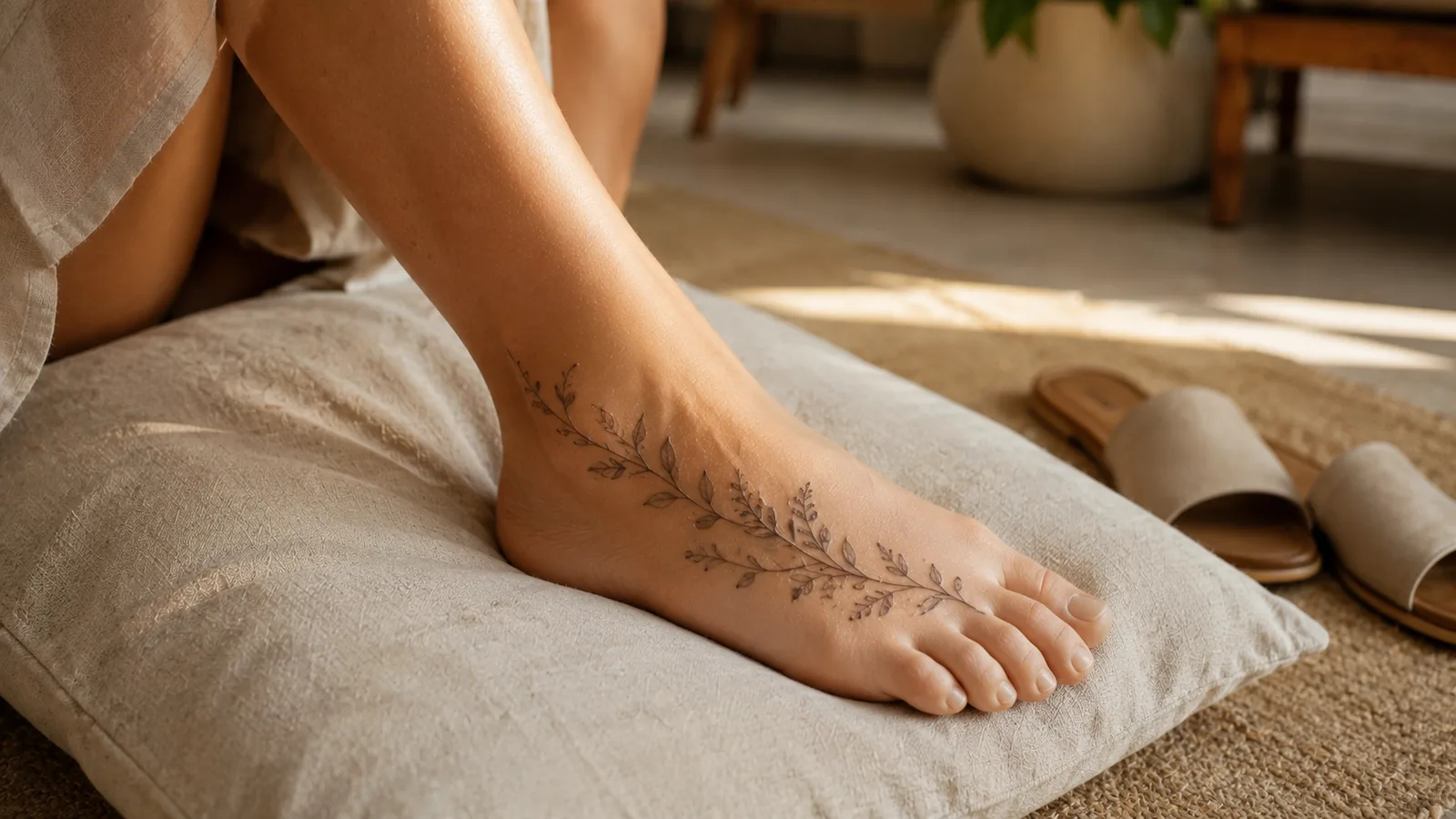
Foot tattoo aftercare can be challenging because shoes, socks, walking, sweat, and swelling all affect the tattooed area. The safest footwear depends on exactly where the tattoo is located. A slide that protects a top-of-foot tattoo may rub an ankle tattoo, while a loose sneaker may avoid an ankle design but press against the top of the foot.
During the earliest healing stage, use footwear that does not touch or rub the tattoo. When closed shoes are unavoidable, choose the cleanest, loosest, most breathable option available and limit how long you wear it. Follow your tattoo artist’s instructions because the tattoo’s size, placement, covering, and saturation can change what is appropriate.
Foot Tattoo Footwear Guide
| Tattoo placement | Footwear concern | Usually safer option |
|---|---|---|
| Top of foot | Shoe tongue, laces, and upper material pressing against the tattoo | Open footwear that does not cross the tattoo |
| Ankle | Shoe collar and high socks rubbing the design | Low footwear with no contact at the ankle |
| Side of foot | Shoe walls and seams pressing against the skin | Wide, soft footwear with sufficient space |
| Heel | Back of shoe repeatedly rubbing the tattoo | Backless footwear that does not touch the heel |
| Toes | Toe box pressure, sweat, and restricted movement | Wide open-toed footwear when safe |
| Sole | Direct pressure, walking, floors, and moisture | Follow individualized instructions from your artist |
There is no single shoe that works for every foot tattoo. Test whether the footwear touches the design before wearing it for an extended period.
Why Foot Tattoos Need Extra Care
Your feet experience pressure and movement throughout the day. Shoes can create repeated friction, while socks may hold sweat against the tattoo or stick to healing skin. Feet are also exposed to floors, dust, and outdoor contamination more frequently than many other tattoo placements.
This does not mean every foot tattoo will heal badly. It means you should plan your work schedule, footwear, exercise, and transportation before the appointment.
The main challenges include:
- Friction from shoes and socks.
- Swelling after the tattoo session.
- Pressure from standing and walking.
- Heat and moisture inside closed footwear.
- Dirt and bacteria from floors.
- Sun exposure when wearing open shoes.
- Difficulty keeping adhesive coverings sealed.
Rule 1: Prevent Direct Rubbing
Choose footwear based on contact, not simply whether it is open or closed. Sandal straps can be just as irritating as sneakers if they cross the tattoo.
Put the shoe on gently and check every edge, seam, strap, and pressure point. If it touches the tattoo while standing still, it will probably rub more when you walk.
Do not assume that placing a thick dressing over the tattoo makes tight shoes safe. Extra material can increase pressure and trap more moisture. Use only the covering recommended by your tattoo artist.
Rule 2: Choose Loose, Breathable Footwear
If closed shoes are necessary, choose a pair with enough space to prevent the upper material, tongue, seams, and collar from scraping the tattoo. Loosening the laces may help only when it genuinely removes pressure from the tattooed area.
Open slides or sandals may work when their straps remain completely away from the design. However, open footwear also exposes the foot to sunlight, dirt, rain, and accidental contact. It should not be treated as automatic protection.
A clean indoor environment where nothing touches the tattoo may be more comfortable, but avoid walking barefoot on dirty or shared floors.
Rule 3: Be Careful With Socks
A sock that sits directly against a fresh tattoo can produce friction, retain sweat, or stick to fluid and healing skin. If you must wear socks, use a clean, soft, breathable pair that is not tight and does not leave marks around the tattoo.
Change the socks if they become damp. Remove them slowly rather than pulling them across the tattoo.
If fabric sticks to the skin, do not tear it away. Moisten the affected material with lukewarm water and separate it gently. Our guide explains what to do when a tattoo sticks to fabric.
Rule 4: Reduce Unnecessary Walking
Normal short-distance movement may be unavoidable, but long walks can increase swelling, friction, and discomfort. If possible, avoid scheduling a foot tattoo immediately before a hiking trip, festival, long work shift, or vacation involving extensive walking.
During the earliest stage:
- Rest when possible.
- Keep walking sessions short.
- Avoid running and jumping.
- Do not force your foot into painful footwear.
- Stop if the tattoo begins rubbing, stinging, or bleeding.
- Elevate the foot comfortably when resting if your artist recommends it.
Contact your artist if swelling prevents you from wearing any safe footwear or walking normally. Severe or worsening swelling requires medical attention.
Rule 5: Keep Shoes and Feet Clean
Shoes collect sweat and dirt, so begin with a clean pair. Do not wear damp footwear or shoes recently used for a muddy workout.
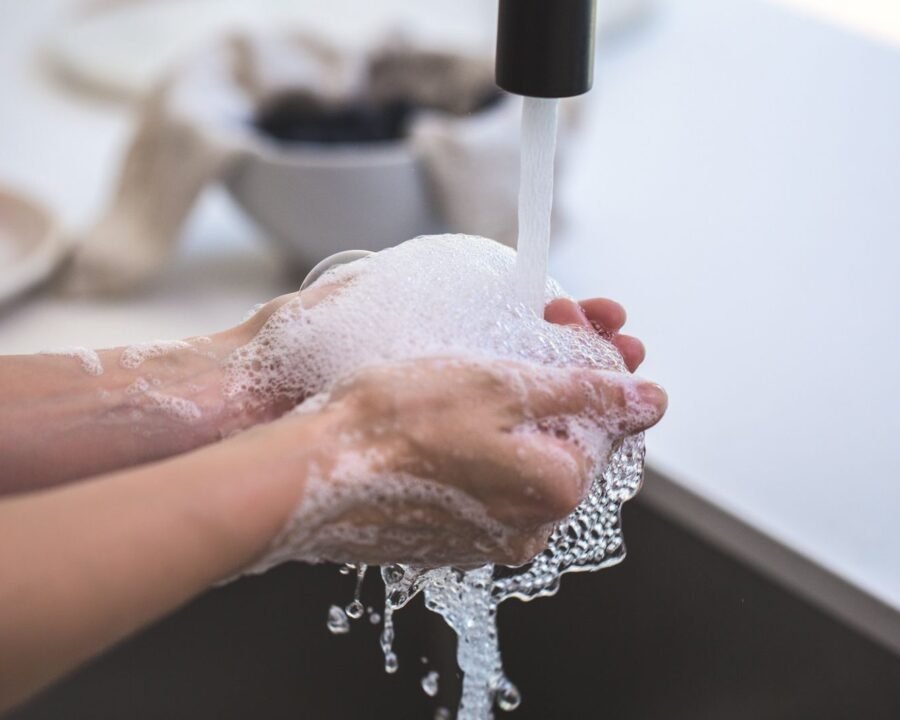
Before touching the tattoo, wash your hands. Clean the tattoo gently with lukewarm water and a mild, fragrance-free cleanser according to your artist’s instructions. Pat it dry with a clean disposable paper towel rather than rubbing it with a bath towel.
If your foot becomes sweaty inside a shoe, remove the footwear when you reach a clean environment. Clean and dry the tattoo if instructed, but avoid repeatedly overwashing it because excessive washing can increase dryness and irritation.
Read Can You Shower After a Tattoo? for a complete washing guide.
Rule 6: Avoid Trapping Excess Moisture
A heavy layer of lotion under a sock and closed shoe can leave the tattoo overly wet. Apply only a thin amount of fragrance-free moisturizer when recommended by your artist.
The moisturizer should not remain in a thick, visible layer. More product does not produce faster healing. Excessive moisturizer, sweat, and restricted airflow can make the surface feel soggy or sticky.
Our guide to the signs of over-moisturizing a tattoo explains what to watch for.
Rule 7: Return to Regular Shoes Gradually
Do not choose a fixed date based only on something you read online. Instead, examine the tattoo and test footwear carefully.
Regular shoes may be more appropriate when:
- The tattoo is no longer weeping.
- Swelling has substantially improved.
- The surface is not sticking to fabric.
- Wearing the shoe does not create pressure or pain.
- Walking does not cause repeated rubbing.
- Peeling and scabbing have settled.
- Your artist agrees that the tattoo is progressing normally.
Start with a short period in a loose shoe. Check the tattoo afterward for new redness, rubbing, moisture, or irritation. Do not immediately return to tight boots, heels, cleats, or running shoes simply because one loose shoe felt comfortable.
Foot Tattoo Healing Timeline
First 24–72 Hours
The foot may feel tender, warm, or swollen. Some clear fluid mixed with ink may collect beneath an approved adhesive covering. Reduce unnecessary walking and avoid footwear that contacts the tattoo.
Days 4–7
The skin may begin feeling dry, tight, flaky, or itchy. Continue gentle washing and use only a thin layer of moisturizer when recommended. Do not scratch or pull at peeling skin.
Week 2
Peeling and itching may continue while tenderness gradually improves. You may be able to tolerate certain loose shoes, but avoid any footwear that rubs the tattoo.
Weeks 3–4
The surface may look calmer, although the tattoo can temporarily appear cloudy or dull. Continue protecting it from friction, soaking, and direct sunlight.
After the First Month
A foot tattoo may look healed on the surface while deeper layers continue recovering. Cleveland Clinic explains that the top layer can take weeks to settle and deeper skin can continue healing for several months. Healing time also varies according to tattoo size and location. See our tattoo healing stages timeline.
Can You Work While a Foot Tattoo Heals?
That depends on your job. Office work may be manageable if you can use suitable footwear and avoid rubbing. Jobs requiring work boots, long periods of standing, running, climbing, or walking may be more difficult.
Before the appointment, ask whether your workplace allows temporary footwear changes. Consider scheduling the tattoo before days off if your normal shoes would press directly against it.
Do not conceal a painful tattoo inside tight work boots for an entire shift simply to protect it from dirt. Discuss the situation with your artist before the appointment so you can make a realistic plan.
Can You Exercise With a New Foot Tattoo?
Running, cycling, team sports, and lower-body gym sessions can create sweat, pressure, and repetitive foot movement. Shared gym floors, mats, pools, and changing rooms can also expose healing skin to contamination.
Wait until the activity can be performed without rubbing or irritating the tattoo. Return gradually rather than testing it with a full-intensity workout. Read How Long After a Tattoo Can You Work Out? for more guidance.
Second Skin on a Foot Tattoo
Adhesive coverings may wrinkle or loosen as the foot moves. Follow the exact product and artist instructions rather than replacing the covering on your own.
If the seal breaks and the tattoo becomes exposed, contact your artist. Do not repeatedly press a contaminated edge back onto the skin. Read Second Skin Came Off Early and Air Bubbles Under Second Skin for related guidance.
Normal Healing vs. Warning Signs
Mild localized redness, tenderness, swelling, clear fluid, itching, flaking, and light scabbing can occur during normal healing. These symptoms should generally trend toward improvement.
Contact a healthcare professional if you notice:
- Redness that spreads or darkens.
- Pain that continues getting worse.
- Increasing heat or significant swelling.
- Yellow or green discharge.
- Pus or an unpleasant odor.
- Open sores or red streaks.
- Fever, chills, or feeling unwell.
- Painful bumps, blisters, or a spreading rash.
- Difficulty breathing or widespread hives.
The American Academy of Dermatology distinguishes ordinary healing changes from symptoms that may indicate infection or an allergic reaction. The FDA recommends contacting both your tattoo artist and a healthcare professional if the tattoo is not healing or develops a rash, especially with fever.
Frequently Asked Questions
When can I wear shoes after a foot tattoo?
Wear shoes only when they do not press against, rub, or stick to the tattoo. Some people can use a suitable loose shoe earlier than others because placement and footwear differ. Follow your artist’s instructions instead of relying on one universal waiting period.
Can I wear socks over a fresh foot tattoo?
Avoid socks that rub, compress, or stick to the tattoo. If socks are unavoidable, choose a clean, loose, breathable pair and remove them carefully. Ask your artist whether the tattoo’s covering and placement make socks appropriate.
Can I wear Crocs after a foot tattoo?
Only if the shoe does not touch the tattoo. Crocs may avoid a top-of-foot design but can rub tattoos near the heel, ankle, or side of the foot.
Can I wear flip-flops?
Flip-flops can still rub tattoos around the toes or where the straps contact the foot. They also leave the tattoo exposed to dirt and sunlight. Choose them only when the straps remain completely clear of the tattoo.
Should I cover my foot tattoo inside a shoe?
Do not improvise with household plastic or repeatedly rewrap the tattoo. Use only the covering recommended by your artist. Contact the artist if closed shoes are unavoidable.
How long does a foot tattoo take to heal?
Visible peeling and sensitivity may improve over several weeks, but complete recovery beneath the surface takes longer. Large, saturated, or frequently irritated tattoos may need additional time.
TattooPiece provides general educational information and does not diagnose or treat medical conditions. Contact a qualified healthcare professional if you are concerned about infection, an allergic reaction, or unusual healing.