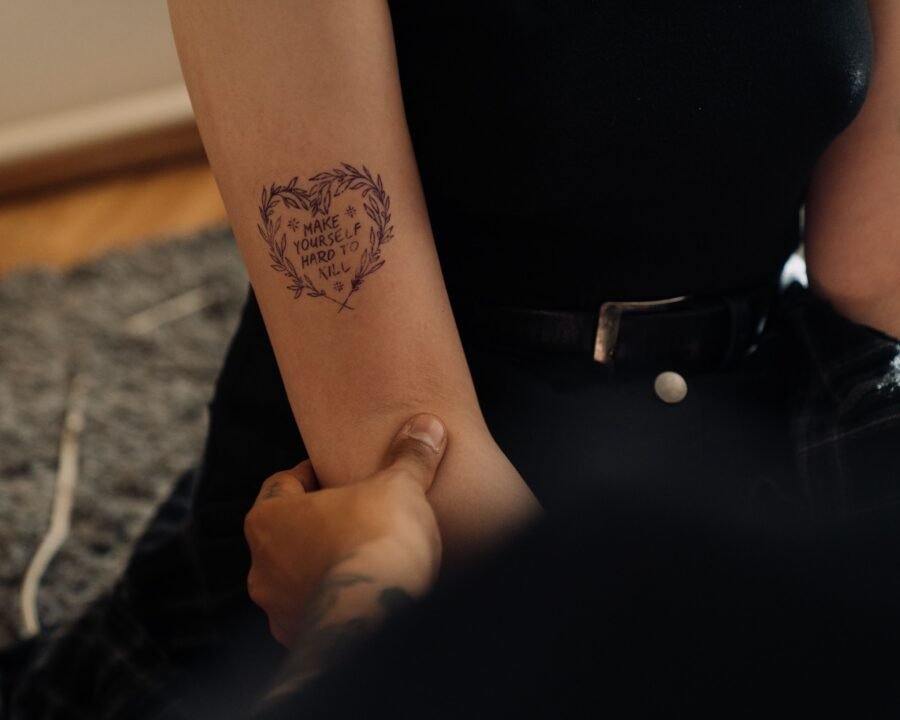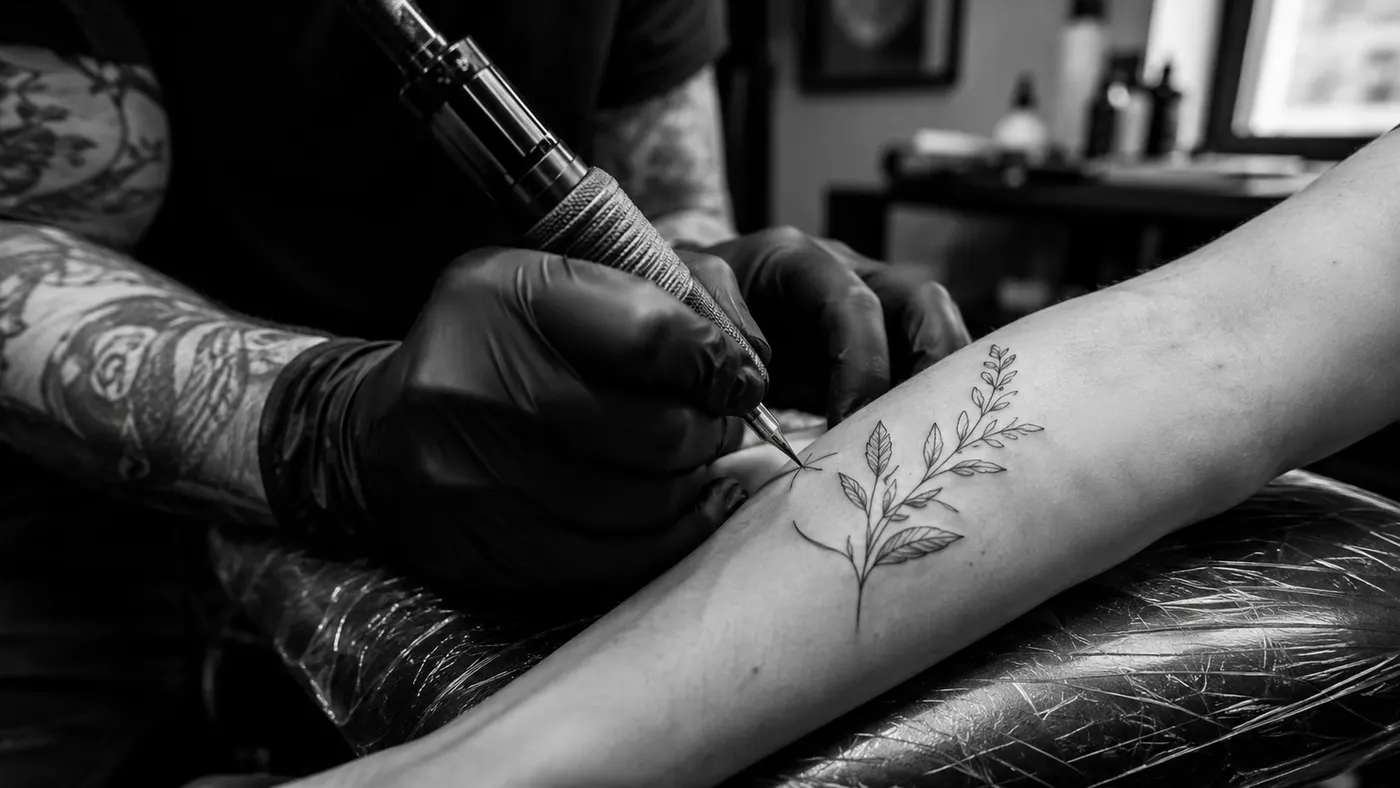
This tattoo aftercare guide explains how to clean, dry, moisturize, and protect a new tattoo while your skin heals. Your tattoo artist’s instructions should always come first because coverings, tattoo sizes, placements, techniques, and individual skin needs can differ. Applying too much is a common mistake — see the signs of over moisturizing a tattoo.
How this guide is put together: researched and cross-checked against public health sources like the AAD, Mayo Clinic, and the FDA, written and edited with AI assistance, and reviewed for accuracy before and after publishing. We don’t have a named medical reviewer on staff — see our editorial policy for exactly how we source and fact-check aftercare content, and always follow your own tattoo artist’s specific instructions first.
Good tattoo aftercare is simple: keep the area clean, avoid excessive moisture and friction, moisturize lightly, stay out of direct sunlight, and never pick at healing skin. Monitor the tattoo for symptoms that become worse instead of gradually improving. Placement changes the timeline more than most people expect — our guide to hand tattoo healing time covers the hardest case.
Tattoo Aftercare Guide: Quick Checklist
- Follow your artist’s instructions for the original covering.
- Wash your hands before touching the tattoo.
- Clean it gently with lukewarm water and a mild fragrance-free cleanser.
- Pat it dry instead of rubbing it.
- Apply only a thin layer of the recommended moisturizer.
- Wear clean, loose, breathable clothing.
- Do not scratch, pick, shave, or exfoliate the area.
- Avoid baths, pools, hot tubs, lakes, rivers, and oceans.
- Keep the healing tattoo away from direct sunlight.
- Seek medical help for symptoms that spread or become worse.
The First Few Hours After Getting a Tattoo
Your artist should clean the tattoo and apply a suitable covering before you leave the studio. This covering helps protect newly tattooed skin from friction, dirt, and contact with outside surfaces during the earliest part of healing.
Wondering when razors are safe again? See when you can shave over a new tattoo.
Keep the covering on for the time recommended by your artist. Traditional bandages, plastic wrap, and adhesive protective films are not handled in exactly the same way. Do not remove the covering early, leave it on longer than instructed, or replace it with a random product.
A limited amount of blood, clear plasma, and excess ink may collect beneath the covering. Ask your artist what amount is expected with the specific covering they used. Contact them if the covering develops a major leak, exposes part of the tattoo, or fills with an unusual amount of fluid.
How to Remove the Original Covering
Wash your hands thoroughly before touching the covering or tattoo. Follow your artist’s removal instructions, particularly if an adhesive protective film was applied. Do not rip a strongly attached film upward from the skin.
After removal, discard the used covering unless your artist provided a replacement and instructed you to apply it. Never reuse the same bandage. If you are uncertain about replacing a protective film, contact the artist rather than improvising.
How to Wash a New Tattoo
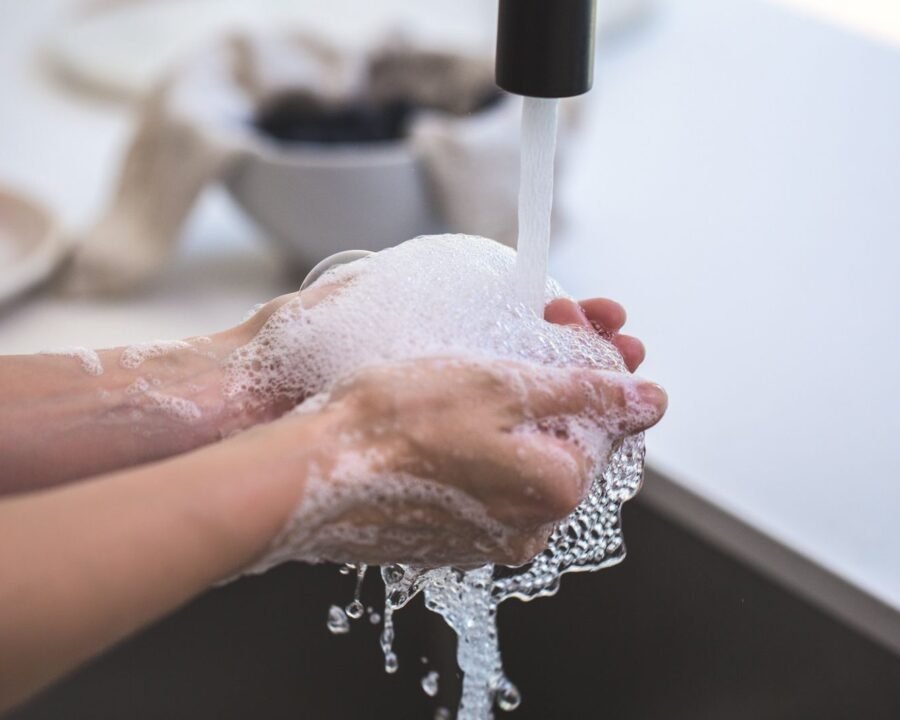
Use clean hands, lukewarm water, and a mild fragrance-free cleanser recommended by your artist. Gently clean away surface residue with your fingertips. Do not scrub the skin or use a washcloth, loofah, sponge, body brush, or exfoliating product. Not sure which product that means in practice? We compare the soap types people actually choose between.
Rinse carefully until no cleanser remains. Avoid holding the tattoo under a strong stream of water. Mayo Clinic recommends keeping tattooed skin clean, using a gentle touch, avoiding direct water pressure, and patting the area dry. Read its complete tattoo safety and care guidance.
Follow the washing schedule provided by your artist. Washing repeatedly throughout the day can leave sensitive skin dry and irritated, while failing to clean the tattoo as instructed can allow sweat and residue to remain on the area.
How to Dry the Tattoo
Gently pat the tattoo with a clean disposable paper towel. Do not rub it with a bath towel. Reused towels can hold microorganisms, while towel fibers and friction may catch on sensitive or peeling skin.
Allow the tattoo to finish air-drying for several minutes before applying moisturizer or clothing. Do not use a hot hair dryer because heat may irritate or excessively dry the skin.
How to Moisturize a New Tattoo
If your artist recommends moisturizer, apply a very thin layer after the tattoo is clean and dry. The surface should feel comfortable rather than greasy, sticky, or visibly wet. Applying more moisturizer does not make a tattoo heal faster.
Choose a simple, fragrance-free product recommended by your artist. Avoid experimenting with essential oils, heavily scented lotions, exfoliating acids, retinoids, or medicated creams on newly tattooed skin.
Petroleum jelly creates a heavy barrier and is not normally the first choice for a healing decorative tattoo unless an artist or healthcare professional specifically recommends it. Read our detailed answer about using Vaseline on a new tattoo.
Tattoo Aftercare During the First Week
During the first several days, the tattoo may appear bright and feel tender, warm, or mildly swollen. Limited localized redness can occur. These symptoms should begin settling rather than becoming progressively worse.
The surface may start feeling tight, dry, or itchy as it heals. Continue gentle cleaning and light moisturizing according to your artist’s instructions. Wear clean, loose clothing that does not repeatedly rub or stick to the tattoo.
Avoid touching the tattoo unnecessarily. Do not allow other people or pets to touch or lick it. Keep bedding and clothing that contact the area clean.
Tattoo Aftercare During Weeks Two to Four
Itching, flaking, and light scabbing commonly become more noticeable during this period. The tattoo can temporarily look dull, cloudy, or faded while new skin forms over it. Small colored flakes may fall away naturally.
Do not scratch, pick, or peel the tattoo. Removing a scab early may reopen the skin and affect the final appearance. Allow flakes and scabs to detach naturally.
The exact timeline varies. Our guide to the four tattoo healing stages explains what can happen from the first 24 hours through deeper recovery.
How to Handle Tattoo Itching
Mild itching can be part of normal healing. Keep your fingernails away from the tattoo, moisturize only as directed, and wear loose clothing. A clean, cool compress may provide temporary comfort, but do not soak the tattoo.
Itching that becomes severe, affects only one ink color, or appears with bumps, blisters, increasing swelling, or a spreading rash may require professional evaluation. Read why a tattoo becomes itchy and how to recognize warning signs.
Can You Shower With a New Tattoo?
A quick, gentle shower is generally different from soaking, provided you follow your artist’s instructions for the covering. Use lukewarm water, keep the shower brief, and avoid directing strong water pressure at the tattoo.
Pat the area dry afterward. Do not scrub it or leave it wet beneath clothing. Our guide explaining how to shower after a tattoo covers water temperature, cleansers, protective films, drying, and common mistakes.
When Can You Swim After Getting a Tattoo?
Avoid pools, hot tubs, baths, oceans, lakes, and rivers until the tattoo is completely healed. Prolonged immersion can soften healing skin, while recreational water may expose the area to chemicals or microorganisms.
A waterproof bandage does not make an unhealed tattoo safe for swimming. Water can enter around its edges during movement or prolonged immersion. Read how long after a tattoo you can swim and which signs indicate that the skin may be ready.
Exercise, Sweat, and Clothing
Exercise can create sweat, stretching, and repeated friction. A small tattoo in a low-movement area may be affected differently from a large tattoo near a joint, waistband, foot, or other high-friction location.
Ask your artist when to return to your normal routine. Avoid activities that make equipment, dirty surfaces, tight clothing, or other people repeatedly contact the tattoo. Clean the area according to your normal aftercare routine if it becomes sweaty.
Choose loose, breathable clothing and clean fabrics. Avoid anything that sticks to the tattoo or repeatedly scrapes across peeling skin.
Sun Protection for a Tattoo
Keep a healing tattoo out of direct sunlight. Do not apply sunscreen to an open or actively healing tattoo unless a healthcare professional specifically instructs you to do so. Use clothing and shade for protection during healing.
Once the tattoo is completely healed, ultraviolet light can still contribute to fading. The American Academy of Dermatology recommends broad-spectrum, water-resistant sunscreen with SPF 30 or higher for tattooed skin. Review its advice for caring for tattooed skin.
What to Avoid While a Tattoo Heals
- Scratching, peeling, or picking at flakes and scabs
- Baths, swimming pools, hot tubs, lakes, rivers, and oceans
- Direct sunlight and tanning beds
- Strongly scented or exfoliating skincare products
- Shaving directly over the healing tattoo
- Tight or dirty clothing that rubs against the area
- Applying thick layers of moisturizer or ointment
- Allowing pets or other people to touch the tattoo
- Using washcloths, loofahs, sponges, or body scrubs
- Ignoring the artist’s instructions for the covering
Normal Healing Versus Possible Infection
Mild localized redness, tenderness, dryness, itching, flaking, and light scabbing can occur during normal healing. These symptoms should generally become less intense over time.
Contact a healthcare professional if redness continues spreading, pain becomes worse, the skin becomes increasingly hot, or you notice significant swelling, pus, unusual drainage, a bad odor, open sores, red streaks, fever, or chills.
The FDA advises contacting both a healthcare professional and the tattoo artist when a tattoo does not appear to be healing or develops a rash, bumps, or fever. Review its official tattoo safety information.
Possible Allergic Reactions
An allergic reaction can appear immediately or much later. It may affect only one ink color and can cause persistent itching, swelling, raised patches, bumps, blisters, scaling, or fluid.
Seek immediate medical care if a reaction appears with trouble breathing, tightness in the chest, dizziness, widespread hives, a racing heartbeat, or swelling of the face, mouth, or throat.
Long-Term Tattoo Care
After the tattoo has fully healed, continue using a simple moisturizer when the skin feels dry. Protect the tattoo from sunlight, avoid unnecessary trauma to the area, and monitor any new or persistent skin changes.
Do not ignore a raised area, recurring rash, persistent itch, new lump, or change limited to one ink color simply because the tattoo is old. Tattoo reactions and unrelated skin conditions can develop later and may need evaluation by a dermatologist.
Getting back to the gym is one of the most common healing questions — see exactly how long after a tattoo you can work out, activity by activity.
For wrist-specific guidance — watches, typing, and everyday hand movement — see our wrist tattoo healing time guide.
The Bottom Line
A reliable tattoo aftercare guide should help you support normal healing without overcomplicating the process. Follow your artist’s covering instructions, wash gently, pat the tattoo dry, moisturize lightly, wear loose clothing, and avoid scratching, soaking, and direct sunlight.
Healing should show steady improvement. Symptoms that spread, intensify, or appear with fever, unusual drainage, severe swelling, or breathing problems require professional medical attention.
This article provides general educational information and does not replace personalized instructions from your tattoo artist or a qualified healthcare professional.
More Aftercare Guides
- Tattoo blowout: causes, fixes & prevention
- Tattoo scabbing: how much is normal?
- Best tattoo aftercare lotion for sensitive skin
- Second Skin Tattoo Aftercare: The Complete Timeline
- Second Skin Leaking After a Tattoo: Remove It or Leave It?
- Air Bubbles Under Second Skin Tattoo: Normal or a Problem?
- How Long to Leave Second Skin on a Tattoo
- When Can You Put Sunscreen on a New Tattoo?