Hand tattoo healing time varies according to the tattoo’s size, exact location, your skin, and how closely you follow the artist’s instructions. Most hand tattoos pass through visible peeling and itching during the first two to four weeks. However, looking healed does not mean every layer of skin has completely recovered.
Hands require additional attention because they are constantly moving, touching surfaces, being washed, and exposed to friction. Good aftercare protects the healing skin without interfering with necessary hand hygiene.
Hand Tattoo Healing Timeline
| Healing stage | What you may notice | What to do |
|---|---|---|
| First 24–48 hours | Tenderness, mild swelling, redness, warmth, or clear fluid | Follow the artist’s bandage instructions and keep the area clean |
| Days 3–7 | Tightness, dryness, light scabbing, or early itching | Wash gently, pat dry, and apply a thin layer of recommended moisturizer |
| Weeks 2–4 | Peeling, flaking, itching, and a temporarily dull appearance | Do not scratch, peel, or remove scabs |
| Weeks 5–8 | Smoother skin and clearer-looking ink | Continue protecting the tattoo from friction and sunlight |
| Following months | Deeper layers continue recovering | Maintain regular moisturizing and long-term sun protection |
This timeline is only a general guide. A small finger tattoo and a large design covering the back of the hand may not heal at the same rate.
Why hand tattoos heal slower and fade harder than other placements
Hand tattoo healing time runs longer than most placements for one underlying reason: the hand never rests. Skin that bends, grips, washes and rubs against things all day is skin that is constantly disturbing its own repair, and the same daily use that slows healing is what pulls ink out of the finished tattoo over the years.
Six factors stack up on this placement, and none of them apply to an upper arm or a thigh:
- Constant movement. Every grip, stretch and flex pulls on skin that is trying to knit closed. Sections over the knuckles move the most and are usually the last to settle.
- Thin skin over bone and tendon. The back of the hand has very little fat between skin and structure, so there is less cushioning for the healing layer than almost anywhere else on the body.
- High cell turnover. Hand skin — the palm side and the sides of the fingers especially — replaces itself faster than skin on the torso. Faster turnover means ink sitting near the surface is shed more readily.
- Washing and sanitiser. You cannot stop washing your hands while a hand tattoo heals, and you should not try. Repeated wetting, drying and alcohol gel is unavoidable exposure that no other placement has to deal with.
- Friction all day. Pockets, keyboards, steering wheels, tools, gloves and bags all rub the same area repeatedly.
- Year-round sun. Hands are one of the few areas most people never cover. Over years, that adds up to more cumulative UV exposure than a placement you keep under a sleeve.
The practical consequence is that touch-ups are far more routine on hands and fingers than on other placements, and many artists raise that before you book rather than after. That is not a sign anything went wrong — it is the expected maintenance for this location. Fine linework and small lettering on fingers are the most likely to need it.
None of this changes the underlying biology of how a tattoo repairs itself — the sequence is the same one described in our guide to the stages of tattoo healing, and the fundamentals in our tattoo aftercare guide still apply. Hands simply run that sequence under harder conditions, and often at the slower end of the normal range.
The First 24 to 48 Hours
Immediately after the appointment, the hand may feel sore, warm, swollen, or sensitive. A small amount of clear fluid, ink, or blood beneath the covering can occur during the early stage.
Your artist should explain how long to leave the original covering in place. Traditional dressings and adhesive tattoo films follow different schedules, so do not remove the covering early based on a generic timeline.
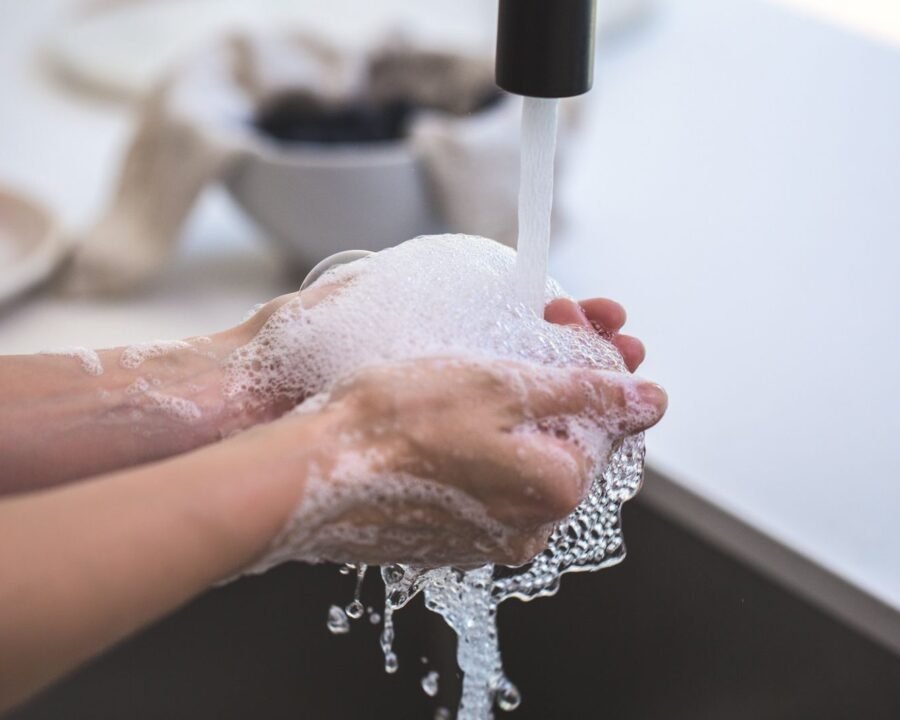
Before touching the tattoo or removing its covering, wash your hands carefully. After removing it, gently clean the area with lukewarm water and a mild, fragrance-free cleanser. Do not scrub it with a washcloth, sponge, or exfoliating product.
Pat the tattoo dry using a clean paper towel. Avoid rubbing it with a shared hand towel that may carry bacteria.
Days 3 to 7: Dryness and Tightness
During the remainder of the first week, the tattoo may feel tight, dry, or increasingly itchy. Light scabs can begin to form, and the skin may feel uncomfortable when you bend your fingers or wrist.
Continue washing the tattoo gently according to your artist’s directions. Apply only a thin layer of the recommended fragrance-free moisturizer. The skin should not remain buried beneath a thick, greasy coating.
The Cleveland Clinic’s tattoo-aftercare guidance recommends gentle washing, moisturizing, avoiding tight clothing, and not picking at healing skin.
Try to limit avoidable friction during this period. Rings, watches, bracelets, tight gloves, tools, gym equipment, and repetitive hand movements can rub against the tattoo.
Weeks 2 to 4: Peeling and Itching
Peeling and itching often become more noticeable during the second week. Small flakes may come away naturally, and the tattoo can temporarily look cloudy, uneven, or less vibrant.
Do not pull off peeling skin or pick at scabs. Removing them prematurely can irritate the area and potentially affect the tattoo’s appearance. If itching becomes uncomfortable, use a thin layer of fragrance-free moisturizer and avoid scratching.
Our guide to why a healing tattoo becomes itchy explains how dryness, normal skin repair, clothing friction, and product irritation can contribute to itching.
By approximately the third or fourth week, visible flaking and surface irritation should generally be improving. Improvement matters more than reaching a precise date.
Weeks 5 to 8: The Tattoo Looks Healed
The surface may appear substantially healed during this stage. The skin should feel smoother, the color may look clearer, and everyday hand movement should become more comfortable.
However, deeper layers of skin can continue healing after the surface looks normal. Cleveland Clinic notes that the upper skin layer may take around two months to heal, while deeper recovery may continue for several months.
Continue moisturizing when the skin feels dry. Once the tattoo is fully healed, protect it from ultraviolet exposure with broad-spectrum, water-resistant SPF 30 or higher. The American Academy of Dermatology recommends sunscreen and avoiding tanning beds to help protect tattooed skin.
How to Wash Your Hands With a New Hand Tattoo
A hand tattoo does not mean you should stop washing your hands. Hand hygiene remains important, especially because a fresh tattoo temporarily disrupts the skin barrier.
Use this routine:
- Use clean, lukewarm water rather than very hot water.
- Choose a mild, fragrance-free cleanser.
- Avoid aggressively scrubbing the tattoo.
- Rinse away all cleanser.
- Pat the area dry with a clean paper towel.
- Let the tattoo finish air-drying briefly.
- Apply a thin layer of recommended moisturizer when appropriate.
Frequent washing can increase dryness, but avoiding necessary handwashing can expose the area to bacteria. The goal is gentle, effective cleaning followed by suitable moisturizing.
Alcohol-based hand sanitizer may sting or excessively dry a fresh tattoo. When practical, keep sanitizer away from the tattooed area, but do not ignore workplace or healthcare hygiene requirements.
Can You Wear Gloves Over a Healing Hand Tattoo?
Gloves can create friction and trap sweat against healing skin. Avoid wearing tight or non-breathable gloves for prolonged periods when they are not necessary.
If your work requires protective gloves, do not simply stop using them. Workplace safety and hygiene rules remain important. Discuss the situation with your tattoo artist before the appointment and ask whether temporary changes to your duties are possible.
Replace dirty or sweaty gloves and never allow contaminated work gloves to rub directly against a fresh tattoo. Seek professional advice if the tattoo repeatedly becomes wet, irritated, or painful beneath required protective equipment.
Working With a New Hand Tattoo
Whether you can work normally depends on the job. Office work may require only minor adjustments, while construction, food preparation, healthcare, cleaning, mechanical work, and other hands-on occupations can expose the tattoo to moisture, chemicals, dirt, friction, or repetitive movement.
During early healing:
- Keep cleaning chemicals away from the tattoo.
- Avoid dirty water, soil, grease, and workshop debris.
- Do not rest the tattoo against shared or contaminated surfaces.
- Limit repetitive movements if they cause cracking, pulling, or pain.
- Follow required workplace handwashing and protective-equipment rules.
- Ask the artist about scheduling the appointment before days off.
If your work cannot be completed safely without exposing the tattoo, speak with your employer and tattoo artist before returning to normal duties.
Can You Exercise With a Hand Tattoo?
Exercise may expose a new hand tattoo to sweat, friction, shared equipment, and repeated gripping. Weightlifting, climbing, boxing, rowing, and similar activities can place particular pressure on the hands.
Avoid any activity that rubs, stretches, or contaminates the healing area. Clean shared equipment before use and never exercise with open, actively draining, or significantly irritated skin.
Read our complete guide to working out after a tattoo for activity-specific precautions.
Hand-specific care: washing, moisturizing, friction, work and sun
General aftercare advice assumes a placement you can leave alone. Hands are not that placement, so the five factors below need a hand-specific answer rather than the standard one. This table is a quick reference; the sections above and below cover each in more detail.
| Factor | Why hands are different | What to do |
|---|---|---|
| Washing | You cannot reduce hand washing while it heals, and you should not try | Wash with lukewarm water and a plain fragrance-free soap, using fingertips rather than a cloth, then pat completely dry — never rub or use a hand dryer at close range |
| Moisturizing | Repeated washing strips the area far faster than on other placements, but hands are also easy to over-apply to | A thin layer after each wash and dry, not a thick coat; if it looks shiny or feels tacky, you have used too much — see the signs of over-moisturizing a tattoo |
| Friction | Pockets, bags, keyboards, tools and steering wheels rub the same spot dozens of times a day | Keep rings, watches and bracelets off the healing area entirely until peeling has finished; choose loose sleeves over tight cuffs |
| Work and gloves | Many jobs require gloves, frequent sanitising or manual handling that a healing tattoo cannot avoid | Talk to your artist before booking if your job is hands-on; where gloves are mandatory, clean disposable gloves over clean dry skin, changed often, are better than a contaminated reusable pair. Training that loads the hands is worth delaying — see how long after a tattoo you can work out |
| Sun | Hands are rarely covered, so UV exposure is close to year-round and cumulative over the life of the tattoo | Keep a healing hand tattoo out of direct sun and do not apply sunscreen until it has fully closed — our guide to when you can put sunscreen on a new tattoo covers the timing. After that, daily SPF on the hands does more to preserve this placement than any other single habit |
What Can Slow Hand Tattoo Healing?
Several factors can make healing more difficult:
- Picking or scratching peeling skin
- Excessive washing or using harsh cleansers
- Applying too much ointment
- Soaking the hand in pools, baths, hot tubs, or natural water
- Repeated friction from gloves, jewelry, equipment, or clothing
- Exposure to cleaning products and workplace chemicals
- Direct sunlight
- Ignoring the artist’s covering instructions
- Returning too quickly to activities that strain the tattooed skin
Healing should generally trend toward less pain, redness, swelling, and irritation.
Signs That Need Medical Attention
Some initial redness, tenderness, mild swelling, itching, flaking, and clear fluid can occur during normal healing. The concerning pattern is when symptoms become stronger or spread instead of gradually improving.
Contact a healthcare professional if you notice:
- Redness that becomes darker or continues spreading
- Pain that becomes stronger rather than improving
- Increasing heat or swelling
- Pus, significant drainage, or an unpleasant odor
- Red streaks extending away from the tattoo
- Open sores or painful bumps
- Fever, chills, or feeling generally unwell
- A persistent rash, blisters, or a suspected allergic reaction
The American Academy of Dermatology advises seeking prompt medical care when tattoo redness spreads, pain worsens, pus develops, or fever and chills occur. The FDA’s tattoo-safety guidance also recommends contacting a healthcare professional when a tattoo is not healing or develops a rash or fever.
Hand Tattoo Healing Checklist
- Follow the tattoo artist’s covering instructions.
- Wash your hands before touching the tattoo.
- Clean the tattoo gently with lukewarm water.
- Pat it dry rather than rubbing it.
- Use only a thin layer of recommended moisturizer.
- Do not scratch, peel, or pick the skin.
- Avoid unnecessary gloves, jewelry, and friction.
- Keep the tattoo away from dirty water and chemicals.
- Do not swim or soak the hand while it heals.
- Protect the tattoo from direct sunlight.
- Monitor whether symptoms improve each day.
- Seek medical care for worsening or spreading symptoms.
Frequently Asked Questions
How long does a hand tattoo take to heal?
Visible peeling, itching, and irritation commonly improve during the first two to four weeks. The upper skin layer may take approximately two months to heal, while deeper recovery can continue for several months. Individual healing times vary.
Do hand tattoos take longer to heal?
Not necessarily. Tattoo size, location, aftercare, health, and lifestyle all affect healing. Hands face frequent washing, movement, contact, and friction, which may make aftercare more demanding even when the tattoo is relatively small.
Can I wash my hands after getting a hand tattoo?
Yes. Necessary hand hygiene should continue. Use lukewarm water, a mild fragrance-free cleanser, and gentle movements. Rinse completely and pat the tattoo dry.
When can I wear rings or a watch again?
Wait until the item no longer touches, rubs, or traps moisture against healing skin. The timing depends on the tattoo’s location and your healing progress. Ask your artist if the jewelry sits close to the tattoo.
Why does my hand tattoo look faded while healing?
Peeling, dry skin, light scabbing, and a temporary cloudy layer can make the tattoo look dull or uneven. Allow the skin to heal fully before judging the final appearance.
When can a hand tattoo be touched up?
Do not schedule a touch-up while the tattoo is still peeling, scabbed, shiny, tender, or irritated. Let the tattoo heal completely and have the original artist assess it before adding more ink.
Is swelling normal after a hand tattoo?
Mild early swelling can occur. Swelling that increases, persists, becomes very painful, or appears alongside spreading redness, heat, drainage, fever, or red streaks should be evaluated by a healthcare professional.
Can I use hand cream on a new tattoo?
Use only a simple fragrance-free product recommended by your tattoo artist, and apply a thin layer. Avoid heavily scented products, exfoliating ingredients, and thick applications that leave the tattoo excessively wet.
This article provides general educational information and does not replace personalized instructions from your tattoo artist or advice from a qualified healthcare professional.
Healing a tattoo just up the arm? Our wrist tattoo healing time guide covers the same friction and movement issues for that spot.
Last reviewed 20 August 2026 by the TattooPiece Editorial Team. This guide is general information about tattoo healing, not medical advice; see a doctor if you have signs of infection.