The most painful tattoo spots are the ribs, sternum, spine, armpit, and hands — places where thin skin sits directly over bone or where nerves cluster densely. This guide ranks every high-pain area, explains the anatomy behind the ranking, and covers how to get through a session if your design belongs somewhere difficult.
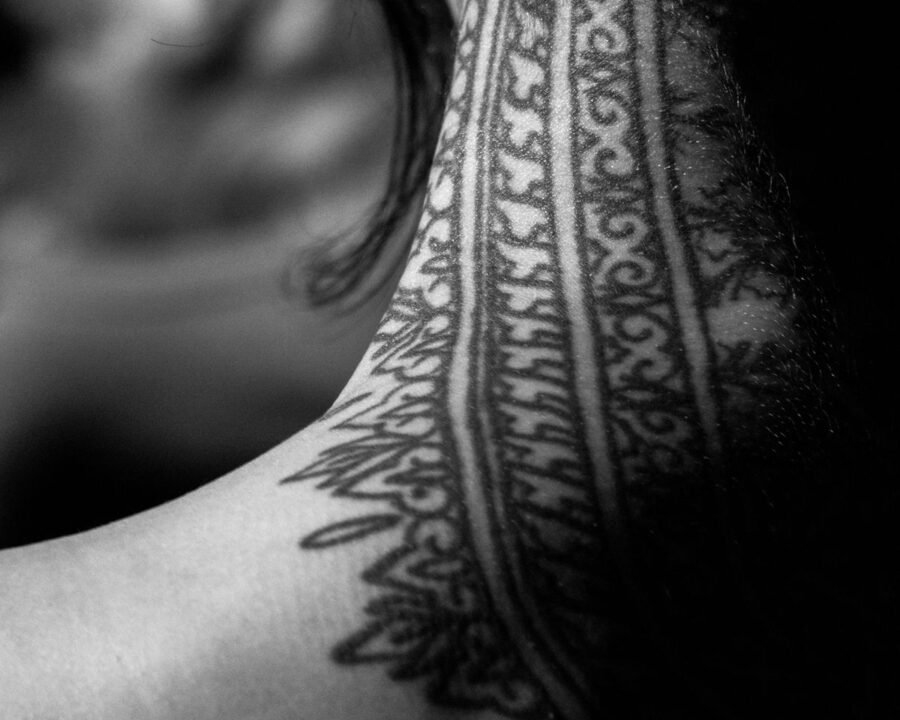
A note on ratings: this post uses pain bands rather than scores out of ten, because no study has produced per-body-part pain scores. Our full tattoo pain chart explains what the research actually measured — and if you want the comfortable end of the scale instead, see the least painful tattoo spots. For the High-band placements in this list, see our dedicated neck tattoo pain guide.
Most Painful Tattoo Spots, Ranked
| Placement | Typical pain | Why |
|---|---|---|
| Ribs | Very high | Bone flexes with every breath under thin skin with almost no padding. |
| Sternum | Very high | Skin sits directly on the breastbone; nowhere to brace against the needle. |
| Armpit | Very high | Dense nerve cluster, lymph nodes, and skin that almost never toughens. |
| Hands and fingers | Very high | Thin skin pulled tight over bone and tendon, packed with nerve endings. |
| Spine | High | Vertebrae under thin skin with a dense nerve line; intensity builds toward the tailbone. |
| Neck and throat | High | Thin, sensitive skin over cartilage and constant involuntary movement. |
| Feet and ankles | High | Bone, tendon, and almost no fat; every pass echoes across the whole foot. |
| Elbow and knee ditches | High | Crease skin is thin, sweaty, and sits over nerve pathways serving the whole limb. |
| Head and skull | High to very high | Needle vibration transfers directly into bone; sound as much as sensation. |
| Inner bicep | Moderate–high | Soft, protected skin that rarely sees friction — and rarely toughens. |
Why We Do Not Score These Out of Ten
Most “most painful tattoo spots” lists give each placement a number — ribs an 8, sternum a 9, and so on. Those numbers are invented. The largest peer-reviewed survey of tattoo pain, Witkoś and Hartman-Petrycka (2020), asked 1,092 people to rate tattoo pain on a 0–10 scale and found that body region did not significantly predict overall pain intensity during the procedure. No study has produced a validated pain score per body site.
So we use bands instead. Every placement on this page carries the same band it has on our tattoo pain chart, which is the reference all TattooPiece pain pages defer to. A band says how an area compares to others, which is a claim the anatomy supports. A score out of ten says how much it will hurt you, which nothing supports.
One thing that survey did find: how long you sit predicted reported pain significantly. If a placement on this list worries you, the most effective lever you control is not the spot — it is booking a shorter session.
Why These Spots Hurt So Much
Three anatomical factors explain almost the entire ranking. The first is bone proximity: where skin stretches thin over the ribs, sternum, spine, or ankle, the needle’s vibration transmits into the bone itself rather than being absorbed by muscle or fat. The second is nerve density — hands, feet, armpits, and the spine carry far more nerve endings per square inch than a shoulder or thigh. The third is bracing: on a bicep you can relax the limb on an armrest, but you cannot stop breathing through a rib session or hold a ditch open without tension. The largest published study of tattoo pain — 1,092 people surveyed on a standard pain scale — found that body region predicted radiating pain rather than overall intensity, which fits this anatomy-first picture.
The same three factors run the other direction on fleshy, muscular placements, which is why the outer arm and thigh top every low-pain list.
The Worst of the Worst: Ribs, Sternum, and Spine
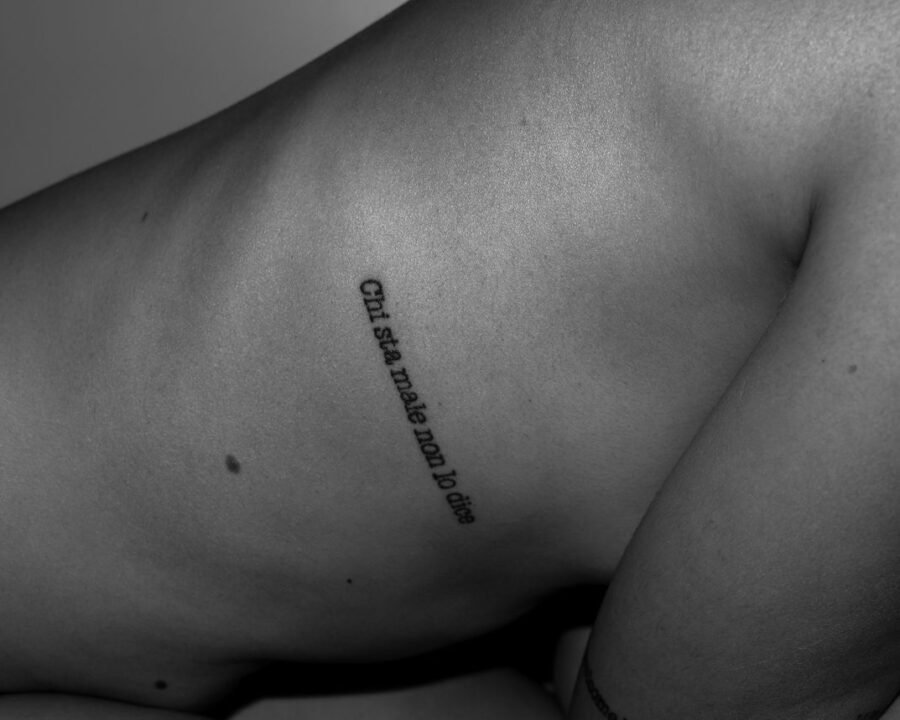
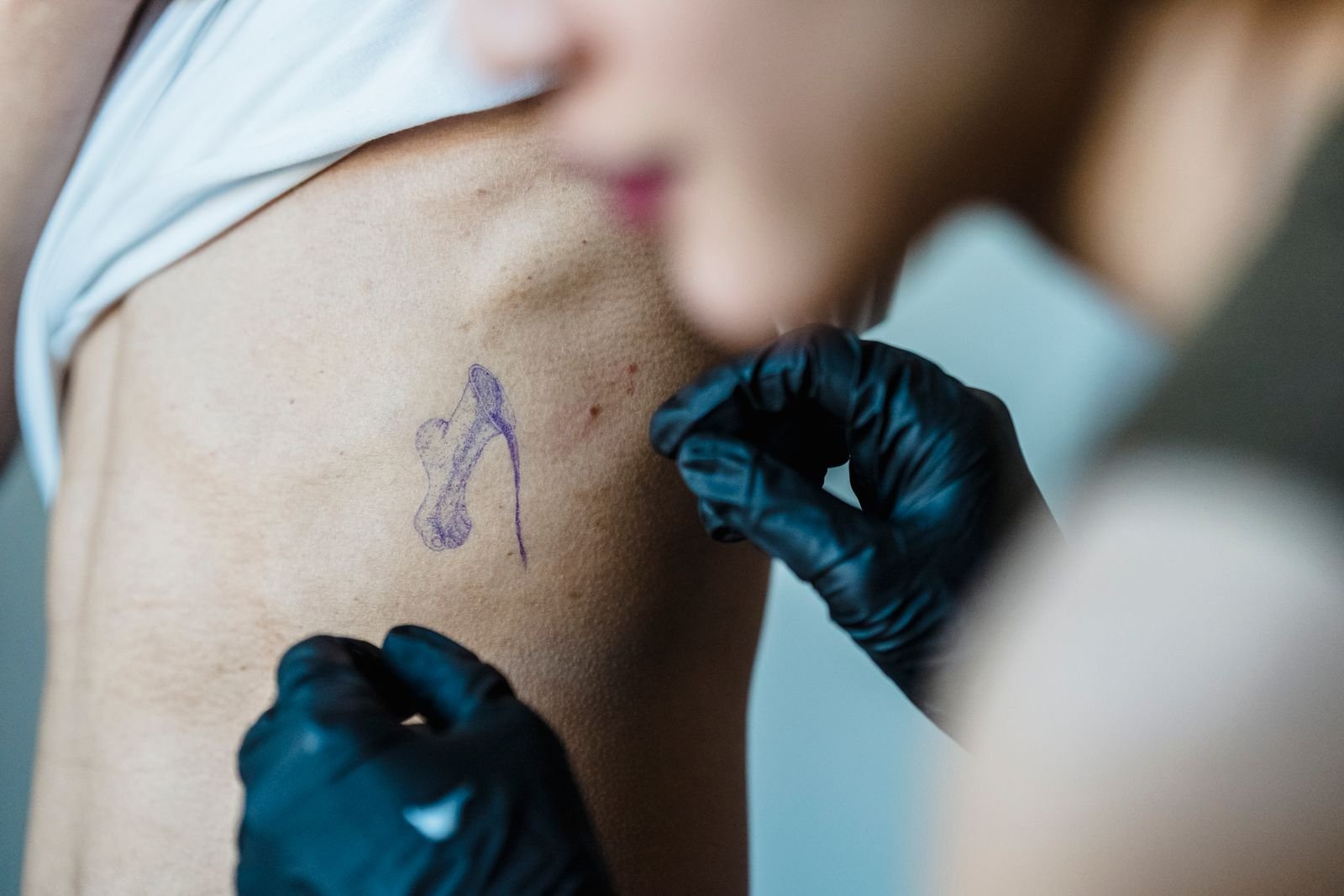
Ribs earn their reputation because the surface never holds still — each breath flexes the cage under the needle, and shallow breathing to compensate only makes sitting harder. Long line work across multiple ribs, crossing bone and the valleys between, is what most people describe as the hardest thing they have sat through.
The sternum concentrates the same problem into a smaller area with even less padding, made worse by the fact that the position is difficult to relax in. And the spine pairs bone proximity with the densest nerve corridor in the body; intensity typically climbs as work moves toward the lower back and tailbone. Our spine tattoo guide breaks that placement down vertebra by vertebra, and the collarbone post covers the closely related clavicle area.
Painful Spots People Underestimate
- The elbow ditch and knee ditch. Crease skin is thin and constantly damp, and the nerves passing through serve the entire limb — many people report sensation shooting into the hand or foot.
- The armpit. Rarely chosen, consistently described as worse than ribs by people who have both.
- The inner bicep. Looks like an easy fleshy spot, but the skin is soft and protected, and it stings far more than the outer arm inches away.
- Behind the knee. Same crease problem as the ditches, plus a difficult healing position.
- The ankle bone. A small area, but direct bone contact makes even short pieces intense.
If Your Heart Is Set on a Painful Spot
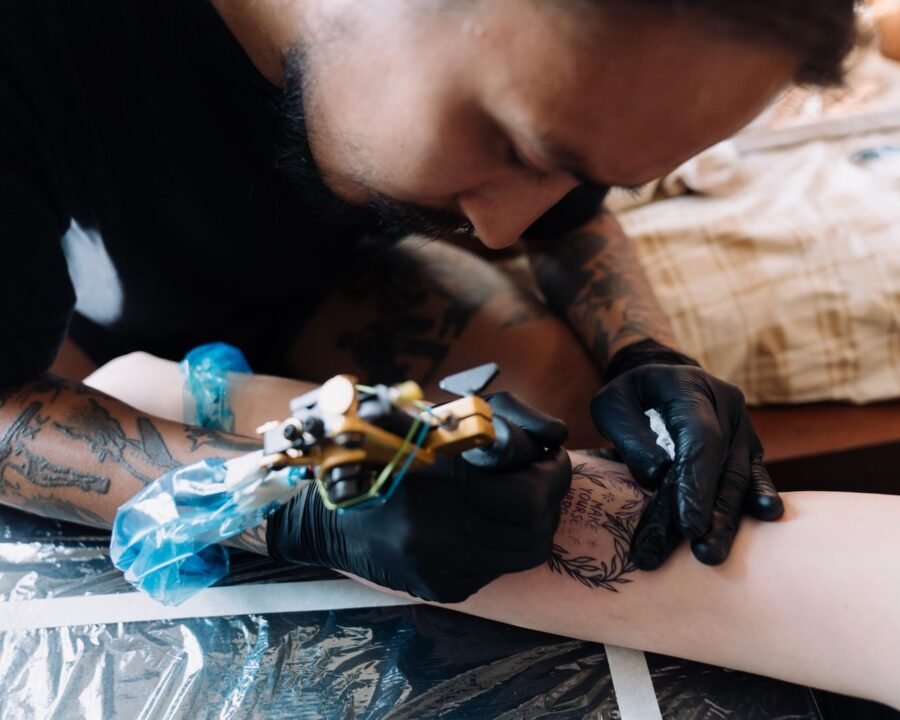
Placement should follow the design, not the pain ranking — a piece that belongs on your ribs will disappoint you on your forearm. What you can control is strategy. Book shorter sessions and split large pieces across sittings. Eat properly and sleep well the night before, because fatigue lowers pain tolerance. Ask your artist about the order of work, so the hardest section comes early while you are fresh.
Some people also consider numbing products for high-pain placements. They help in some situations and are refused by some artists — our guide to tattoo numbing cream covers what they can and cannot do, honestly.
Pain Now, Healing Later
High-pain placements charge twice: most of them are also awkward healers. Rib and sternum pieces rub against clothing and complicate sleep — see our guide to sleeping with a rib tattoo. Hands and feet face constant use and friction. Ditches bend all day. Factor the first weeks of healing into the decision, not just the hours in the chair.
What Tattoo Pain Actually Feels Like
People bracing for a first session usually imagine one sensation, but tattoo pain comes in several distinct varieties, and which one dominates depends heavily on where the needle is working. Knowing the difference makes a hard placement far more manageable, because the sensations that alarm people most are often the least concerning.
| Sensation | What it feels like | Where it shows up most |
|---|---|---|
| Scratching | A persistent cat-scratch drag, the most common baseline sensation | Almost everywhere; dominant on fleshy areas |
| Burning | A hot, sustained ache after the same area is worked repeatedly | Anywhere the artist passes over ground already covered |
| Vibrating | A buzzing that travels into the bone rather than staying at the surface | Ribs, sternum, spine, ankle, skull, hands |
| Sharp stinging | A precise, electric sting, often on outlines and fine detail | Thin skin: ditches, inner bicep, throat, armpit |
| Dull pressure | A heavy, bearable throb, usually reported as the easiest | Thick muscle: outer arm, thigh, calf |
The vibrating sensation is what separates the top of the ranking from everything below it. On a thigh the needle’s energy is absorbed by tissue; over the sternum or a knuckle it transmits into bone, which is why people describe those sessions as loud as much as painful.
What Changes Your Pain Beyond Placement
Placement sets the ceiling, but several factors move where you land under it — and most of them are within your control the week of the appointment.
- Sleep. A short night measurably lowers pain tolerance. This is the single easiest variable to fix and the one most often ignored.
- Food and blood sugar. Sitting through a long session on an empty stomach invites lightheadedness and makes everything feel sharper. Eat a real meal beforehand and bring something sugary for hour three.
- Alcohol. Beyond thinning the blood, a hangover flattens pain tolerance. Our guide to alcohol before a tattoo covers why most artists refuse to work on anyone who has been drinking.
- Session length. Hour four on a forgiving placement can be worse than hour one on a brutal one. Skin becomes progressively more irritated as it is worked.
- Caffeine and stress. Both raise your baseline arousal, and a nervous system already running hot registers pain more intensely.
- Where you are in your cycle. Many people who menstruate report noticeably higher sensitivity in the days before a period, and plan bookings around it.
Artist technique matters too, though it is not something you control directly beyond who you choose. Needle depth, machine setup, and hand speed vary between artists, and two people can produce genuinely different experiences on the same body part.
Most Painful vs Least Painful: The Two Ends Compared
Seen side by side, the pattern behind both lists is the same three factors running in opposite directions.
| Most painful areas | Least painful areas | |
|---|---|---|
| Tissue between needle and bone | Almost none | Thick muscle and fat |
| Nerve density | High | Low |
| Can you brace or relax it? | No — breathing, joints, or reflex movement | Yes — the limb can rest supported |
| Typical examples | Ribs, sternum, armpit, hands, spine | Outer upper arm, shoulder, outer thigh, calf |
| Usual advice for a first tattoo | Avoid unless the design demands it | Recommended starting point |
If you are choosing between the two ends rather than committed to a design, the least painful tattoo spots post covers the right-hand column in the same detail this one gives the left.
FAQ
Are ribs really the most painful spot for a tattoo?
They are consistently ranked at the top, alongside the sternum and armpit. The ribcage flexes with every breath, the skin over it is thin, and there is almost no muscle padding, so the needle works close to bone for the whole session. Individual tolerance still varies widely.
Do the most painful tattoo spots also fade faster?
Not automatically. Pain comes from bone proximity and nerve density, while fading is driven by friction and sun exposure. Hands and fingers score badly on both counts, but ribs and the sternum are usually covered and can hold ink well once healed.
Can you sit a full session on a high-pain area?
Most people can manage shorter sittings. Artists commonly split rib, sternum, and spine pieces into multiple sessions rather than pushing through one long one, because tensing against pain for hours also makes the skin harder to work on.
Do the most painful tattoo spots hurt for everyone?
The ranking holds up as a pattern, but intensity differs from person to person. Sleep, stress, hydration, and where you are in relation to the placement’s nerves all shift the experience, which is why two people describe the same rib tattoo very differently.
Looking for the opposite end of the scale? The forearm sits in the low–moderate and moderate bands, several steps below everything on this page.
The Bottom Line
Ribs, sternum, armpit, hands, and spine top every credible ranking of the most painful tattoo spots, and the reason is anatomy rather than toughness: thin skin, close bone, dense nerves, and nowhere to brace. If pain is a dealbreaker, the least painful tattoo spots are the better starting point. If the design belongs somewhere hard, go in with shorter sessions, a rested body, and an artist who knows you plan to take breaks.
This article provides general educational information about placement, pain, and healing. It does not replace personalized advice from your tattoo artist or a qualified healthcare professional.