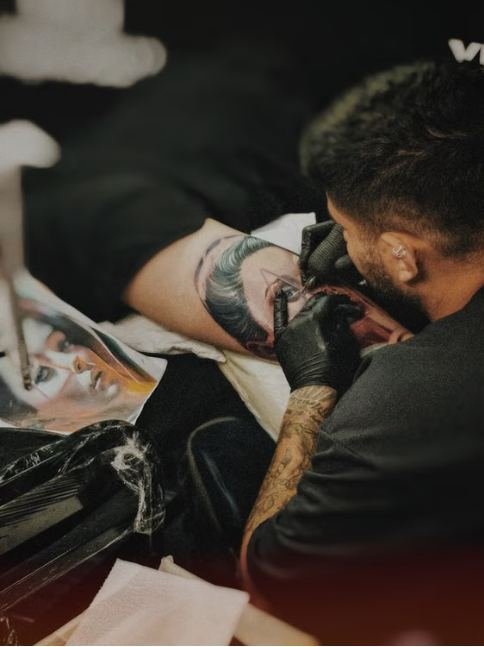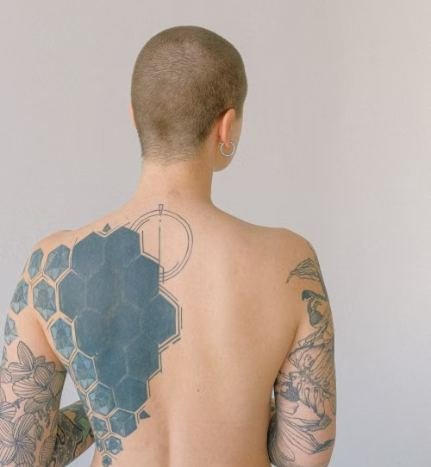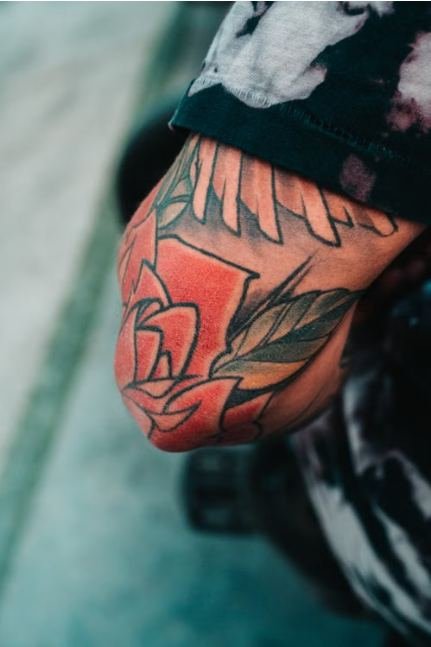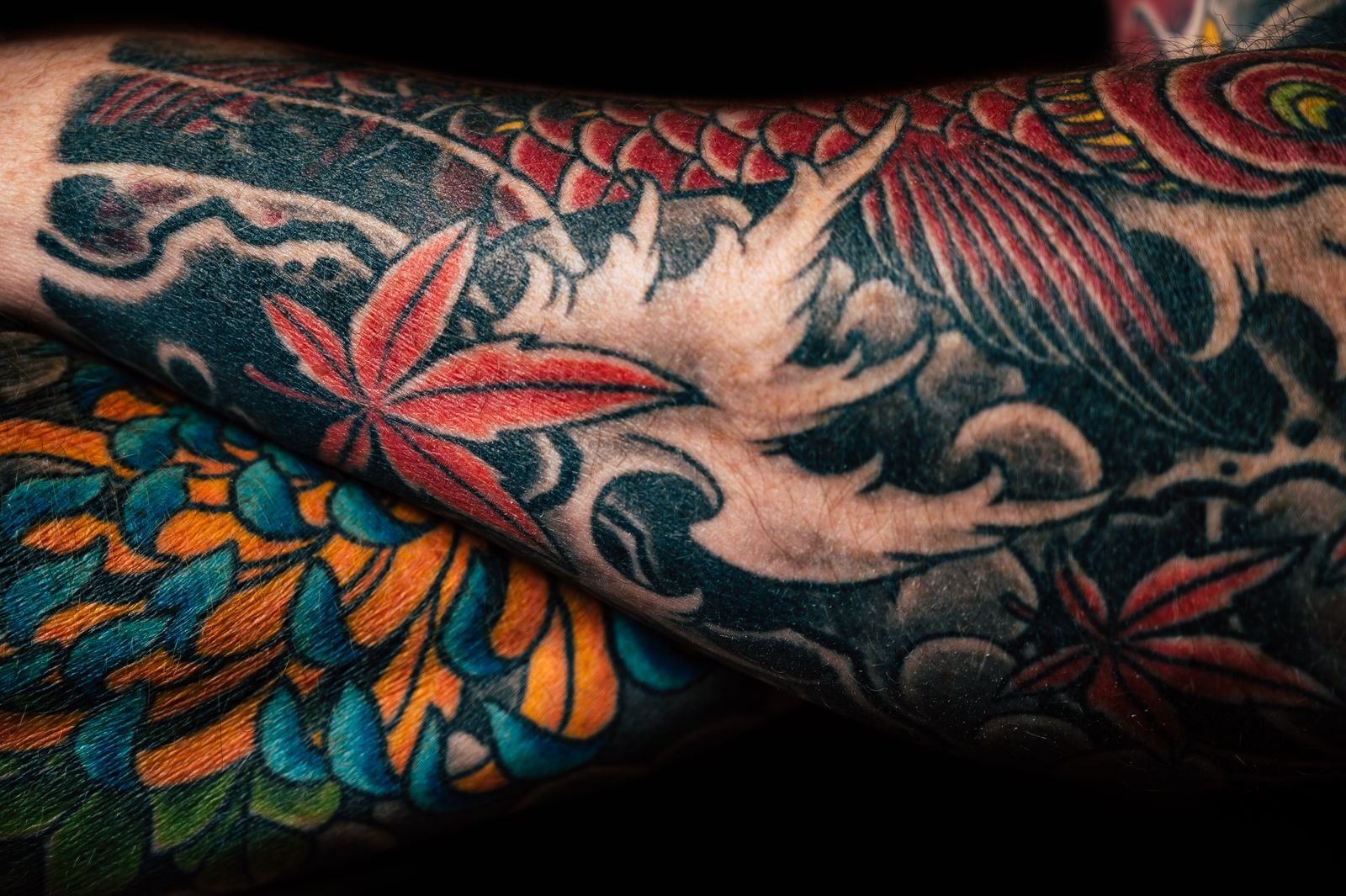
A neo traditional tattoo takes the backbone of American Traditional — bold outlines, readable composition — and expands everything around it: a wider color palette, varied line weights, dimensional shading, and subjects rendered with far more detail and elegance. This guide covers what defines the style, how it differs from the tradition it grew out of, and how it holds up on skin over the years.
What Defines the Neo-Traditional Tattoo Style
Four traits make the style recognizable at a glance. First, line weight varies: where American Traditional uses one bold outline throughout, neo-traditional artists switch between thick structural lines and finer interior lines within the same piece. Second, the palette is expanded and moodier — jewel tones, muted autumn colors, and gradients that traditional work deliberately avoids. Third, shading builds dimension, giving subjects volume rather than the flat, poster-like fill of traditional work. Fourth, ornamental framing: gems, filigree, lace, beads, and decorative arcs that turn a subject into a composed piece.
The result sits between two worlds: more illustrative and detailed than traditional, but still built on the bold skeleton that makes tattoos survive decades on skin.
Neo-Traditional vs American Traditional
| American Traditional | Neo-Traditional | |
|---|---|---|
| Outlines | Single bold weight throughout | Varied — bold structure, finer interior detail |
| Color palette | Small and fixed: red, yellow, green, black | Expanded: jewel tones, muted shades, gradients |
| Shading | Minimal, flat fills | Dimensional, painterly transitions |
| Subjects | Flash canon: anchors, eagles, roses, daggers | Broader: animals, portraits, flora, ornament |
| Feel | Direct, iconic, deliberately simple | Elegant, illustrative, decorative |
| Detail level | Low by design | High, within limits the outlines protect |
Neither is the upgrade of the other — they are different answers to the same question of how to make an image last on skin. Our American Traditional guide makes the case for the original approach.
Where the Style Came From
Neo-traditional grew out of American Traditional rather than replacing it. As tattoo machines, pigments, and needle groupings improved through the late twentieth century, artists trained in the traditional canon began pushing at its constraints — adding colors the old palette never included, varying line weight, and borrowing composition from Art Nouveau and illustration. The style kept the structural discipline of traditional work because that discipline is what makes tattoos age well, and discarded the deliberate simplicity that was partly a product of older equipment.
Popular Subjects and Motifs
- Animal portraits — foxes, owls, cats, and big cats with jewel-toned detail are the style’s signature subject.
- Lady heads — the classic traditional motif, rendered with naturalistic features and ornamental framing.
- Flora — peonies, roses, and chrysanthemums with layered petals and moody color.
- Gems, keys, lanterns, and daggers — decorative objects that suit the style’s love of ornament.
- Frames and filigree — lace, beads, and arcs that compose the piece rather than leaving a floating subject.
How a Neo Traditional Tattoo Ages
The style ages in two layers. The bold structural outlines — the part inherited from American Traditional — hold their shape for decades, exactly as they do in traditional work. The interior is where time shows: fine decorative lines soften, and subtle color transitions gradually flatten as ink spreads microscopically under the skin. A well-designed neo-traditional piece plans for this, keeping the silhouette readable even as interior detail mellows.
Placement and sun exposure move the timeline more than the style does. Covered, low-friction placements hold the palette dramatically longer — the same longevity logic covered in our guide to placements that age well, and it applies at every scale.
Is Neo-Traditional Right for You?
Choose it if you want color and detail with structure underneath — a piece that reads as art rather than an icon, but still commits to bold lines. Skip it if you want the stripped-down permanence of traditional, the airy minimalism of fine line, or pure black graphic work in the blackwork tradition. If you are still mapping the territory, our guide to fifteen popular styles compares them side by side.
Neo-Traditional vs New School vs Illustrative
Neo-traditional gets confused with two neighbouring styles that share its willingness to break from the traditional canon. The differences are easiest to see side by side.
| Neo-Traditional | New School | Illustrative | |
|---|---|---|---|
| Proportions | Naturalistic | Exaggerated, cartoon-like | Varies; follows the drawing |
| Line work | Bold structure, varied interior weight | Heavy, uniform, graphic | Often fine and sketch-like |
| Palette | Jewel tones, muted, moody | Loud, high-contrast, saturated | Frequently limited or black and grey |
| Ornament | Central to the style | Rare | Occasional |
| Ages like | Very well — bold outlines hold | Well — heavy lines hold | Variable — fine lines soften sooner |
| Feels | Elegant, decorative | Playful, irreverent | Personal, drawn rather than designed |
The practical takeaway: if you want detail and colour but also want the piece to still read clearly in twenty years, neo-traditional is the safest of the three, because the bold structural outline it inherited from American Traditional does the long-term work.
Choosing a Neo-Traditional Artist
This style asks two different skills of one person: the confidence to lay bold, clean structural lines, and the colour theory to build dimensional shading inside them. Plenty of excellent artists have one and not the other, which is why the style rewards careful portfolio reading more than most.
- Look for healed work, not just fresh photos. Fresh neo-traditional always looks sharp. Healed photos at one year or more show whether the colour transitions held or muddied.
- Check the outlines specifically. In healed work the structural lines should still be crisp and even, not spread or wobbling.
- Look at how they handle ornament. Filigree, gems, and lace are where the style either sings or turns cluttered.
- Check colour range across pieces. An artist who uses the same three-colour combination on every piece may be working within a comfort zone rather than a palette.
- Ask what they would change about your idea. Neo-traditional pieces are composed, not just drawn, and a good artist will have opinions about framing and flow.
Size and Placement: Give the Style Room
Neo-traditional is a poor fit for very small work. The style depends on interior detail sitting inside bold outlines, and below a certain size there is simply no space between the lines for that detail to exist — you end up with the outline and nothing else, which is traditional work with extra steps.
Most neo-traditional pieces are palm-sized at minimum, and the style comes into its own on the outer arm, thigh, chest, back, and full sleeves where a composition can breathe. Those placements also happen to be low-friction and easy to keep out of the sun, which suits a style that leans on colour. Our placement guide weighs the options, and the pain ranking is worth checking if you are considering a large piece somewhere difficult.
Caring for Colour-Heavy Work
Dense colour packing is harder on skin than line work. Expect a neo-traditional piece to feel more tender through the first days and to plateau slightly longer than a simple outline, simply because more of the skin surface has been worked. The healing stages themselves follow the usual pattern — our week-by-week healing guide covers what is normal.
Long-term, sun is the enemy of the palette rather than the outlines. The structural lines will outlast you; the jewel tones between them will not, unless they are protected. Consistent sunscreen once healed is the single biggest factor in whether a neo-traditional piece looks rich or washed out a decade on.
FAQ
Is a neo traditional tattoo more painful than other styles?
The style itself does not change how the needle feels, but neo-traditional pieces tend to involve dense color packing and longer sessions than a simple line design, which adds up. Placement matters far more than style — see our tattoo pain chart for how areas compare.
Do neo-traditional tattoos fade faster than American Traditional?
The bold structural outlines age just as well. The difference is in the interior: neo-traditional relies on more color transitions and finer decorative detail, and those elements soften sooner than flat color fields. Sun protection makes the biggest difference either way.
What is the difference between neo-traditional and new school?
They grew from the same roots but read very differently. New school leans cartoonish — exaggerated proportions, graffiti influence, extreme color. Neo-traditional keeps the elegance: naturalistic proportions, ornamental framing, and a moodier, more curated palette.
Can any tattoo artist do a neo traditional tattoo well?
It is a genuine specialty. The style demands confident bold-line work and sophisticated color theory at the same time, which is an unusual combination. Look for a portfolio with healed neo-traditional work specifically, not just fresh photos.
The Bottom Line
The neo traditional tattoo style keeps what makes traditional work survive — bold structure and readable composition — and layers on expanded color, varied line weight, and ornament. It rewards careful artist selection more than most styles, because it demands two skill sets at once. Find someone whose healed work still looks composed years on, and the style delivers pieces that read as illustration without sacrificing longevity.
This article provides general educational information about tattoo styles and healing. It does not replace personalized advice from your tattoo artist or a qualified healthcare professional.