The fine line tattoo style uses thin, delicate strokes and a quiet, illustrative look rather than bold outlines or heavy shading. It has become one of the most requested tattoo aesthetics of the last decade, and it carries its own tradeoffs — particularly around how well fine detail survives over time.
If you scroll through tattoo inspiration on Instagram or Pinterest today, chances are most of what you see falls under this style. It appeals to first-timers who want something subtle and to seasoned collectors filling small spaces with detail rather than bold colour or heavy shading. The quirks and skill requirements are worth understanding before you book an appointment.
This guide breaks down what actually defines the technique, where it came from, what kinds of designs suit it best, how much it tends to hurt, and — importantly — how fine lines age on skin so you can go in with realistic expectations rather than just a Pinterest board.
What Defines the Fine Line Tattoo Style
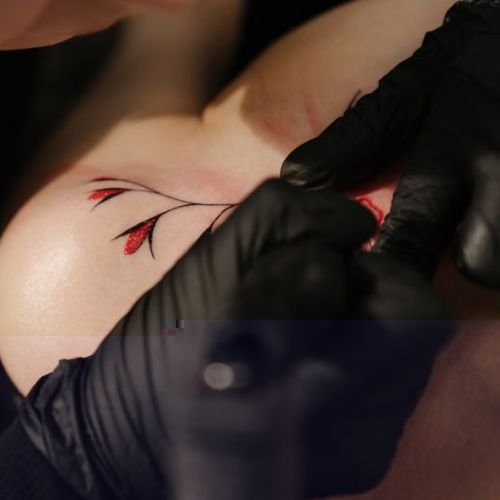
At its core, fine line tattooing is a technique, not a single subject matter. It refers to the use of small needle configurations — most commonly a single needle (often labeled 1RL) or very tight round liner groupings such as 3RL — instead of the thicker needle groupings used for traditional bold linework. The result is a thread-thin, uniform line that reads more like pen-and-ink illustration or a pencil sketch than a classic tattoo outline.
Because the lines are so thin, fine line pieces typically rely on minimal or no heavy black shading. Depth and dimension usually come from stippling, light single-needle shading, or delicate whip-shading rather than solid black fill. The overall aesthetic tends to be understated, airy, and detailed at a small scale — which is exactly why it pairs so well with minimalist and illustrative concepts. Some artists use the terms “single needle” and “fine line” interchangeably, though fine line is really the broader visual outcome, while single needle describes the specific equipment that helps achieve it.
Because there’s very little margin for error with such thin lines, steady-hand control and consistent needle depth matter enormously in this style — more so than in bolder tattooing, where thicker lines can mask small inconsistencies.
A Brief History of Fine Line Tattooing
Fine line tattooing isn’t entirely new, but the equipment needed to execute it reliably is a relatively recent development. Early tattoo machines were built for durability and speed rather than precision, and single-needle configurations weren’t widely used or trusted for large-scale work. Chicano fine line black-and-grey tattooing, which emerged in Los Angeles in the mid-20th century, is often credited as one of the earliest widespread applications of fine, detailed linework combined with soft grey-wash shading — a tradition that still influences fine line artists today.
From the 1970s onward, improvements in machine engineering, thinner and more consistent needles, and better ink formulations made ultra-precise line work far more achievable and repeatable. Then came the real turning point: social media. Through the 2010s and into the 2020s, platforms like Instagram, Pinterest, and TikTok gave fine line artists a visual showcase that suited their delicate, photogenic designs perfectly. Celebrity adoption of small, minimalist tattoos helped normalize the look for a much broader, often younger, audience, and by the mid-2020s fine line had become one of the dominant aesthetics in contemporary tattooing — spanning everything from minimalist symbols to detailed micro-realism.
Popular Subjects and Motifs
Because the fine line tattoo style favors detail over boldness, certain subjects translate especially well:
- Botanical designs — single-stem flowers, delicate leaves, and detailed florals
- Script and lettering — quotes, names, and dates in a delicate handwritten or serif style
- Minimalist line art — single continuous-line portraits, faces, or abstract shapes
- Small animals — birds, cats, insects, and other creatures rendered with light detail
- Fine line florals combined with dotwork or subtle shading for gentle dimension
- Celestial and symbolic imagery — stars, moons, and geometric shapes kept intentionally simple
Much of this style’s popularity comes down to subtlety. Fine line tattoos read as understated and can look almost like a drawing on the skin rather than a “loud” tattoo, which appeals to people who want body art that feels personal without dominating a room. It also tends to feel like a lower-commitment entry point for first-timers, since small, delicate pieces are quick to complete and easy to place discreetly. If you’re weighing where a small, subtle piece would work best on your body, our guide to small tattoo placement ideas is a useful next read.
Fine line work is often small enough to land squarely on a studio’s shop minimum rather than an hourly rate. Across the 41 studios in our published tattoo pricing dataset, the median minimum is $100 — which is what a small, simple fine line piece will usually cost you regardless of how few minutes it takes.
Pain and Session Length
Pain tolerance is individual, but fine line tattoos are often described as comparable to, or in some cases slightly less intense than, traditional linework, since the needle groupings are smaller and the artist typically isn’t packing in heavy shading or saturation. That said, single-needle work usually requires more passes over the same area to keep the line crisp and solid, which can mean more repeated contact on sensitive skin — so “less painful” isn’t a guarantee, and placement still matters far more than style. Bony, thin-skinned areas like the ribs, spine, ankles, and inner arm tend to be more uncomfortable regardless of technique.
Session length depends heavily on size and detail level. A small single-line floral or minimalist symbol might take well under an hour, while a detailed forearm or larger illustrative piece with lots of fine detail can take several hours, sometimes across multiple sessions, since precise single-needle work is inherently slower than bold linework or larger shaded pieces. If this is your first tattoo, it’s worth reading through general preparation advice — our first tattoo tips guide covers what to expect before you sit down in the chair.
Healing and Fading: The Honest Truth About Longevity
This is the part of the fine line conversation that doesn’t get talked about enough: fine line tattoos are more prone to blurring and fading over time than bold, traditional linework. Thin lines carry less ink and pigment than a thick line does, and as skin naturally ages, stretches, and regenerates cells over the years, that thin deposit of ink has less room for error. Sun exposure, weight fluctuation, skin elasticity changes, and simply the passage of time can all cause fine lines to soften, spread slightly under the skin, or lose crispness faster than a bold outline would.
This doesn’t mean fine line tattoos are a bad choice — it simply means they come with a different maintenance expectation. Some things that genuinely help longevity:
- Diligent aftercare during the initial healing window, since poor healing can affect how evenly the ink settles
- Consistent sun protection long-term, since UV exposure is one of the fastest ways any tattoo — especially a fine one — fades
- Keeping skin moisturized to support its overall health and elasticity
- Planning for the possibility of a touch-up several years down the line, particularly on areas exposed to friction or sun
The American Academy of Dermatology notes that UV light fades tattoo ink over time and recommends broad-spectrum sunscreen of SPF 30 or higher on tattooed skin, along with avoiding tanning beds, since both can accelerate fading and, in some cases, trigger skin reactions in tattooed areas. For a full walkthrough of the healing process itself, see our tattoo aftercare guide, which applies to fine line pieces as much as any other style — arguably more, since there’s less ink margin to lose.
Fine Line Tattoos: Pros and Cons
Fine line work trades durability for detail. That is the whole trade-off in one sentence, and whether it is worth making depends far more on placement and artist choice than on the style itself.
The advantages
- Detail at small scale. Fine line achieves legible, delicate imagery at sizes where heavier work would close up.
- Less trauma to the skin. Lighter needle work over a smaller area usually means a shorter session and a more comfortable heal.
- Discreet by nature. It suits placements where a bold piece would dominate, and sits comfortably alongside other small tattoos.
- Aesthetically flexible. It reads as modern and understated rather than committing you to a specific traditional visual language.
The drawbacks
- It blurs sooner. Thin lines spread as skin ages, and a line that started hair-thin has very little margin before detail is lost.
- It is placement-sensitive. High-friction, high-sun areas such as hands, feet, and inner wrists degrade fine line work noticeably faster than a covered, fleshy placement.
- It needs a specialist. Fine line is a genuine sub-discipline, and an artist who excels at bold traditional work is not automatically good at it.
- Touch-ups are more likely. Plan for the possibility rather than treating it as a failure of the original work.
If longevity is your priority, placement does more work than anything else. Our guide to small tattoo placements that age well covers which areas hold delicate work longest, and the tattoo pain chart shows how those same areas compare for pain.
What are the pros and cons of fine line tattoos?
The main advantage is detail at small scale with a comparatively easy heal. The main drawback is durability: thin lines blur sooner than bold ones, particularly on hands, feet, and other high-friction areas, and touch-ups are more likely over time.
How long do fine line tattoos last before needing a touch-up?
There is no fixed interval, because it depends heavily on placement and sun exposure. A fine line piece on a covered, low-friction area can hold for many years, while the same design on a hand or foot may soften much sooner. Sun protection is the biggest factor you control.
How to Choose the Right Artist for This Style
Not every skilled tattoo artist is equally skilled at fine line work, and this is one style where portfolio research really pays off. A few things worth checking before you book:
- Look specifically for healed photos, not just fresh ink — fine lines that still look crisp months or years later are the real proof of skill
- Check for consistent line weight throughout their portfolio; wobbly or uneven thin lines are a red flag for shaky technique
- Confirm the studio is licensed and follows proper sterilization and single-use needle protocols
- Ask whether they specialize in fine line or single-needle work specifically, since a steady, controlled hand is essential to this technique in a way it isn’t for bolder styles
- Discuss placement honestly — some areas (like fingers, feet, and inner lips) are notoriously hard for any ink, including fine lines, to hold up in the long run
Placement is worth thinking through carefully with your artist, since some spots hold detail and fine linework better than others over the years. Our tattoo placement guide is a helpful resource for weighing durability, visibility, and pain level together before committing to a spot.
Frequently Asked Questions
Is the fine line tattoo style more painful than traditional tattoos?
Not necessarily. Fine line tattoos use smaller needle groupings and generally less shading, which some people find slightly more tolerable than heavily saturated bold work. However, single-needle technique often requires more passes to build a clean line, so overall discomfort can end up similar. Placement on bony or sensitive areas will affect pain more than the style itself.
Do fine line tattoos really fade faster than bold tattoos?
Yes, generally. Thin lines hold less ink than thick ones, so as skin naturally changes over time, fine lines are more prone to softening, blurring, or losing sharpness compared to bold, thicker linework. Good aftercare, sun protection, and occasional touch-ups can slow this process but typically can’t stop it entirely.
How long does a fine line tattoo take to heal?
Surface healing generally follows a similar timeline to other tattoos — roughly two to three weeks for the top layers of skin to close and scab over, with full healing underneath taking a few months. Because the lines are delicate, picking at scabbing or over-exfoliating during healing can distort the linework more noticeably than it would on a bold tattoo.
Can any tattoo artist do fine line work well?
No — fine line tattooing demands a particularly steady hand and consistent needle depth, since there’s very little room to hide small errors the way thicker lines can. It’s worth specifically seeking out an artist with a strong, healed portfolio of fine line or single-needle work rather than assuming any generalist tattoo artist will execute it equally well.
Fine line tattoos aren’t going anywhere as a favorite aesthetic — their subtlety, versatility, and illustrative charm make them a natural fit for anything from a first small tattoo to an intricate sleeve of botanical detail. Just go in informed: choose an artist with genuine expertise in the technique, take healing seriously, and accept that thin lines may need a little maintenance over the years to stay as sharp as the day they were done.
This article provides general educational information about tattoo styles and healing. It does not replace personalized advice from your tattoo artist or a qualified healthcare professional.