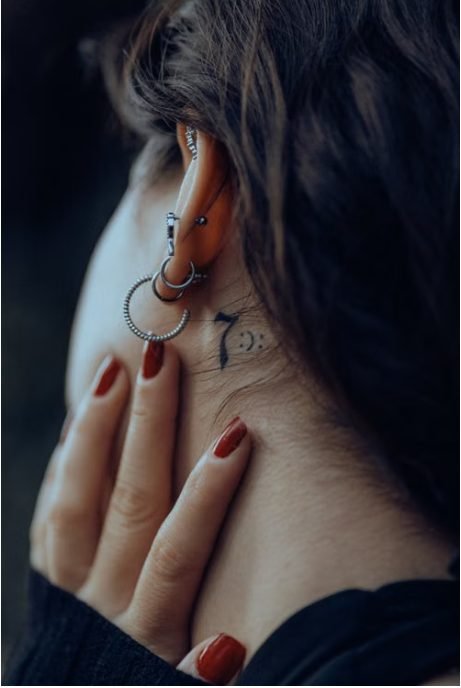
Behind the ear tattoo healing takes longer than the small size suggests, mainly because of how much brushes against that spot every day.
Behind-the-ear sits in the high band on our tattoo pain chart, because the skin there is thin and sits almost directly on bone and cartilage with very little cushioning fat in between. We do not give it a score out of ten — no published research supports per-placement pain numbers, so the chart uses bands instead. The good news is that the discomfort tends to be brief rather than grinding, since most behind-the-ear designs are small and the artist can usually finish the outline and shading in well under an hour. Healing typically runs 2 to 3 weeks for the surface to close over, with the fully settled look showing around the 4-week mark. What makes this placement trickier than the timeline suggests is not the pain during the sit, it is the sheer number of things that brush against a fresh tattoo behind the ear every single day. The neck sits in the same High band — see our neck tattoo pain guide if you are weighing the two placements against each other.
Why Behind the Ear Tattoo Healing Hurts the Way It Does
The area right behind your ear, over the mastoid bone, has almost no muscle or fat to absorb the vibration of the needle. You are feeling the machine work directly against bone, which reads as a buzzing, sharp sensation rather than the duller ache you might get on a fleshier spot like the outer arm or thigh. The skin itself is also some of the thinnest on the body outside the eyelids, so it is more reactive and more likely to feel every pass. On top of that, this region is nerve-dense, sitting close to branches that also serve the ear and jaw, which is part of why some people describe the feeling as sharp, ticklish, or oddly electric rather than a straightforward burn. If you have compared notes with a friend about placement pain before, our tattoo placement guide breaks down how bone proximity, skin thickness, and nerve density stack up across the body, and behind the ear checks most of those boxes for higher sensitivity.
None of this means the session will be unbearable. Small placements mean less total needle time, and most people say the worst of it passes once the linework is done and the shading starts.
Daily Friction Checklist
This is the part most guides skip, and it is the actual reason behind-the-ear tattoos can heal patchy or take longer than expected. The tattoo itself is small, but the list of everyday objects that touch that exact spot is long. Go through this checklist before your appointment so you are not improvising fixes mid-heal.
- Glasses and sunglasses: The temple arm of your glasses rests directly on or near a behind-the-ear tattoo, and constant pressure in the same spot can rub off scabbing and pull out ink before it sets. If you cannot go without glasses, try pushing the arm slightly higher or lower than usual, use contacts for the first week if that is an option, or ask your optician about temporarily adjusting the fit.
- Earbuds and headphones: Wired earbuds, over-ear headphone bands, and even the hook style of some wireless buds all make contact with or near this area. Give yourself a break from headphones for the first several days, or switch to speaker calls and speakerphone audio until the surface has closed over.
- Hair, ponytails, and hair ties: Loose strands resting against a healing tattoo trap sweat, oil, and product, and pulling hair back into a ponytail or bun drags the hair tie’s edge right across the spot. Keep hair clipped away from the area with a soft clip, avoid tight styles for the first week, and be deliberate about brushing so the bristles do not catch the scabbing.
- Pillows and sleep: You cannot control how you move while asleep, but you can control what you sleep on. A fresh tattoo grinding into a pillowcase for eight hours is one of the more common ways people accidentally scrub off scabs. Our guide on how to sleep with a new tattoo covers positioning and pillowcase choices that apply directly here, and a clean, breathable pillowcase changed more often than usual is worth the extra laundry for the first week or two.
- Masks and mask straps: If you wear a mask regularly for work or health reasons, the ear loops sit close to or directly on this placement. Look into extenders that clip behind the head instead of looping over the ears, or switch to a tie-back style mask temporarily so nothing loops over the healing skin.
- Phone calls: Pressing a phone to your ear for a call presses a hard, unwashed surface straight into a wound. Use speakerphone, a headset that does not touch the tattooed area, or hold the phone slightly forward instead of flush against your head while it is healing.
None of these need to be permanent changes, just adjustments for the first one to two weeks while the surface is most vulnerable. After that, the risk of accidental disruption drops off fast.
For more on how skin’s nerve endings and thickness vary by layer, Cleveland Clinic’s overview of skin anatomy breaks down what this comes down to.
Healing Timeline for a Small, High-Movement Spot
Behind-the-ear tattoos are small, which normally means a fast heal, but the constant contact from hair, glasses, and pillows can stretch out the process compared to a similarly sized tattoo somewhere with less daily interference.
| Stage | What to Expect |
|---|---|
| Days 1-3 | Redness, mild swelling, and oozing of plasma and excess ink. Gently blot rather than wipe, especially given how close hair sits to the area. |
| Days 4-7 | Scabbing and light peeling set in. This is the highest-risk window for the friction issues above, since a snagged scab from a hair tie or earbud can pull out ink and leave a patchy spot. Itching often ramps up here too. |
| Week 2-3 | The surface closes over and flaking tapers off. Skin can look dry or slightly dull, which is normal, but keep moisturizing light. |
| Week 4+ | Color and linework settle into their final look. Minor touch-ups for unevenly healed spots, more common here than on flatter placements, are usually done after this point. |
If you are dealing with intense itching during the scabbing phase, our piece on why your tattoo is itchy walks through what is normal versus what is worth watching. And because over-applying lotion in a small, hair-adjacent area can trap moisture against the skin and cause its own problems, it is worth a quick check of the signs of over-moisturizing a tattoo if things look shinier or more irritated than expected rather than less.
For general aftercare basics that apply to any placement, including cleaning frequency and what products to use, our full tattoo aftercare guide is worth reading alongside this one, since behind-the-ear healing follows the same core rules with the friction considerations layered on top.
Tips for the Appointment
A little planning before you sit down makes the pain and the healing easier to manage.
- Ask your artist how they handle placement relative to your hairline and glasses, especially if you wear glasses daily; a few millimeters of adjustment can keep the design clear of the temple arm.
- Ask how they recommend keeping hair back during healing, since some artists have specific product or clip recommendations they have seen work for past clients in this spot.
- Mention if you wear a mask regularly for work so your artist can tell you what kind of irritation to expect and how to catch it early.
- Ask about their preferred aftercare routine specifically for small, hair-adjacent placements, since some studios recommend a lighter moisturizing schedule here than they would for a large back piece.
- If pain is a real concern for you, ask whether numbing options are available and how the studio times sessions around them.
FAQ
Does a behind the ear tattoo hurt more than other small placements?
Usually yes, compared to fleshier small placements like the wrist or forearm. The thin skin, bone proximity, and nerve density behind the ear place it in the high band on our tattoo pain chart. It rarely feels unbearable, though, since the tattoo itself is small and the sit is typically short. We cover how topical numbing products actually behave in a separate guide.
How long does a behind the ear tattoo take to fully heal?
Surface healing generally takes 2 to 3 weeks, with the tattoo reaching its fully settled color and texture around the 4-week mark. That timeline can stretch if the area keeps getting disrupted by glasses, hair, or headphones, so managing daily friction matters as much as the aftercare routine itself.
Can I wear glasses or earbuds while a behind the ear tattoo heals?
You can, but both sit close enough to the placement to cause problems in the first one to two weeks. If you wear glasses daily, try adjusting the fit slightly or leaning on contacts for a few days. For earbuds and headphones, giving the area a break or switching to speaker audio until the scabbing has cleared reduces the risk of pulling out ink.
Why does my behind the ear tattoo look patchy while healing?
Patchy healing behind the ear is common because the spot gets so much daily contact from hair, hair ties, glasses, and pillows during the scabbing phase. If a scab gets snagged or rubbed off early, the skin underneath can heal unevenly and take the ink with it in small spots. Keeping the area clear of friction during days 4 through 7 specifically is the biggest factor in avoiding this.
This article provides general educational information about placement, pain, and healing. It does not replace personalized advice from your tattoo artist or a qualified healthcare professional.