Does tattoo numbing cream actually work? Broadly, yes — lidocaine-based creams genuinely reduce surface pain for most people — but with three caveats that matter more than the yes: the effect is shallow and temporary, it can wear off mid-session, and a meaningful number of artists refuse to work over it. This guide covers how the creams behave in practice, why artists disagree about them, and the safety limits worth knowing before you buy anything.
How Tattoo Numbing Cream Works
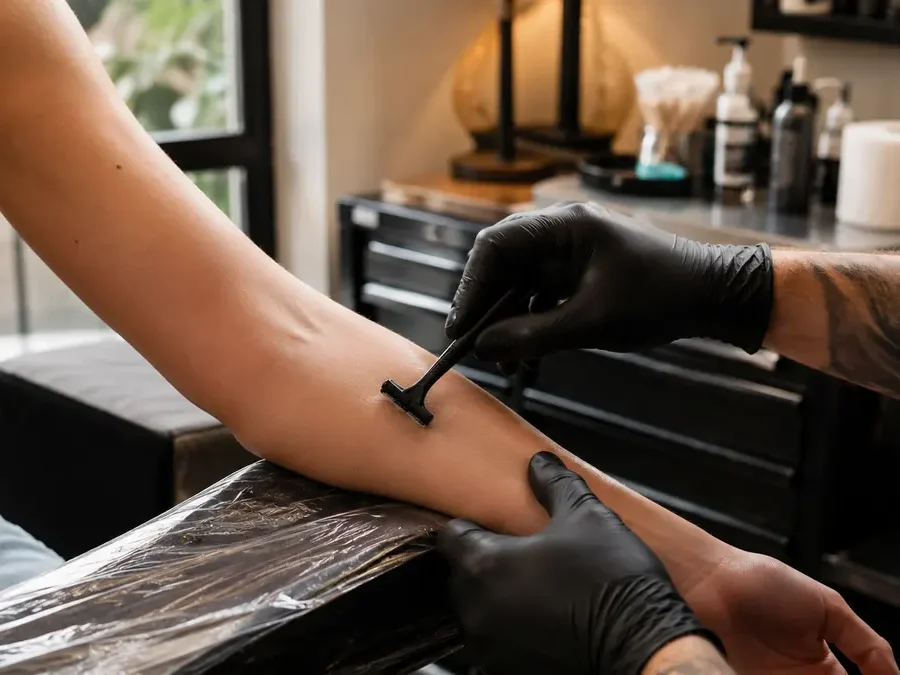
Nearly every product on the market is built on lidocaine, a local anesthetic that temporarily blocks the nerve signals that carry pain from the skin. Applied in a thick layer and usually covered with plastic wrap, the drug absorbs into the upper layers of skin over thirty to ninety minutes. Over-the-counter products in the US typically contain up to around 4 to 5 percent lidocaine; stronger concentrations are prescription territory.
Two properties follow directly from how the drug works. The numbing is shallow — it dulls the surface layers where much of tattoo pain lives, but tattoo needles work at the boundary of deeper layers the cream reaches less well. And it is temporary: roughly one to two hours of meaningful effect after onset.
Does It Actually Work During a Session?
For short sessions on intact skin, most people report a genuine difference — the sharp scratch becomes pressure and vibration. That makes creams most useful for exactly the situations people buy them for: small pieces in high-pain areas, and people whose anxiety about pain is the barrier to getting tattooed at all.
The picture changes over longer sessions. The cream wears off on the artist’s schedule, not yours, and sensation returning to skin that has already been worked for two hours is a harder arrival than starting without the cream at all. Coverage is often patchy in practice — a spot missed during application becomes very noticeable an hour in. And on the highest-pain placements, the deep, bone-adjacent component of the pain is precisely the part a surface anesthetic reaches least.
Why Many Artists Say No
Ask before you apply anything — this is the single most important line in this article. Studios set their own policies, and plenty of experienced artists decline to work over numbing products for reasons that are practical rather than macho:
- Some products change skin texture — firmer, spongier, or slightly swollen — which affects how skin stretches and takes ink.
- Wear-off timing is unpredictable, and a client who suddenly regains full sensation two hours in tends to move.
- The artist carries responsibility for the result, and unfamiliar chemistry on the skin adds a variable they did not choose.
- Some prefer their own mid-session products, which are formulated for skin that is already broken and are managed by them, on their timing.
If numbing matters to you, raise it when booking — not in the chair. Some studios have a product they know and allow; some will apply it themselves; some will say no, and that answer is part of choosing them.
How to Use It Safely If Your Artist Agrees
- Patch-test on a small area a day or two before the appointment, exactly as you would with a new skincare product.
- Follow the label — amount, coverage area, and timing. More cream, thicker layers, and longer wrap times increase absorption of the drug, not just the effect.
- Apply only to intact skin, never over cuts, rashes, or a previous tattoo that is still healing.
- Keep the covered area modest. Wrapping a large area in anesthetic cream for hours is how the absorption problems in the next section happen.
- Time it with your artist so the session starts inside the effective window rather than at the end of it.
Safety Limits Worth Knowing
Lidocaine absorbed through the skin ends up in the bloodstream, and the dose scales with concentration, surface area, wrap time, and broken skin. Regulators have repeatedly warned about high-concentration topical anesthetics sold for cosmetic procedures, because too much absorbed anesthetic can cause serious systemic effects. The practical version of that warning: use products at over-the-counter strengths, on modest areas, for the labeled time — and treat anything advertising double-digit percentages as a red flag rather than a bargain. The FDA’s tattoo safety guidance is worth reading before any appointment, and anyone with heart, liver, or skin conditions — or who takes medication — should ask a healthcare professional before using topical anesthetics at all.
What Is Actually in Numbing Products
Not every product marketed for tattoo pain works the same way, and the active ingredient determines both how long it takes to work and how long it lasts. Reading the label matters more than reading the marketing.
| Active ingredient | How it works | Practical notes |
|---|---|---|
| Lidocaine | Blocks nerve signals in the upper skin layers | The most common active; usually up to around 4–5% in over-the-counter products |
| Benzocaine | Surface anaesthetic, shorter acting | Higher allergy rate than lidocaine; more common in gels than creams |
| Tetracaine | Longer-acting anaesthetic | More potent, absorbed more readily; usually seen in combination products |
| Epinephrine (added) | Constricts blood vessels | Extends the numbing window and reduces bleeding; typically in artist-applied products |
| Combination formulas | Two or more of the above together | Stronger effect but higher total absorption; the category regulators warn about most |
One thing the table cannot capture: products designed for artists to apply mid-session on already-broken skin are formulated differently from creams sold for pre-session use on intact skin. They are not interchangeable, which is part of why artists often prefer their own.
Before, During, or Not at All: The Three Approaches
There are really three strategies, and choosing between them is a conversation with your artist rather than a purchase decision.
- Pre-session cream, applied by you. Cheapest and most common. Works on intact skin, needs 30–90 minutes under cover, and wears off on its own schedule. Requires your artist’s agreement in advance.
- Artist-applied secondary products. Many studios keep anaesthetic sprays or gels formulated for broken skin and apply them once the outline is done. Timing and dosage stay under the artist’s control, which is why this is the approach many prefer.
- Nothing at all. Still the default for most sessions. Shorter bookings, good sleep, a real meal, and agreed breaks handle more than people expect, and there is no wear-off cliff to manage.
The middle option is the one most people do not know exists, and it is often the better answer for someone whose real worry is hour three rather than the first ten minutes.
Who Should Avoid Numbing Cream Entirely
Topical anaesthetics are drugs absorbed through the skin, and some situations call for skipping them regardless of what an artist permits. Talk to a healthcare professional first if any of the following apply to you:
- You take heart medication, or have a heart rhythm condition — lidocaine affects cardiac tissue when enough is absorbed.
- You have liver disease, which affects how the body clears the drug.
- You have a skin condition affecting the area, or any broken skin, rash, or sunburn where the cream would go.
- You are pregnant or breastfeeding.
- You have had a reaction to a local anaesthetic before, including at the dentist.
- The tattoo covers a large area — total absorbed dose scales with surface area, not just concentration.
None of these is a reason to avoid getting tattooed. They are reasons to manage pain a different way, and the alternatives below work for everyone.
Alternatives That Do Not Involve Cream
Placement is the biggest pain lever you control: the difference between a rib piece and an outer-arm piece dwarfs anything a cream does — compare the most painful spots with the least painful ones before assuming you need chemistry. Beyond placement: shorter sessions, genuine sleep, a real meal beforehand, and agreed break signals all measurably improve how a session goes — the same fundamentals in our guide to preparing for a tattoo. Mid-session, many artists carry their own anesthetic products designed for broken skin, applied at their discretion; if pain management matters to you, choosing an artist comfortable with those is more reliable than anything you buy yourself.
FAQ
Does numbing cream affect tattoo quality?
It can, which is one reason artists have opinions about it. Some products temporarily change skin texture — firmer or slightly swollen — which changes how the skin takes ink and stretches under the needle. Many artists work over numbing cream without issues; others find it interferes. This is exactly why the conversation happens before the appointment, not at it.
How long does tattoo numbing cream last?
Typically one to two hours of meaningful effect after it takes hold, with onset taking thirty to ninety minutes under a covered layer. Long sessions outlast it, and the wear-off mid-session — going from muted sensation to full sensation on already-worked skin — is a real downside people report.
Can I put numbing cream on a healing tattoo?
No. Numbing creams are for intact skin before the session. A fresh tattoo is an open wound, and applying anesthetic cream to broken skin increases how much of the drug your body absorbs and interferes with healing. If a healing tattoo hurts enough that you want to numb it, that is a question for a healthcare professional.
Why do some tattoo artists refuse numbing cream?
A mix of practical and professional reasons: texture changes that affect their work, unpredictable wear-off timing, clients who move more once the cream fades, and preferring to control the process themselves. Some artists instead use their own products mid-session. Their studio, their rules — always ask first.
What is the strongest numbing cream I can buy without a prescription?
In the US, over-the-counter products are typically limited to around 4 to 5 percent lidocaine. Products advertising much higher concentrations are the ones regulators have warned about, because absorbing too much anesthetic through the skin carries genuine risks. Stronger is not safer, and past a point it is not legal to sell over the counter.
The Bottom Line
Tattoo numbing cream works within honest limits: real surface relief for one to two hours on intact skin, less reach into deep bone-adjacent pain, and a wear-off that can land mid-session. It is a reasonable tool for short pieces in hard places and for pain anxiety — provided your artist agrees beforehand and the product stays within over-the-counter strengths, used exactly as labeled.
This article provides general educational information and does not replace advice from your tattoo artist or medical guidance from a qualified healthcare professional. Never apply numbing products to broken or healing skin.