Nobody tells you the tipping part. You research the artist for months, save up, sit through the session — and then stand at the counter doing mental arithmetic while everyone waits. Knowing how much to tip a tattoo artist ahead of time removes the only genuinely awkward moment in the whole process.
Short answer: 20% is the standard in the United States, 15% is acceptable, and 25%+ signals the work went well beyond what you expected. Below is the reasoning, plus the cases where the standard percentage does not fit.
How much to tip a tattoo artist, by percentage
- 15% — the floor for competent, professional work. Nothing went wrong, nothing was exceptional.
- 20% — the default. Use this if you have no particular reason to go higher or lower. Most artists expect roughly this.
- 25% or more — for work that exceeded the brief: a redesign done at short notice, a long session where they stayed late, or a piece that turned out better than what you asked for.
On a $200 session that is $30 / $40 / $50. On a $1,200 sleeve session it is $180 / $240 / $300 — which is where people start to hesitate, and where the flat-rate approach below becomes relevant.
Tipping on large or multi-session work
Percentage tipping scales badly once you are into serious money. A full sleeve across six sessions at 20% adds a four-figure sum to the project, and artists know this.
Two approaches are both considered normal:
- Tip per session at a reduced percentage — 10–15% each time. Predictable, and the artist gets paid along the way.
- Tip once at the end as a lump sum. Common for large projects. Discuss it early so nobody is guessing.
If you are planning something big, ask at the consultation how they prefer to be tipped. It is not a rude question, and the answer tells you how they run their business.
When you should not tip the standard amount
- The artist owns the shop. Shop owners keep the full price rather than splitting with the house, so the tipping expectation is genuinely lower. Many still appreciate it; nobody will think less of you for tipping 10% or skipping it.
- You are unhappy with the work. Do not tip out of embarrassment and then complain later. Say something at the shop, calmly, while it can still be discussed. A reduced tip that goes unexplained just reads as rudeness.
- You were quoted an all-inclusive rate. Some artists, particularly outside the US, build everything into a flat price and do not expect a tip on top. Ask when you book.
- You are outside the US. Tipping culture varies enormously. In much of Europe, rounding up or adding 5–10% is generous. In Japan it can cause genuine discomfort. Research locally rather than exporting American norms.
How to actually hand it over
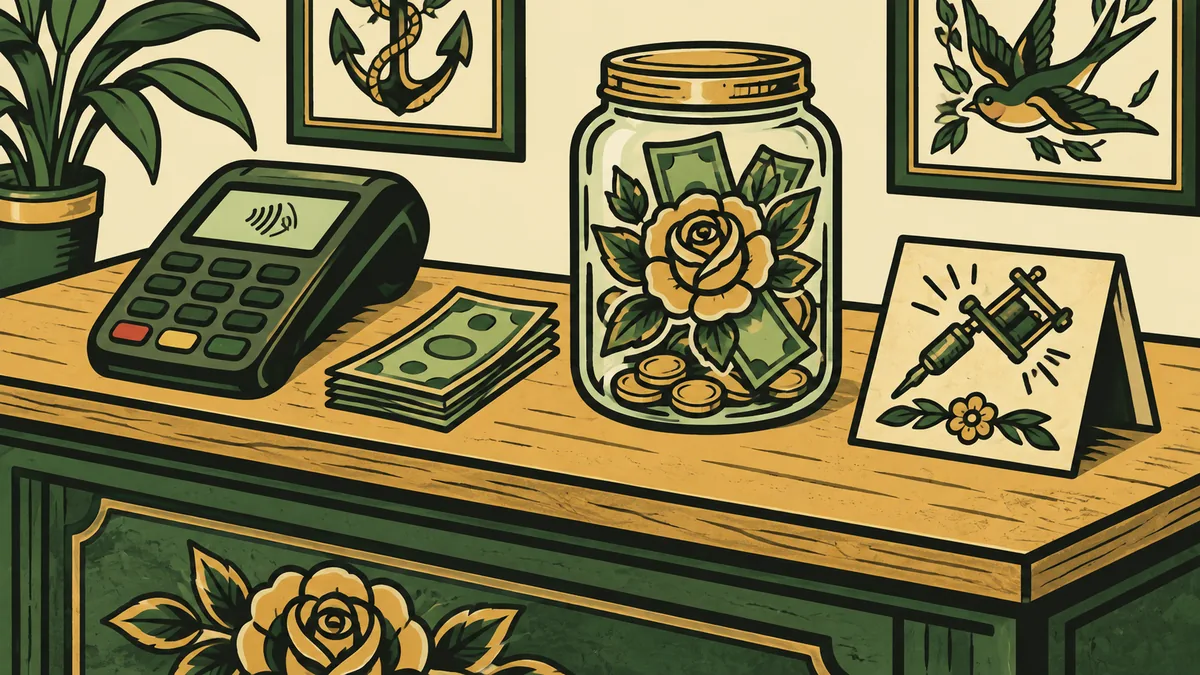
- Cash is preferred almost universally — it lands with the artist directly and immediately, with no processing fee and no split.
- Bring it separately. Have the tip in its own envelope or pocket rather than counting it out at the desk.
- Tip the artist, not the shop. If the counter has a card machine that prompts a tip, that money may be pooled. If you are unsure, ask.
- Piercers and apprentices count too. If an apprentice set up your station and handled aftercare, a small separate tip is a real kindness.
What tipping does not buy
A large tip does not secure priority booking, a discount later, or a free touch-up. Reputable artists include reasonable touch-ups anyway, and the ones who do not are not going to change that policy because you tipped well. Tip because the work was good, not as an investment.
What it does buy, informally, is being remembered as someone easy to work with — which matters more than money when you are trying to get back on a busy artist’s books.
Budget for it from the start
The single most common mistake is treating the tip as an afterthought. Add 20% to the quoted price when you are working out whether you can afford the piece, exactly as you would with sales tax. If the total only works without a tip, the honest answer is that you are not quite ready to book yet.
If you are still costing out the piece itself, our guide to how much a tattoo costs covers hourly rates, minimums and what drives a quote up. And if this is your first appointment, how to prepare for a tattoo covers the rest of the day.
The short version
How much to tip a tattoo artist comes down to 20% as a default, 15% as a floor, and more when they have clearly gone beyond the brief. Cash, handed over separately, and budgeted from the beginning rather than improvised at the counter.