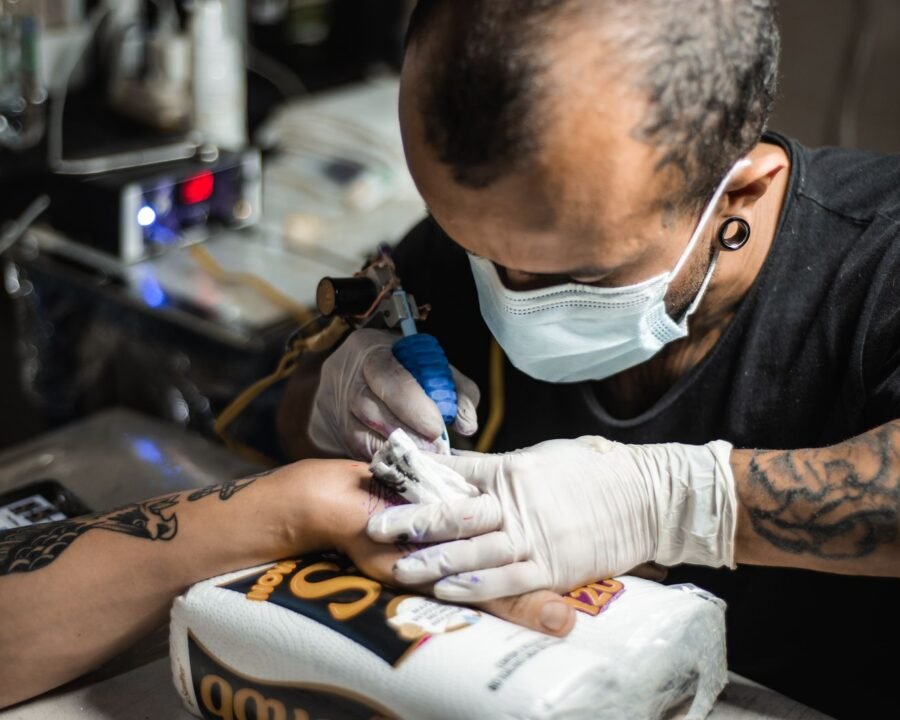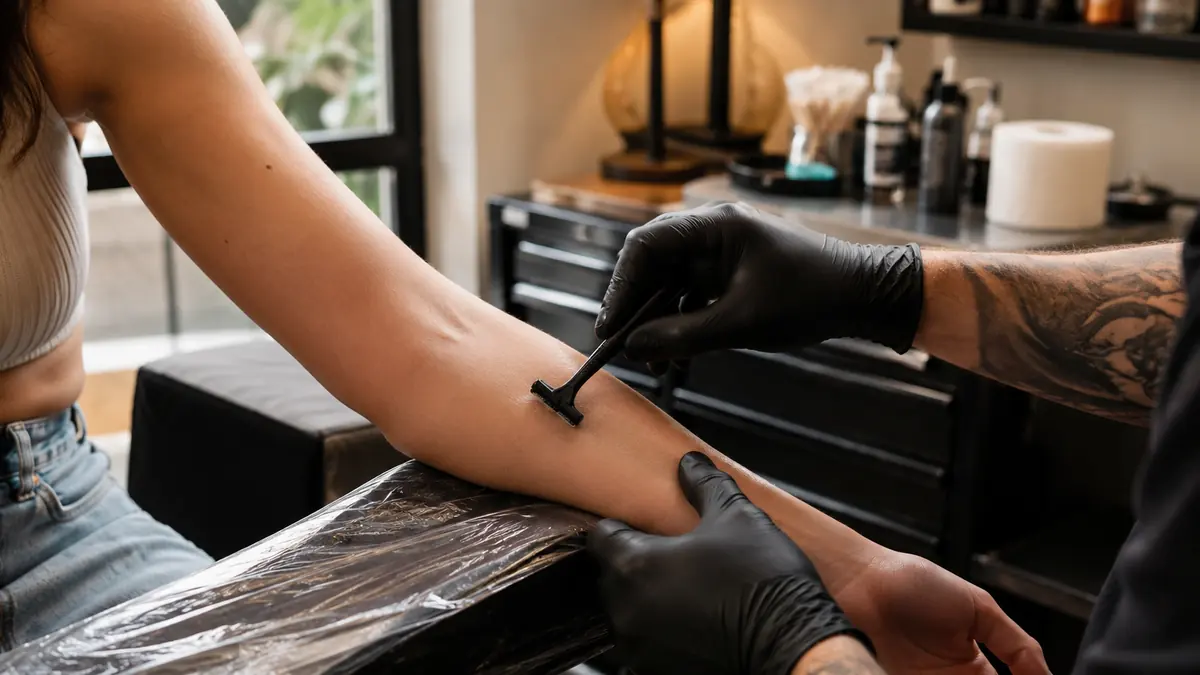
The safest general answer is no: do not shave before a tattoo unless your artist specifically asks you to. Tattoo artists commonly prefer to prepare the placement themselves immediately before applying the stencil. This helps them remove only the necessary hair while checking the skin for cuts, irritation, rashes, or other problems.
Shaving at home may seem helpful, but an accidental cut, razor burn, or inflamed hair follicle could make tattooing uncomfortable or force the appointment to be postponed. Follow your artist’s instructions because studios may use different preparation procedures.
Why Does Skin Need to Be Shaved Before Tattooing?
Hair can interfere with cleaning the skin, placing the stencil, and creating unobstructed contact between the tattoo machine and the skin. Even fine body hair may need to be removed from the immediate working area.
Shaving also helps adhesive coverings make better contact with the skin after the tattoo is completed. However, this does not mean the client must shave at home. The artist can determine exactly how much hair needs to be removed based on the design’s placement and size.
Why Tattoo Artists Often Prefer to Shave the Area
A professional artist can prepare the placement under controlled studio conditions using suitable equipment. The artist can also examine the area immediately afterward and decide whether the skin is healthy enough to tattoo.
Allowing your artist to handle the shaving can help avoid:
- Shaving the wrong area
- Removing more hair than necessary
- Razor burn immediately before the session
- Small cuts and scratches
- Ingrown hairs
- Inflamed hair follicles
- Applying irritating shaving products
- Shaving too aggressively or too closely
Arriving with natural body hair is not disrespectful or embarrassing. Preparing clients’ skin is a normal part of a tattoo artist’s work.
What Can Go Wrong When You Shave at Home?
Shaving can create tiny injuries that may not be immediately visible. A dull razor, excessive pressure, repeated strokes, or shaving against the direction of hair growth can leave the skin irritated.
Shaving may also contribute to folliculitis, which develops when hair follicles become inflamed. The American Academy of Dermatology identifies shaving as a common cause of follicle damage, while the Mayo Clinic notes that damaged follicles can become inflamed or infected.
Tattooing already involves repeatedly piercing the skin. Beginning the appointment with razor burn, bumps, broken skin, or inflammation gives the artist a poor surface to work on.
What If Your Tattoo Artist Asks You to Shave?
Follow the exact timing and method your artist provides. Do not assume that instructions from another studio apply to your appointment.
If you have been asked to shave:
- Use a clean, sharp razor.
- Wash the area gently beforehand.
- Use warm water and a suitable shaving gel.
- Shave in the direction of hair growth.
- Avoid repeatedly shaving the same spot.
- Rinse the area and pat it dry.
- Avoid strongly fragranced products afterward.
- Tell your artist about any irritation or cuts.
Dermatologists recommend shaving with softened hair, using shaving cream, shaving in the direction of growth, and avoiding excessively close shaving to reduce irritation and razor bumps. Read the AAD’s shaving guidance.
Should You Wax Before a Tattoo?
Do not wax the placement shortly before your appointment unless your artist explicitly approves it. Waxing pulls hair from the root and may leave the skin sensitive, inflamed, or irritated.
Waxing is unnecessary for tattoo preparation because the artist only needs a clean, smooth working surface. Shaving immediately before the procedure is generally more controllable than waxing.
Should You Use Hair-Removal Cream?
Avoid using chemical hair-removal products shortly before the appointment unless your artist has approved them. These products can irritate the skin or cause a reaction, particularly when used incorrectly or on sensitive areas.
Do not test a new depilatory product on the tattoo placement immediately before getting tattooed. Healthy, calm skin is more important than arriving completely hairless.
What If You Accidentally Cut Yourself Shaving?
Tell your artist before the appointment. Do not conceal the cut with makeup, lotion, or another product.
A small superficial nick does not automatically mean the entire appointment must be cancelled, but only the artist can decide whether the placement remains safe to tattoo. A cut directly inside the planned design may require adjusting the placement or rescheduling.
Clean and protect the wound appropriately. The NHS guidance for cuts and grazes recommends cleaning the wound and covering it to reduce contamination. Seek medical help when a cut is serious or shows signs of infection.
What If You Have Razor Burn or Ingrown Hairs?
Contact your artist and describe the condition honestly. Send a clear photograph if the studio requests one.
Do not scratch, squeeze, or pick at bumps. Tattooing irritated skin can worsen discomfort and may affect how the artist works. Severe redness, painful bumps, pus, warmth, or spreading inflammation should be assessed by a qualified healthcare professional.
Does Every Tattoo Placement Need Shaving?
Not necessarily. The decision depends on the amount and type of hair, the placement, the design’s size, and the artist’s procedure.
Commonly shaved areas include:
- Arms and forearms
- Legs and thighs
- Chest and stomach
- Back and shoulders
- Hands and fingers
- Feet and ankles
Areas with very fine or nearly invisible hair may still be lightly shaved because even small hairs can interfere with stencil placement.
How Else Should You Prepare Your Skin?
In the days before your appointment:
- Keep the skin normally clean and moisturized.
- Avoid sunburn and tanning.
- Avoid aggressive exfoliation.
- Do not pick at spots or ingrown hairs.
- Avoid unfamiliar skincare products.
- Tell your artist about rashes, wounds, or reactions.
- Follow any instructions supplied by the studio.
Read our complete guide on how to prepare for a tattoo appointment before your session. First-time clients can also review our first tattoo tips and tattoo aftercare guides.
Frequently Asked Questions
Will the tattoo artist shave me?
When hair needs to be removed, the artist will commonly shave the required area during skin preparation. Ask your studio if you are unsure about its process.
Is body hair embarrassing during a tattoo appointment?
No. Tattoo artists regularly work on naturally hairy skin. Do not risk irritating yourself because you feel embarrassed about normal body hair.
Can I shave on the morning of my appointment?
Only do this when your artist has instructed you to. Otherwise, arrive without shaving and let the artist prepare the area.
Can a tattoo be placed over razor bumps?
Your artist must examine the skin first. Significant irritation, inflamed follicles, or broken skin may require postponing or adjusting the tattoo.
Will shaving make tattoo hair grow back thicker?
Shaving does not change the thickness, color, or growth rate of the hair follicle. Regrowth may temporarily feel coarse because the razor leaves a blunt hair tip.
The Bottom Line
Unless your artist gives you different instructions, do not shave the tattoo placement yourself. Arrive with clean, healthy, unbroken skin and allow the artist to perform the necessary preparation.
If you develop cuts, razor burn, a rash, or inflamed follicles, contact the studio before your appointment. Protecting the condition of your skin matters more than arriving hairless.
TattooPiece provides general educational information and does not replace advice from your tattoo artist, dermatologist, or another qualified healthcare professional.