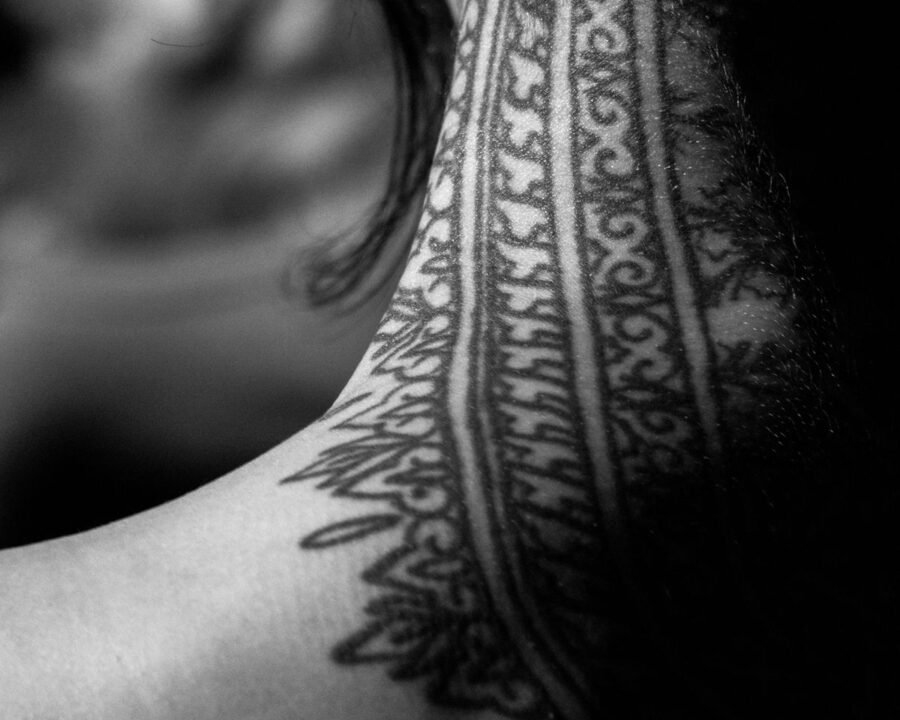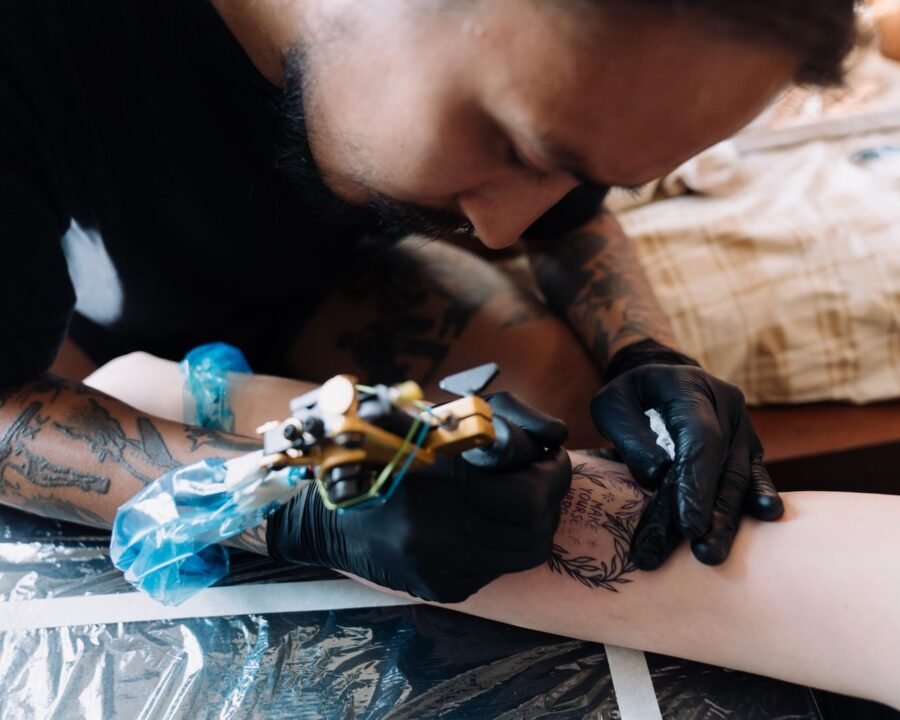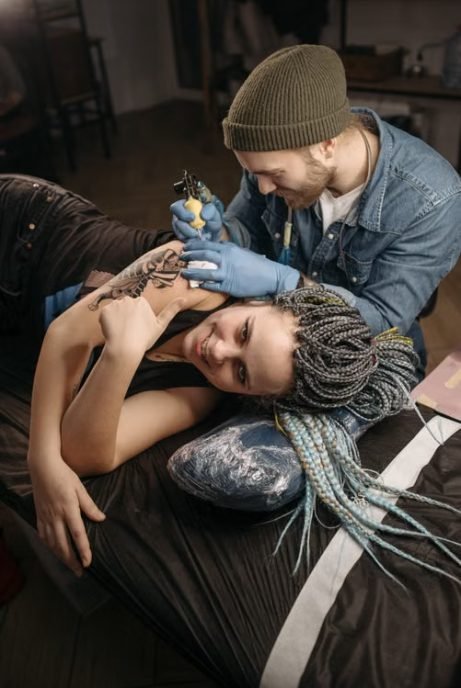
Shoulder tattoo pain sits in the low band over the rounded muscle cap, rising toward moderate as you move in toward the collarbone, which is why it is one of the most recommended placements for a first tattoo. The important caveat is that the answer changes within inches: the outer deltoid is comfortable, while the shoulder blade, collarbone edge, and trapezius are noticeably sharper.
The reason is anatomy rather than luck. Over the deltoid there is muscle between the needle and bone. Move toward the shoulder blade, the front near the collarbone, or the trapezius edge near the neck, and the skin thins while bone comes closer to the surface. There is no single shoulder tattoo pain level that covers the whole area, so where the needle lands matters more than the placement’s name. See how this compares with every other placement in our tattoo pain chart. The shoulder is also one of the top-ranked low-pain placements in our guide to the least painful tattoo spots.
This matters because most shoulder pieces are not confined to one sub-zone. A cap sleeve or a large floral piece that starts on the deltoid and wraps toward the shoulder blade or collarbone will feel completely different depending on which part is being worked at any given moment. Knowing the breakdown ahead of time helps you plan session length, brace for the harder stretches, and avoid being caught off guard mid-sitting.
Shoulder Tattoo Pain by Sub-Zone
Here’s how shoulder tattoo pain breaks down by the exact area being worked, not just “the shoulder” as one zone.
| Sub-Zone | Typical pain | Why | Note |
|---|---|---|---|
| Deltoid / outer shoulder | Low | Thick deltoid muscle plus a layer of fat cushions the needle, and nerve density is relatively low here | Usually the easiest part of a shoulder piece to sit through, even for multi-hour sessions |
| Shoulder blade / scapula | Moderate | The scapula is a flat, thin bone sitting close under the skin, especially along its ridge and edges; vibration from the needle transmits into the bone | Pain spikes noticeably when the artist works directly over the bone ridge rather than the surrounding muscle |
| Front shoulder / collar-adjacent | Moderate–high | Skin and fat coverage over the collarbone (clavicle) is thin, and nerve concentration increases near the collarbone and armpit | One of the more consistently painful spots people report anywhere near the shoulder |
| Trapezius / side-of-neck-adjacent | Moderate–high | The trapezius is muscle, but this zone sits close to major nerve pathways near the neck, and skin thins out toward the collarbone and spine | Pain tends to climb the closer the linework gets to the neck or spine |
Why These Sub-Zones Feel So Different
Bone Proximity
The single biggest factor in shoulder tattoo pain is how close the needle is working to bone. Over the deltoid, the needle passes through skin, fat, and a thick slab of muscle before it gets anywhere near the humerus. Over the shoulder blade, that buffer mostly disappears. The scapula is a wide, flat bone that sits just beneath a thin layer of skin and muscle across large parts of its surface, particularly along the spine-side edge and the bony ridge that runs across it. When the needle works that close to bone, you feel a sharper, more concentrated sensation, plus a low vibration that some people describe as feeling in the bone itself rather than just the skin. For the other end of that comparison, we rank every high-pain placement from bad to worst.
Muscle and Fat Coverage
Muscle and fat act as natural padding that absorbs and disperses the impact of the needle. The deltoid is a thick, rounded muscle, which is a big part of why the outer shoulder is one of the more forgiving spots on the body for a first tattoo. The trapezius offers some of that same cushioning, but it thins out as it approaches the neck and collarbone, which is why pain tends to ramp up the further a design creeps toward that boundary. The front of the shoulder near the collarbone has almost no muscle or fat buffer at all, which is the main reason it consistently rates higher on pain than the outer shoulder.
Nerve Density
For more on how skin’s nerve endings and thickness vary by layer, Cleveland Clinic’s overview of skin anatomy breaks down what this comes down to.
Nerve endings are not spread evenly across the body, and the shoulder region is a good example of that. The area around the collarbone, armpit, and the front of the shoulder has a higher concentration of nerve endings than the broad, muscular expanse of the outer shoulder. That is also part of why some people describe front-shoulder tattoos as sharper or more “electric” feeling, compared to the duller, more manageable ache typical of the deltoid.
How to Make It More Manageable
None of this is medical advice, just practical steps people commonly use to get through a harder shoulder session:
- Ask your artist about topical numbing options. Many studios allow or work with over-the-counter numbing creams applied before the session, and some can reapply a topical during longer sittings, especially over bonier sections like the shoulder blade edge.
- Break up large pieces into multiple sessions. A full shoulder-cap or a piece that spans the deltoid, shoulder blade, and collar area is often tattooed over two or more sittings rather than one long session, which keeps any single sitting from dragging through the most painful zones for too long.
- Ask for breaks during the harder stretches. A five-minute pause when the artist moves onto the shoulder blade ridge or collarbone is normal and reasonable to request.
- Eat and hydrate beforehand. Low blood sugar and dehydration make any tattoo session harder to sit through, regardless of placement.
- Plan the sitting order. Some artists will tattoo the more sensitive sections, like the collarbone-adjacent area or shoulder blade edge, earlier in the session while you’re freshest, saving the more tolerable deltoid area for when fatigue sets in.
If you’re still deciding where on the shoulder to put your design, it’s worth reading a broader tattoo placement guide before booking, since placement affects healing and visibility as much as it affects pain.
What Affects Your Personal Pain Tolerance
Pain charts are averages, not guarantees, and several personal factors shift where you land on them.
- First tattoo versus experienced: if this is your first tattoo, the unfamiliar sensation and any anxiety around it can make pain feel more intense than it will on later pieces, once you know what to expect. Reading through some first tattoo tips beforehand can take some of the uncertainty out of the process.
- Time of day: many people report handling tattoos better earlier in the day, before fatigue and stress from a full day build up.
- Sleep and hydration: showing up tired, dehydrated, or hungover tends to lower pain tolerance across the board, not just on the shoulder.
- Anxiety level: going in tense makes muscles tighten, which can make the same needle depth feel sharper. Knowing generally how to prepare for a tattoo the day before and morning of can make a real difference in how the session actually feels.
- Session length and design complexity: shading and packed color work tend to feel different from fine linework, and longer sittings compound discomfort regardless of location. If cost is part of what’s driving how much you’re trying to fit into one sitting, it helps to understand how much a tattoo costs before deciding on session length versus multiple appointments.
Once the piece is done, how well you look after it also affects your overall experience with the tattoo, not just the sitting itself. A solid tattoo aftercare guide is worth reading before you leave the studio, since a shoulder piece over the deltoid or shoulder blade sees a lot of movement from arm use, which can affect healing if you’re not prepared for it.
FAQ
Does a shoulder tattoo hurt more than other placements?
Not usually. The outer shoulder over the deltoid is considered one of the more tolerable spots on the body because of the thick muscle and fat coverage. It’s the sub-zones around it, like the shoulder blade and the front near the collarbone, that push closer to moderate-to-high pain.
What’s the most painful part of a shoulder tattoo?
For most people, the front of the shoulder near the collarbone and the edges of the shoulder blade closest to the spine are the most painful sections, because the skin is thin and there’s little muscle or fat between the needle and the bone.
Is a shoulder blade tattoo more painful than a regular shoulder tattoo?
Generally yes. The shoulder blade sits over a flat bone with a thin layer of tissue covering it, so it tends to rate higher on pain scales than the rounder, more muscular outer shoulder.
How long does a shoulder tattoo take to heal, and does that affect pain?
Most shoulder tattoos take about two to three weeks to heal on the surface, with full healing underneath taking longer. The pain during healing is usually mild compared to the tattooing itself, but movement from everyday arm use can cause more irritation on a shoulder piece than on a less mobile area, which is why following proper aftercare matters.
This article provides general educational information about placement, pain, and healing. It does not replace personalized advice from your tattoo artist or a qualified healthcare professional.