How often should you moisturize a new tattoo? A common starting point is a thin layer of fragrance-free moisturizer approximately twice a day after the original covering has been removed, but your tattoo artist’s instructions should come first. The correct frequency depends on the bandage, healing stage, product, placement, climate, and how dry the skin feels. If you suspect you have gone too far the other way, see the signs of over moisturizing a tattoo.
The tattoo should feel comfortable rather than greasy, sticky, or constantly wet. More moisturizer does not make a tattoo heal faster. Applying a small amount correctly is more important than applying it frequently.
Quick Answer: A Practical Moisturizing Schedule
Do not apply moisturizer underneath an adhesive covering or traditional bandage unless your tattoo artist specifically instructs you to do so. Follow the artist’s directions about when to remove the covering and how to perform the first wash.
After the covering is removed, gently wash the tattoo, pat it dry, and apply a very thin layer of the recommended product. The Cleveland Clinic’s tattoo-aftercare guidance recommends washing and moisturizing a healing tattoo approximately twice daily. If you are still deciding what to buy, our guide to tattoo aftercare products covers which ones you actually need.
This is general guidance rather than a universal rule. A tattoo exposed to dry winter air may need moisturizer more often than one in a humid climate. A large, heavily saturated tattoo may also behave differently from a small fine-line design.
Tattoo Moisturizing Schedule by Healing Stage
| Healing stage | General moisturizing approach | What to watch for |
|---|---|---|
| While the original covering remains | Follow your artist’s instructions and do not apply products beneath the covering | Leaking adhesive, trapped fluid, irritation, or a loose covering |
| First week after covering removal | Apply a very thin layer after gentle washing, commonly around twice daily | Excessive wetness, stickiness, increasing pain, or expanding redness |
| Peeling and itching stage | Moisturize lightly when the skin feels dry or tight | Picking, scratching, thick scabs, or applying too much product |
| Weeks two to four | Continue once or twice daily as needed while dryness improves | Symptoms that worsen rather than gradually improving |
| After the surface has healed | Use a normal moisturizer as needed and protect healed skin from sunlight | Persistent rash, painful bumps, or other unusual changes |
Healing does not follow an identical calendar for everyone. Read our detailed guide to the tattoo healing stages for a broader timeline.
How Much Moisturizer Should You Apply?
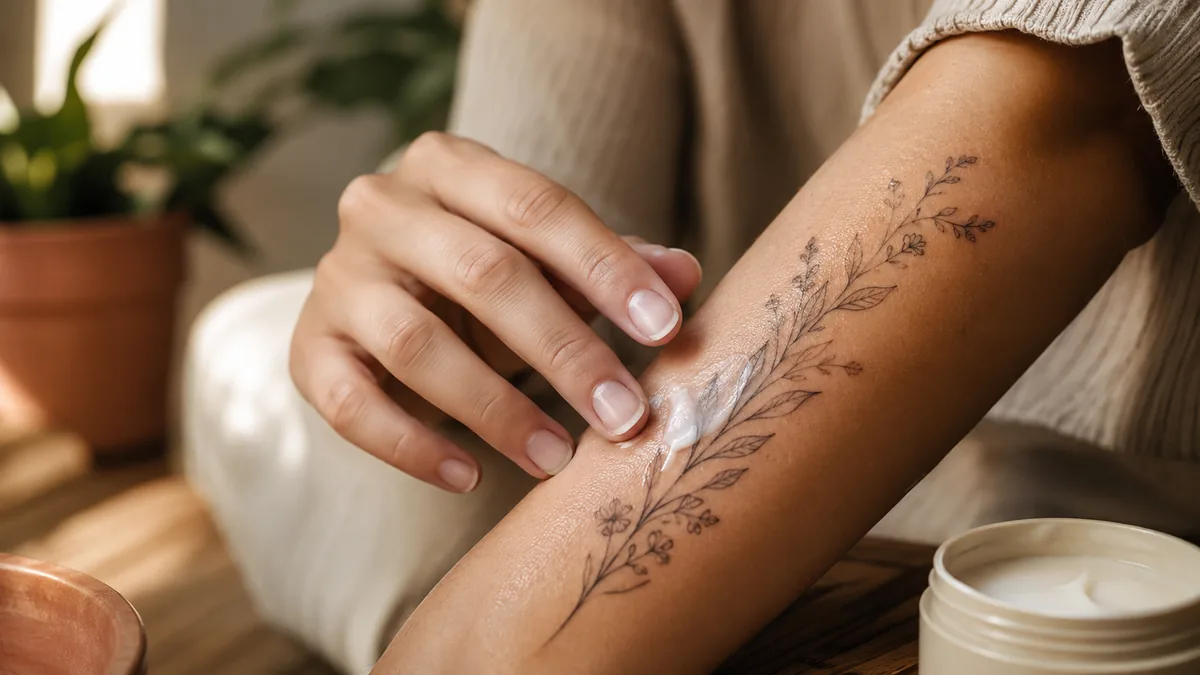
Use enough product to create a thin, even layer across the tattoo. The product should absorb without leaving the area heavily coated. If the tattoo remains shiny, wet, or sticky for a long time, you may have used too much.
Start with less than you think you need. Clean hands can be used to spread a small amount gently across the skin. Avoid rubbing aggressively or repeatedly touching the area.
The goal is to reduce uncomfortable dryness without keeping the tattoo constantly damp. If excess moisturizer remains on the surface, follow your artist’s advice about gently removing it rather than layering more product on top.
Seven Tips for Moisturizing a New Tattoo
1. Follow the Artist’s Instructions First
Your tattoo artist knows which covering was applied and how long it should remain in place. Traditional bandages, adhesive films, and other protective coverings require different routines.
Ask the artist to write down the instructions if you are unsure. Important questions include when to remove the covering, when to begin moisturizing, which product to use, and how frequently to wash the tattoo.
2. Wash Your Hands Before Touching the Tattoo
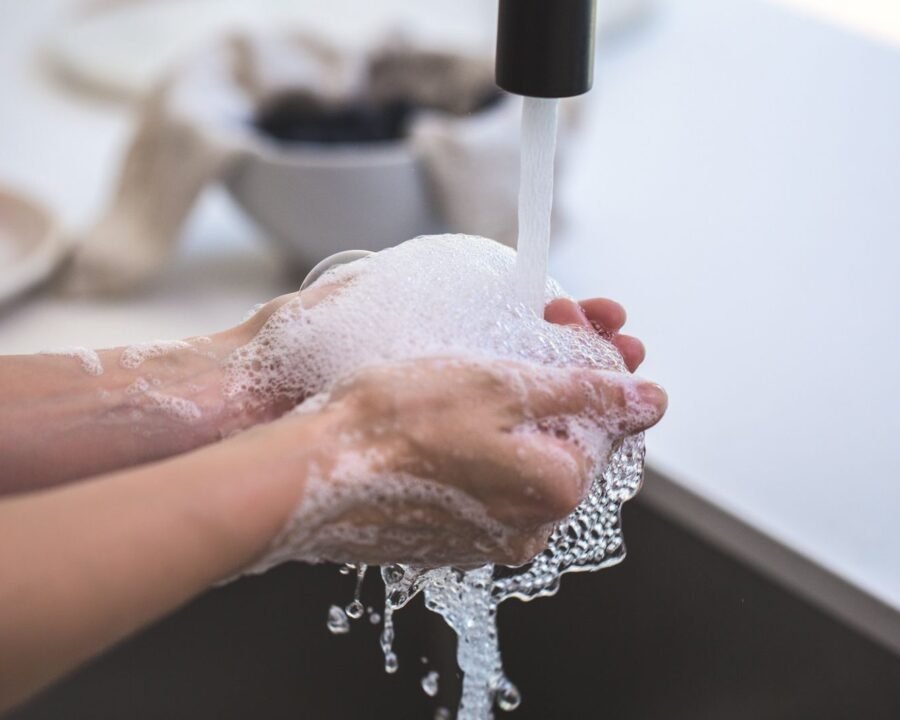
Always clean your hands before washing or moisturizing healing skin. Avoid touching the tattoo unnecessarily throughout the day.
Gently wash according to your artist’s instructions, rinse carefully, and pat the area dry. Do not use a rough towel, sponge, washcloth, or exfoliating tool. Our guide explains how to shower after a tattoo safely.
3. Allow the Surface to Dry Before Moisturizing
After washing, pat the tattoo dry with a clean paper towel. Allow any remaining surface moisture to disappear before applying lotion or ointment.
Applying moisturizer over skin that is still dripping wet can make it difficult to judge how much product is needed. Do not use a hair dryer or rub the tattoo to speed up drying.
4. Choose a Simple Fragrance-Free Product
Look for a simple moisturizer without strong fragrance, exfoliating acids, retinoids, dyes, or unnecessary active ingredients. Use the product recommended by your tattoo artist whenever possible.
The American Academy of Dermatology recommends applying a water-based lotion or cream when tattooed skin feels dry. Read the AAD’s guidance for caring for tattooed skin.
A product labeled “natural” is not automatically suitable for damaged or sensitive skin. Botanical extracts, essential oils, fragrances, and preservatives can still cause irritation in some people.
5. Use a Thin Layer
A thick coating is not better aftercare. It may leave the tattoo uncomfortably wet, attract lint, stick to clothing, and make the surface difficult to keep clean.
If you are using an ointment during an early healing stage, follow the exact amount and duration recommended by your artist. Do not continue using a heavy ointment simply because the skin looks dry.
Our separate guide explains why routine use of Vaseline on a new tattoo is generally discouraged.
6. Moisturize According to the Skin, Not the Clock Alone
A schedule provides a useful starting point, but observe how the tattoo feels. If the skin feels comfortable and the previous application has not absorbed, another layer is probably unnecessary.
If the tattoo feels dry, tight, and uncomfortable, a small amount may help. Mild dryness and itching commonly occur while a tattoo heals. Moisturizer can reduce discomfort, but it should not be used to cover up worsening pain, heat, or swelling.
Read more about why a healing tattoo becomes itchy.
7. Stop Using Products That Cause a Reaction
Stop using a moisturizer and seek appropriate advice if it causes intense burning, a spreading rash, painful bumps, or blisters. Keep the product packaging in case a healthcare professional needs to review its ingredients.
Do not repeatedly test multiple new products on irritated tattooed skin. Contact your artist for routine aftercare questions and a healthcare professional for concerning symptoms.
Signs You May Not Be Moisturizing Enough
A tattoo that needs a small amount of moisturizer may feel unusually tight, rough, or uncomfortable. The surface may look excessively dry, and movement can make the skin feel as though it is pulling.
Some dryness, light flaking, and itching are still expected during normal healing. Moisturizer will not completely prevent tattoo peeling, and you should not attempt to stop natural flakes from falling away.
Avoid reacting to every small dry patch by applying another heavy layer. Begin with a small amount and observe whether the skin becomes more comfortable.
Signs You May Be Using Too Much Moisturizer
Possible signs of excessive product include:
- A surface that remains greasy or shiny for a long time
- Lotion collecting in creases or around scabs
- Skin that stays excessively soft or wet
- Clothing repeatedly sticking to the area
- New irritation after increasing product use
- A heavy layer that does not absorb
These signs do not automatically mean the tattoo is infected. Reduce unnecessary product and contact your artist if you are uncertain about the routine.
Lotion Versus Ointment for a New Tattoo
Lotions and ointments have different textures and levels of occlusion. A lightweight fragrance-free lotion generally absorbs more easily, while an ointment creates a heavier barrier.
Some artists recommend a particular ointment briefly during the earliest stage and then advise changing to a lighter moisturizer. Others recommend a simple lotion after the original covering is removed. There is no single product schedule used by every professional.
Follow your artist’s instructions and avoid combining several products without a clear reason. If you have eczema, allergies, highly sensitive skin, or a history of reactions, ask a qualified healthcare professional for personalized guidance.
Should You Moisturize a Tattoo While It Is Peeling?
A peeling tattoo can generally be moisturized lightly after washing, provided that this matches your artist’s instructions. Do not massage away flakes or apply extra lotion to force them to detach.
Allow loose skin and small scabs to fall away naturally. Pulling them may irritate the healing surface and affect the appearance of the tattoo.
Should You Moisturize a Tattoo Before Bed?
You can apply a small amount before bed if the tattoo has been cleaned, the skin feels dry, and the timing fits your normal aftercare schedule. The tattoo should not be covered in a thick layer overnight.
Use clean bedding and wear loose, breathable clothing that will not repeatedly rub the area. Do not wrap the tattoo in household plastic unless your artist specifically instructs you to do so.
When Can You Stop Moisturizing a New Tattoo?
You can gradually return to your normal skincare routine as peeling, scabbing, tightness, and sensitivity resolve. Many people continue using a simple moisturizer because hydrated skin can make a healed tattoo look more comfortable and vibrant.
Wait until the tattoo has healed before applying sunscreen directly to it. Once healed, protect the area with suitable broad-spectrum sun protection because ultraviolet exposure can fade tattoo pigment over time.
When Should You Contact a Healthcare Professional?
Contact a qualified healthcare professional if you notice:
- Redness that continues expanding
- Pain or swelling that becomes worse
- Skin that feels increasingly hot
- Thick or foul-smelling drainage
- Fever, chills, or feeling unwell
- Red streaks extending from the tattoo
- Painful bumps, blisters, or a spreading rash
- Symptoms that improve and then suddenly worsen
The FDA’s tattoo-safety information recommends contacting a tattoo artist and healthcare professional when a tattoo does not appear to be healing or develops a rash, redness, bumps, or fever.
The Bottom Line
How often should you moisturize a new tattoo? Approximately twice daily is a reasonable general starting point after the covering has been removed, but your artist’s instructions and the condition of your skin should guide the routine.
Apply a thin layer rather than a heavy coating. The tattoo should feel comfortable, not wet or greasy. Continue gentle washing, avoid scratching and soaking, and monitor whether symptoms are gradually improving.
Read our complete tattoo aftercare guide for the full healing routine.
This article provides general educational information and does not replace personalized instructions from a tattoo artist or advice from a qualified healthcare professional.