How long after a tattoo can you shower? Usually within a few hours — the exact timing depends on how your artist wrapped it. With an adhesive “second skin” film you can shower right away, since the film is water-resistant. With traditional plastic wrap or an absorbent bandage, wait until your artist tells you to remove it, often between 3 and 24 hours.
Once the covering is off, shower with the tattoo uncovered and keep it out of the direct spray. What you should not do for 2 to 4 weeks is soak: no baths, hot tubs, or swimming.
Your artist’s instructions should come first because traditional bandages and adhesive protective films require different care. Ask how long the original covering should remain in place and whether it can safely get wet.
Shower Timing by Bandage Type
| Covering | When you can shower | Notes |
|---|---|---|
| Second skin film (Saniderm, Tegaderm) | Right away | Water-resistant; pat edges dry after |
| Plastic cling wrap | After removal, per your artist (often 2–4 hours) | Don’t re-wrap after showering unless told to |
| Absorbent/dressing bandage | After removal, typically same day to 24 hours | Follow your artist’s timing |
| No covering | Anytime | Lukewarm water, quick, no direct spray |
When Can You Shower After Getting a Tattoo?
You can generally take a careful shower once your artist says the original covering can be removed or confirms that the protective film is water-resistant. Some traditional coverings are removed after several hours, while certain adhesive films may remain for multiple days. Do not guess or remove the covering early simply because you want to shower.
If the covering must remain dry, protect it and keep that area away from the water. If your artist confirms that the film can get wet, keep the shower short and do not direct the showerhead at its edges. Contact your artist if the film develops a major leak, begins peeling away, or traps dirty water underneath.
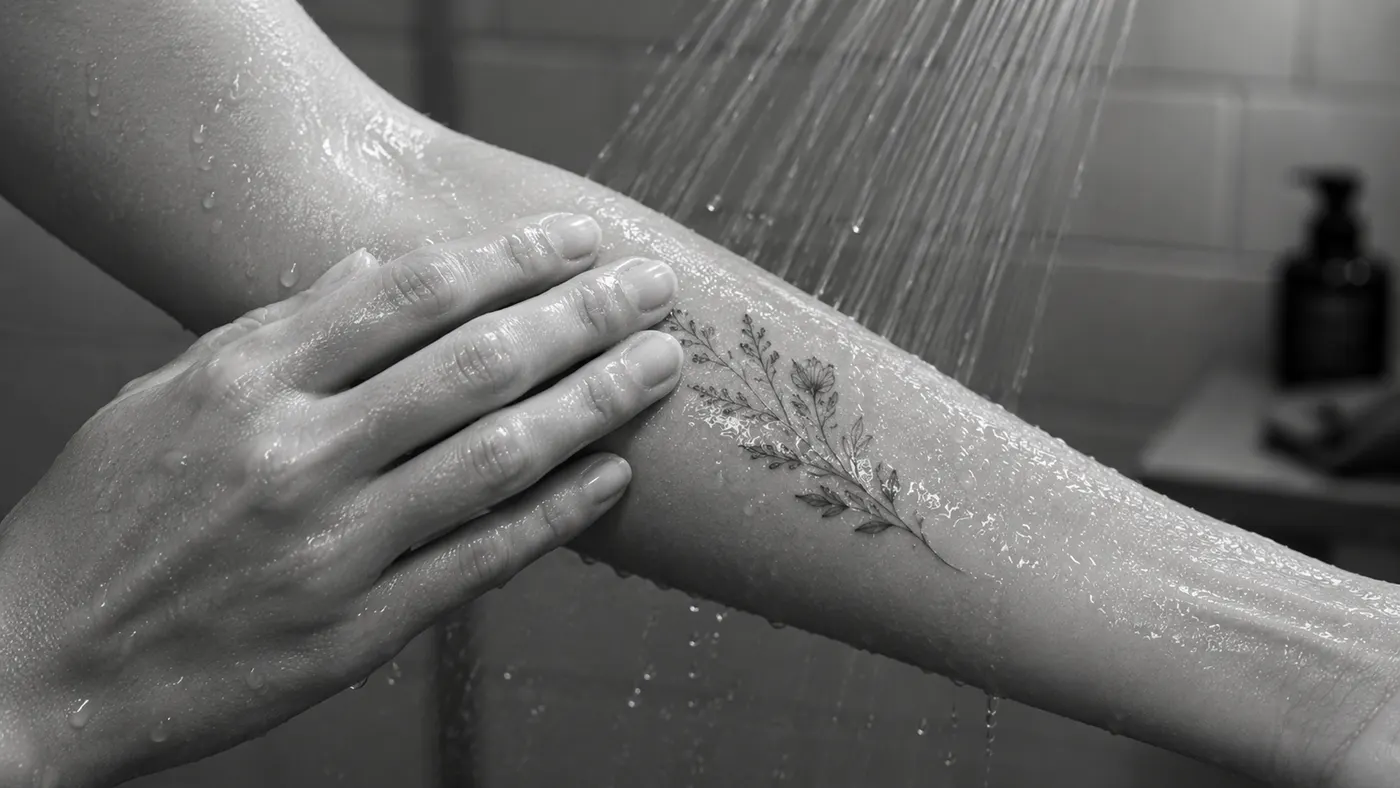
How to Shower With a New Tattoo
Use this simple routine unless your artist has given you different instructions:
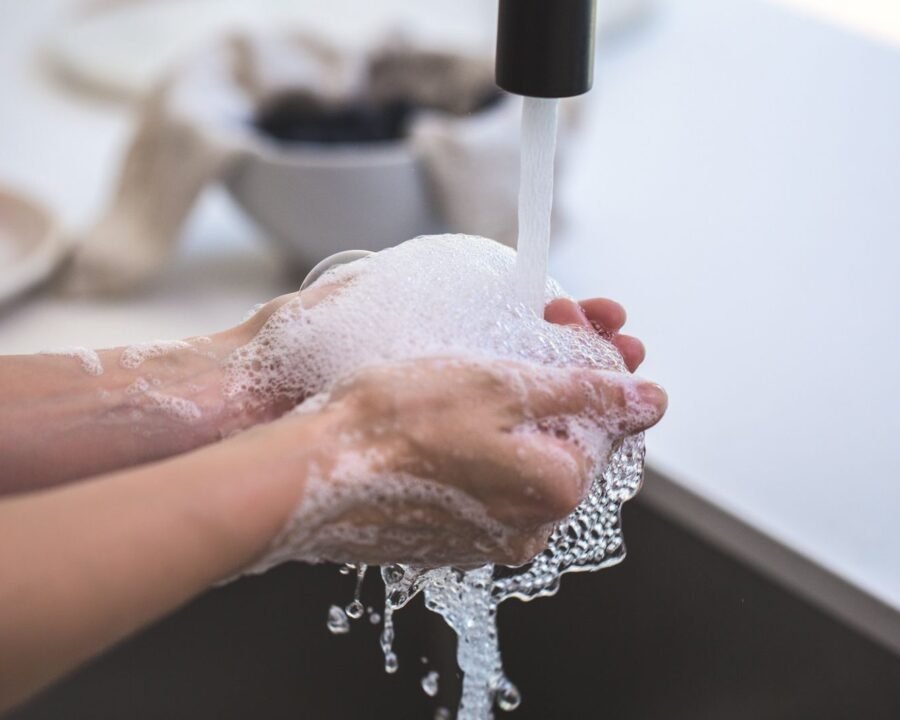
- Wash your hands before touching the tattoo or its covering.
- Set the water to lukewarm rather than very hot.
- Keep the shower relatively short.
- Avoid aiming high-pressure water directly at the tattoo.
- Use a mild, fragrance-free cleanser recommended by your artist.
- Clean the tattoo gently with your fingertips.
- Do not use a washcloth, loofah, sponge, or body scrub.
- Rinse away all cleanser without rubbing the skin.
- Pat the tattoo dry with a clean disposable paper towel.
- Apply a thin layer of the recommended moisturizer when appropriate.
Mayo Clinic recommends washing tattooed skin gently with soap and water, avoiding a direct stream of water, and patting rather than rubbing the area dry. See its complete tattoo care guidance.
What Water Temperature Should You Use?
Use lukewarm water. Very hot water may increase discomfort, dryness, and irritation in already-sensitive skin. It can also create more steam and make a protective film begin lifting around its edges.
The water should feel comfortable rather than hot. If the tattoo starts stinging or becomes noticeably more irritated, move it away from the water and finish the shower.
What Soap Should You Use?
Choose a mild, fragrance-free cleanser without exfoliating particles, strong dyes, or heavy perfumes. Our guide to the best soap for a new tattoo compares the specific types, including antibacterial washes and green soap. Products that normally smell pleasant may sting or irritate newly tattooed skin. Avoid body scrubs, exfoliating acids, retinoids, and harsh acne cleansers on the tattoo.
Place a small amount of cleanser on clean fingertips and wash gently. Do not pour a large amount directly onto the tattoo. Rinse carefully so no residue remains on the skin.
Our complete tattoo aftercare guide covers cleaning, moisturizing, clothing, sunlight, and other parts of the healing routine.
How Should You Dry a Tattoo After Showering?
Do not rub the tattoo with a bath towel. Towels can create friction, catch on peeling skin, and hold microorganisms when reused. Gently pat the tattoo with a clean disposable paper towel, then allow it to finish air-drying for a few minutes.
Do not use a hair dryer. Hot air can irritate or overdry the skin, while a shared dryer may blow dust toward the healing area. Give the tattoo time to dry naturally before applying clothing or moisturizer.
Should You Moisturize After the Shower?
If your artist has instructed you to moisturize, apply only a thin layer after the tattoo is clean and dry. The skin should feel comfortable but should not look heavily coated, greasy, or wet.
Use the fragrance-free product recommended by your artist. Avoid applying a thick layer of petroleum jelly unless your artist or healthcare professional specifically instructed you to do so. Our article about using Vaseline on a new tattoo explains why water-based moisturizers are generally preferred.
Can You Shower With a Second-Skin Bandage?
Many adhesive tattoo films are water-resistant, but that does not mean they are designed for prolonged soaking or forceful water pressure. Follow the instructions for the specific film used by your artist.
Do not direct the showerhead at the bandage or allow very hot water to loosen its adhesive. After showering, pat the outside dry. Do not place moisturizer underneath the film or puncture it to release fluid.
Ask your artist what to do if the seal breaks, a large amount of water enters, or the bandage exposes part of the tattoo. Do not repeatedly remove and reapply the same film.
The film is designed to stay on through normal showers, but a few habits protect it: keep the water lukewarm (heat loosens adhesive), don’t aim the showerhead directly at the film, keep showers short, and pat the edges dry afterward rather than rubbing. It’s normal to see plasma or a little ink pooling under the film — that’s not a reason to peel it early, though air bubbles under the film are worth checking. If the seal breaks and water gets underneath, remove the film, wash the tattoo gently, and follow your artist’s instructions for re-covering or healing it open. See our guides on how long to leave second skin on and what to do if second skin is leaking.
Can You Take a Bath With a New Tattoo?
Avoid baths while the tattoo is healing. Soaking keeps the tattoo wet for much longer than a shower and may soften healing skin or scabs. You should also avoid pools, hot tubs, lakes, rivers, and oceans until the tattoo is completely healed.
Cleveland Clinic recommends avoiding immersion in water while a tattoo heals. Its dermatologist-reviewed aftercare guidance also explains the expected healing stages and warning signs.
For more detail, read how long to wait before swimming after a tattoo.
What If Shampoo or Conditioner Touches the Tattoo?
Rinse it away gently with lukewarm water. Do not scrub the tattoo or repeatedly wash it with more products. When possible, position the tattoo away from shampoo, conditioner, shaving cream, and strongly fragranced body wash.
If a product causes persistent burning, a rash, or worsening redness, stop using it around the tattoo and contact your artist or a healthcare professional.
Common Showering Mistakes to Avoid
- Using water that is extremely hot
- Taking a long, steamy shower
- Aiming forceful water directly at the tattoo
- Scrubbing with a washcloth, loofah, or sponge
- Using scented or exfoliating products
- Rubbing the tattoo dry with a bath towel
- Applying a thick layer of moisturizer afterward
- Picking at skin or scabs softened by the water
- Removing a protective film earlier than instructed
When Should You Contact a Healthcare Professional?
Mild tenderness, dryness, itching, flaking, and light scabbing can occur during normal healing. These symptoms should gradually improve. Our guide to the tattoo healing stages explains what may happen over time.
Contact a healthcare professional if you notice redness that continues spreading, pain that becomes worse, increasing heat, significant swelling, unusual drainage, a bad odor, red streaks, fever, chills, blisters, or a persistent raised rash. These symptoms may indicate an infection or another reaction that needs professional evaluation.
Frequently Asked Questions
How long after a tattoo can you shower normally?
You can take gentle showers almost immediately, but “normal” showers — hot water, full spray, scrubbing, long steam sessions — should wait until the tattoo has finished peeling, usually 2 to 3 weeks. Until then: lukewarm, quick, hands-off. The full routine is in our tattoo aftercare guide.
Is it OK if water runs over my new tattoo in the shower?
Yes. Clean water running briefly over a new tattoo won’t hurt it. The problems are direct high-pressure spray, hot water, soaking, and scrubbing — not incidental water contact.
Can I shower with Saniderm or second skin on my tattoo?
Yes, that’s one of the main benefits of adhesive films. Keep showers short and lukewarm, avoid aiming the spray at the film, and pat the edges dry afterward so the adhesive doesn’t lift.
What if I accidentally soaked my new tattoo?
Don’t panic. Wash it gently with mild soap and lukewarm water, pat it dry with a clean paper towel, and let it air out. Afterward apply a thin layer of lotion — how often to moisturize matters, and overdoing the lotion makes things worse, not better. Watch over the next few days for spreading redness, heat, swelling, or pus — those are reasons to contact a healthcare professional.
Heading back to the gym soon? Post-workout showers follow the same rules — and our guide to going to the gym after a tattoo covers the rest of the return timeline.
The Bottom Line
You can usually shower after getting a tattoo once you understand how to care for its covering. Keep the shower brief, use lukewarm water, wash with clean hands, and avoid direct pressure or scrubbing. Pat the tattoo dry and use only a thin layer of the moisturizer recommended by your artist.
A shower is acceptable because it cleans the tattoo without prolonged immersion. Baths, swimming pools, hot tubs, lakes, rivers, and oceans should wait until the tattoo is completely healed.
This article provides general educational information and does not replace personalized advice from your tattoo artist or a qualified healthcare professional.
This is one part of the full second skin process — see our complete second skin tattoo aftercare timeline for the whole picture, from application to removal.