Is tattoo scabbing normal? Yes. Some scabbing is a normal part of tattoo healing, and most people get at least a little of it however carefully they look after the piece. Light, thin scabbing along the linework is expected as the top layer of skin dries and hardens over the wound underneath.
What is not normal is thick, raised, dark crust that looks more like a scrape than a healing tattoo — particularly if it is tender to the touch, warm, or leaking anything beyond a small amount of clear or slightly bloody plasma in the first day or two.
Timing follows a fairly predictable pattern. Scabbing usually starts around day 3 to 5, once the initial oozing and swelling calm down, builds through the first week, and should be mostly finished by the end of week 2 to 3. By then, whatever scab is left should be thin and ready to flake off on its own, and the skin and color underneath should be settling in. This piece breaks down what’s normal at each stage, how to tell when scabbing has become too much, and what to do — and avoid doing — while it runs its course, building on the broader timeline in our tattoo healing stages guide.
Tattoo Scabbing Week by Week
| Stage | What’s Normal |
|---|---|
| Days 1–2 | Red, swollen, warm skin with some oozing of clear plasma, blood, or excess ink; no real scabbing yet, surface looks raw and shiny. |
| Days 3–7 | Thin scabbing and flaking start forming along the linework and shaded areas; skin looks dry and tight; itching often kicks in around this point. |
| Week 2 | Scabs flake off in small pieces on their own, revealing patchy, slightly dull-looking skin underneath; color can look muted until swelling and dryness fully settle. |
| Week 3+ | Scabbing should be finished; any leftover flaking is light and dry rather than thick crust; color is settling in and the tattoo starts to look like its healed, finished self. |
These timeframes are general ranges rather than strict rules. A large back piece with heavy black fill can scab more and take a little longer to fully clear than a small, simple line tattoo on the forearm, and that’s expected — bigger, more saturated work means more skin trauma to heal from. What matters more than hitting an exact day is the direction things are moving: less redness, less swelling, and thinner, drier scabbing as each week passes. If a tattoo looks the same or worse at day 10 as it did at day 5, that’s a better signal to pay attention to than the calendar alone.
Is Tattoo Scabbing Normal? How Much Is Too Much?
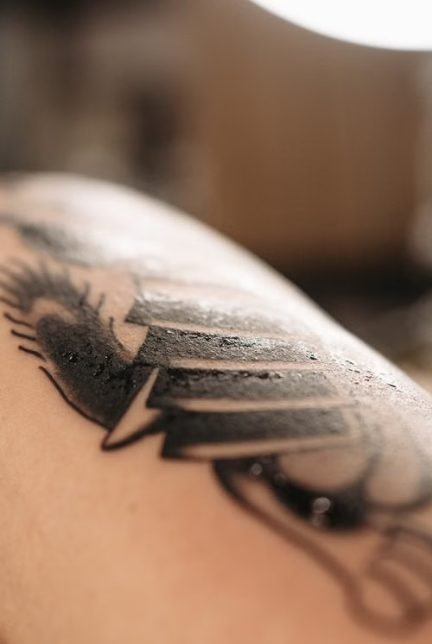
Normal scabbing is thin. Think of it as light, slightly raised flaking that traces the linework and shaded areas, similar to what you’d get from a mild sunburn peeling. It’s usually close to your natural skin tone or a shade lighter, and it lifts away in small flakes on its own over a few days without you doing anything to speed it along. This is the same process that eventually turns into the more visible tattoo peeling most people notice starting around the one to two week mark.
Scabbing crosses into “too much” territory when it’s thick, raised, or dark — closer to what forms over a scraped knee than what should sit on top of a tattoo. A few signs you’re dealing with heavier, less typical scabbing:
- Chunky, waxy, or hardened crust that sits noticeably above the surrounding skin
- Scabs that are dark brown or nearly black, rather than a lighter, dried-plasma color
- Solid crust covering large sections instead of thin flaking that follows the lines
- Scabs that are still thick and unchanged well past two and a half to three weeks
- Scabs that keep cracking, splitting open, and re-forming instead of flaking off cleanly
The distinction that matters most is normal-but-heavy versus poor healing. Heavy-but-normal scabbing is uncomfortable and looks worse before it looks better, but it’s flat-ish, matches the shape of the tattoo, and gradually thins out day by day. Poor healing looks different: scabs stay raised and hard rather than thinning, the skin around them stays hot or swollen instead of calming down, and the crust doesn’t follow the linework so much as blanket the whole area in a uniform, scraped-looking layer. The first is something to manage with patience and consistent aftercare; the second is a cue to look more closely at the infection signs further down.
Thick scabbing usually traces back to how the tattoo was treated in the first few days. Too much ointment can trap moisture underneath a scab and make it soggy, slower to heal, and thicker than it needs to be. Too little moisturizer lets the skin dry out aggressively and crust over hard instead of flaking lightly. A tattoo that scabs heavily isn’t necessarily healing “wrong,” but it is a sign to double-check your routine — a consistent one, like the one laid out in our tattoo aftercare guide, and moisturizing at the right frequency, covered in how often to moisturize a new tattoo, both go a long way toward keeping scabbing light instead of heavy.
Don’t Pick
Don’t pick at scabs, even the ones that look loose or feel ready to come off. Pulling a scab away before it’s ready takes ink with it — the pigment sits in the dermis, and yanking off skin that’s still attached to it can pull color out along with the dead tissue, leaving light or patchy spots that don’t grow back on their own. Picking also reopens the skin underneath, which raises your risk of infection and can leave uneven, slightly raised or discolored scarring once everything heals.
If a scab feels tight or itches, don’t scratch or pick at it — pat or lightly slap the area instead, or smooth on a thin layer of your regular moisturizer to ease the tightness. Our guide on why your tattoo is itchy covers more ways to get through this stage without damaging the piece. Let every scab come off entirely on its own, however long that takes, even if it means a few more days of looking patchy.
For a general overview of how skin repairs itself after trauma, MedlinePlus’s guide to how wounds heal covers the stages skin goes through, scab formation included.
What Affects How Much a Tattoo Scabs
How much a given tattoo scabs varies a lot from person to person, and even from one piece to the next on the same body. A few of the biggest factors:
- Ink saturation: Heavy black work, solid color fill, and blackout pieces push more ink into the skin in a single sitting than fine line or single-needle tattoos, which usually means more trauma to the skin and heavier scabbing as a result.
- Placement: Spots that flex constantly or take a lot of friction — hands, feet, elbows, ribs, waistbands — tend to scab more and heal slower than flatter, less-used areas like the outer arm or thigh.
- Individual skin: Some people barely scab at all and just get light flaking; others scab noticeably every time, even from a small tattoo. That comes down to skin type, age, and how your body heals in general, not how well the tattoo was done.
- Aftercare product choice: Thick, heavily occlusive ointments can trap moisture under a scab and make it thicker and slower to clear, while a lighter, breathable lotion applied at the right frequency tends to result in thinner scabs that flake off faster.
None of these factors are things you can fully control, and having heavier scabbing than a friend’s tattoo doesn’t mean you did anything wrong. It just means your skin, placement, or design called for more of it.
Signs Scabbing Has Become a Problem
Most heavy scabbing is still just heavy scabbing — uncomfortable and slower to clear, but not dangerous. A smaller set of signs, though, means it’s time to stop watching and get it checked out instead of waiting for it to pass:
- Thick yellow or green crust, instead of clear or lightly blood-tinged plasma that’s dried
- Redness that’s spreading past the edges of the tattoo, especially with visible red streaking
- Pain that keeps getting worse after day three or four instead of easing up
- A foul or sour smell coming from the tattoo or the scab itself
- Fever, chills, or swollen glands near the tattooed area
- Heat and swelling that doesn’t calm down after the first couple of days, or that comes back after seeming to improve
None of these are things to self-diagnose from a photo or a forum post. If you’re seeing any combination of the signs above, contact a healthcare provider rather than waiting it out. Infections caught early are usually straightforward to treat; left alone, they can damage the tattoo itself and, in rare cases, turn into a more serious health issue.
Frequently Asked Questions
Is it bad if my tattoo doesn’t scab at all?
No. Plenty of tattoos heal with barely any visible scabbing — just light dryness or peeling — especially fine line and small pieces. How much a tattoo scabs depends on placement, ink saturation, and your individual skin, so no scabbing isn’t a sign that anything went wrong, as long as the tattoo isn’t red, hot, or oozing anything beyond the first couple of days.
How long does tattoo scabbing last?
Scabbing typically starts around day three to five and clears up by the end of week two or three. Larger, heavily saturated pieces or high-friction placements can take a little longer. If thick scabbing is still present well past three weeks, that’s worth a closer look rather than just waiting it out.
Can I moisturize over a scab?
Yes — a thin layer of your regular aftercare moisturizer over scabbed skin is fine, and it can actually help prevent scabs from getting hard and cracking. The goal is a light, even layer, not a thick coat that traps moisture underneath and makes the scab thicker.
What happens if a scab cracks and bleeds a little?
A small crack that bleeds a bit isn’t an emergency — clean it gently with mild soap and water, pat it dry, and apply a thin layer of moisturizer. It usually happens from movement or tight clothing rather than picking. Keep an eye on it over the next day; if it gets more red, painful, or starts oozing pus instead of a little blood, treat it as a possible infection sign and check in with a doctor.
This article provides general educational information and does not replace personalized instructions from your tattoo artist or medical care from a qualified healthcare professional.