A tattoo blowout is what happens when ink pushes past the layer it’s supposed to sit in and spreads out under your skin, leaving lines that look blurry, smudged, or like they’re bleeding into the surrounding skin instead of holding a crisp edge. It’s not the same as normal healing texture, a scab lifting oddly, or lines looking soft under fresh swelling. It’s ink physically sitting somewhere it shouldn’t be.
Here’s the blunt part nobody likes hearing: once ink has actually migrated into deeper tissue, you can’t undo it with lotion, sun avoidance, or patience. A blowout doesn’t heal itself into a clean line over time, and no aftercare product on the market reverses it. What you can control is how much worse it gets in the first few days, and if one has already happened, what your realistic options are afterward. This guide covers why blowouts actually happen, which parts of the body are more likely to get one, whether a blowout can be fixed, and how to stack the odds in your favor before you ever sit in the chair.
What Actually Causes a Tattoo Blowout
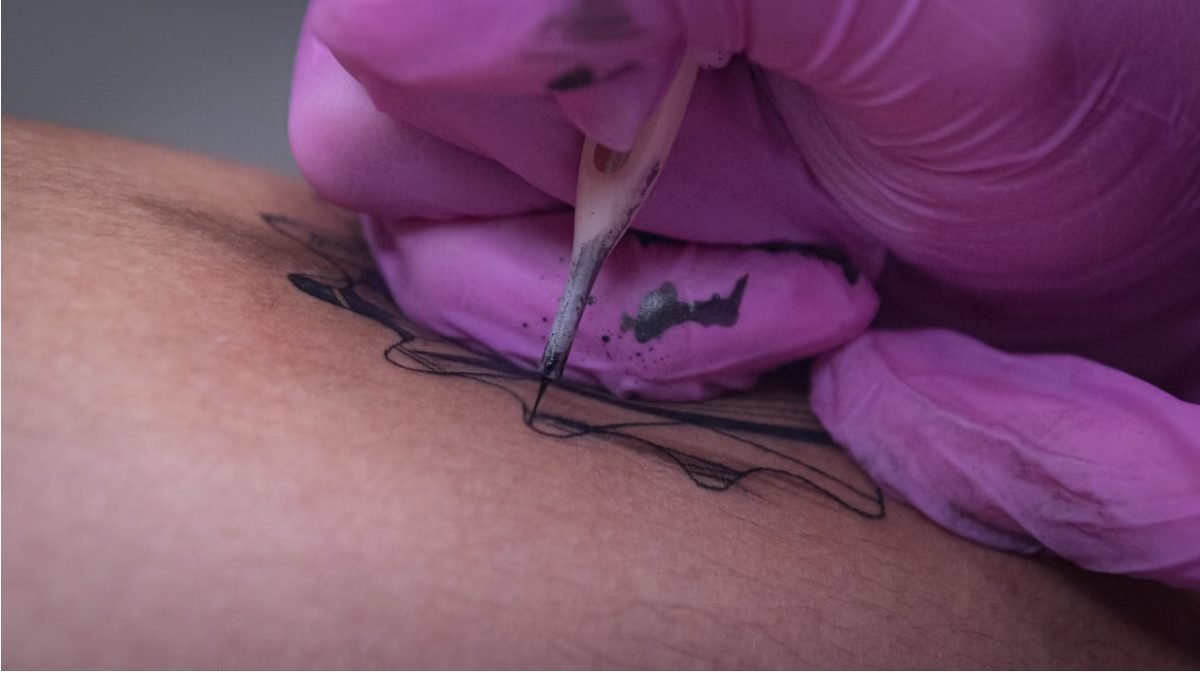
Tattoo ink is meant to sit in the dermis, the middle layer of skin, below the outer epidermis and above the fatty tissue underneath it. Medical sources including Cleveland Clinic describe tattooing as depositing pigment specifically into that dermis layer, because it’s dense and stable enough to hold ink in place for years without it drifting. A blowout happens when the needle pushes ink past the dermis and into the looser, fatty subcutaneous tissue below. That layer doesn’t hold pigment in place the way the dermis does — it’s soft, with more space between cells, so ink dropped there spreads outward instead of staying put. That’s why a blowout looks like blur or bruising around a line instead of a clean edge: you’re seeing ink scattered through fat, not ink sitting neatly inside skin.
A few things drive the needle too deep or let ink track sideways during a session:
- Needle depth and angle — pushing the needle in too far, or holding the machine at too steep an angle, drives ink below the dermis instead of depositing it evenly within it.
- Too much pressure or overworking a line — going over the same area repeatedly, or leaning hard on the machine, breaks down skin structure and pushes ink deeper than intended.
- Skin thickness in the area — thin skin gives the needle less dermis to work with, so it’s easier to blow through it into fat even with otherwise normal technique.
- Movement during the session — if you shift, tense up, or your skin stretches while the artist is working, the needle can hit a different depth on the next pass than it did on the last one.
- Artist experience — newer or less careful artists are more likely to misjudge depth, especially on tricky or thin-skinned spots.
One reason blowouts confuse people is that they don’t always look obvious on day one. A fresh tattoo is swollen and slightly raised no matter what, so mild spreading can hide inside normal inflammation for the first few days. It usually becomes clearer as the swelling goes down and the skin flattens out — if the edges still look soft, foggy, or wider than the original stencil once that happens, that’s the blowout showing itself rather than a new problem developing.
It’s worth separating this from normal healing. Skin oozing plasma, scabbing, and flaking in the first couple of weeks is expected — our tattoo aftercare guide covers what’s normal versus what’s not in detail. Peeling is part of the skin shedding process and isn’t related to blowout at all. A blowout is a structural placement issue caused during the tattooing itself, not something aftercare products cause or can fix on their own.
Which Areas Are Most Prone to Blowouts
Blowouts aren’t random. They cluster on parts of the body where skin is naturally thin, loose, or moves constantly. Less dermis means less margin for error, so even a slight depth mistake is more likely to break straight through into fat.
- Fingers and hands — skin here is thin and pulled tight over bone and tendon, with very little cushioning underneath.
- Wrists and inner wrists — thin, mobile skin that stretches with normal, everyday movement.
- Ankles and the top of the foot — thin skin sitting directly over bone, a similar risk profile to fingers.
- Inner arm, including the inner bicep and inner forearm — noticeably softer and thinner than the outer arm.
- Ribs and other areas with a lot of skin movement, where an artist can’t always get a fully taut, stable surface to work on.
These spots aren’t off-limits, and plenty of people get tattooed on hands, wrists, and ankles with no issues at all. But they leave less room for error, so technique and artist experience matter more there than they do on a thigh or upper back. If you’re still deciding where to put your next piece, it’s worth weighing blowout risk alongside pain level and visibility. Our tattoo placement guide breaks down skin thickness and healing considerations by body area in more detail.
For a general overview of how skin repairs itself after trauma, MedlinePlus’s guide to how wounds heal covers the stages skin goes through.
Can a Tattoo Blowout Be Fixed?
The honest answer is: not fully, and not by anything you do at home. A blowout is ink already sitting in the wrong layer of skin — there’s no cream, ointment, or technique that pulls it back into the dermis once it’s spread into fat. What’s actually possible depends heavily on when you catch it and how you respond, which is why early detection and later correction look very different.
| Stage | What’s Happening | What Can Help |
|---|---|---|
| First few days to weeks (still healing) | Ink has already spread; the full extent is often hidden by normal swelling and scabbing | Nothing reverses the spread itself, but keeping the area clean, avoiding friction and tight clothing, not over-moisturizing, and not picking at scabs prevents extra trauma that can make it look worse. Follow standard aftercare closely. |
| After full healing (blowout confirmed, roughly 2+ months out) | The blurred or smudged area is now settled and effectively permanent as-is | Laser treatment to lighten and break up the spread ink, a cover-up or rework designed around the blurred area, or, in rare severe cases, surgical excision. None of these “undo” the blowout — they manage or disguise it. |
Laser correction typically takes multiple sessions with a licensed provider and works by breaking the spread ink into smaller particles your body can gradually clear — it lightens the blur, it doesn’t erase it outright. A cover-up or rework relies on a skilled artist designing new linework or shading that absorbs or disguises the blurred area, which is often the more practical and affordable fix for smaller blowouts. Surgical removal is the most invasive route and leaves a scar, so it’s generally reserved for severe cases where the other two options aren’t realistic. Whichever route you’re considering, wait until the tattoo is fully healed, generally around the two-month mark, before deciding, since a lot of what looks like blowout at week two is actually just normal swelling and scabbing that settles down on its own.
How to Prevent a Blowout Before You Get Tattooed
Prevention happens almost entirely before the needle touches your skin. Once a blowout has occurred, aftercare can’t undo it, so the real leverage is upfront, in who you choose and what you ask them.
- Choose an experienced artist, not just a cheap or convenient one. Look at healed photos in their portfolio, not just fresh ones, specifically of fine linework or the placement you’re considering. An artist who’s tattooed thin-skin areas before knows how to adjust depth and pressure for them.
- Ask directly about technique for your placement. It’s a completely fair question to ask how they handle needle depth on hands, wrists, ankles, or ribs. A confident, specific answer is a good sign; vagueness isn’t.
- Factor placement into the design itself. If you want fine detail or thin lines, thin-skin areas carry more risk. Consider whether the design truly needs to go there or could work just as well on a location with thicker skin. Our tattoo placement guide covers this trade-off in more depth.
- Prep your skin and body beforehand. Well-hydrated, healthy skin gives the artist a more predictable, stable surface to work on. Our guide to preparing for a tattoo covers what actually helps.
- Stay still and communicate during the session. Movement changes needle depth mid-line, so if you need a break, ask for one instead of shifting position on your own.
- Follow aftercare exactly once it’s done. You can’t prevent a blowout after the fact, but sticking closely to your artist’s instructions and our tattoo aftercare guide avoids adding friction or trauma that can make any existing spread look worse while it heals.
None of this guarantees a blowout will never happen — even skilled, experienced artists occasionally get one on a genuinely difficult area, and some clients’ skin is simply more prone to spreading than others. But choosing your artist carefully, having an honest conversation about placement, and following aftercare closely stack the odds heavily in your favor, which is really all prevention can offer here.
FAQ
How do I know if it’s a blowout or just normal healing?
Normal healing includes redness, swelling, scabbing, and peeling that stays close to the tattooed lines and improves week over week. A blowout looks like ink blur or shading extending outward beyond the linework, often with a grayish or bruised tint, and it doesn’t resolve as the tattoo heals — the blur is still there once swelling goes down. If you’re unsure, wait until around the two-week mark when initial swelling has faded, then compare the edges to the original design. If lines look feathered or spread rather than crisp, mention it to your artist.
Can a tattoo blowout go away on its own?
No. A blowout is ink already deposited in the wrong layer of skin, and normal skin healing doesn’t relocate it. It can look slightly different once full healing settles in at around the two-month mark, since swelling and scabbing that were exaggerating the appearance will be gone, but the underlying spread itself doesn’t disappear on its own.
Does a tattoo blowout get worse over time?
It generally stays close to where it settled once your tattoo is fully healed — it’s not something that keeps spreading indefinitely. That said, sun exposure, skin aging, and weight changes can make any tattoo, blowout or not, look softer or blurrier over the years, so it may become more noticeable long-term even without any active spreading.
Is a tattoo blowout the artist’s fault?
Most of the time, yes — a blowout typically comes down to needle depth, angle, or pressure during the session, which is a technique issue. That said, thin or fragile skin, certain medications, or unexpected movement can make even an experienced artist’s job harder on specific placements. It’s still worth choosing an artist with a strong track record on tricky spots like hands, wrists, or ribs to lower the risk before you book.
This article provides general educational information and does not replace personalized instructions from your tattoo artist or medical care from a qualified healthcare professional.