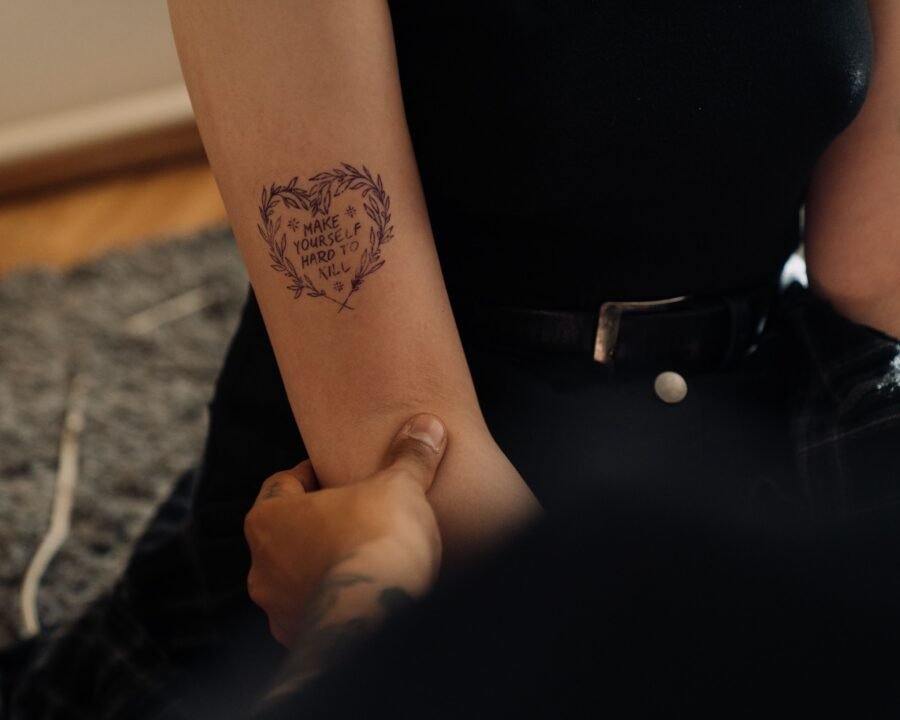
The best rib tattoo sleeping position is usually on the side opposite the tattoo. If the tattoo extends across both sides, your chest or your back, try sleeping in a supported position on your back without allowing bedding or clothing to press against it. Healing a sternum tattoo raises the same sleeping and clothing problems, with its own guide.
The goal is not to remain perfectly motionless. It is to reduce direct pressure, rubbing, sweat and fabric sticking to tender tattooed skin. Follow your tattoo artist’s covering and aftercare instructions first.
This guide covers sleeping and healing. If you are still deciding on the placement or preparing for the session itself, see our rib tattoo pain guide.
Best Rib Tattoo Sleeping Position by Placement
| Tattoo placement | Sleeping position to try | What to avoid |
|---|---|---|
| Left ribs | Right side | Sleeping directly on the left side |
| Right ribs | Left side | Sleeping directly on the right side |
| Side ribs extending toward the back | Opposite side or supported back position | Twisting onto the tattoo |
| Side ribs extending toward the chest | Opposite side with chest supported | Stomach sleeping |
| Both sides of the ribs | Supported back position | Rolling heavily onto either side |
| Under-breast or upper-rib tattoo | Back or opposite side | Tight clothing and skin-to-skin pressure |
Your comfort and the tattoo’s exact position matter. Stop using a position if it creates pulling, burning, throbbing or increasing discomfort.
How to Arrange Your Pillows
Place a firm pillow behind your back when sleeping on the opposite side. This creates a barrier that makes it harder to roll toward the tattoo during the night.
A second pillow between your knees can stabilize your hips and reduce twisting through your torso. Hold another pillow against your chest if that makes the side position more comfortable.
If you must sleep on your back, elevate your upper body slightly with a wedge pillow or two supportive pillows. Place pillows beside your body to limit rolling, but do not press them directly against the tattoo.
Avoid complicated arrangements that restrict breathing, circulation or your ability to get out of bed safely.
How Long Should You Avoid Sleeping on a Rib Tattoo?
There is no universal number of nights. Avoid direct pressure while the tattoo is tender, moist, weeping, heavily peeling or scabbed. Resume your normal position gradually when the surface is dry, comfortable and no longer irritated by light contact.
Large, heavily shaded rib tattoos may remain tender longer than a small fine-line piece. Healing also varies with your skin, movement, clothing and aftercare routine.
Use the tattoo’s condition rather than forcing yourself to follow an exact deadline. Our tattoo healing stages guide explains what may happen as the surface recovers.
Prepare the Tattoo Before Bed
Wash your hands before touching the tattoo or its covering. If your artist told you to remove the initial bandage, wash the tattoo gently with lukewarm water and a mild fragrance-free cleanser.
Pat the area dry with clean disposable paper towel. Do not scrub it with a towel or sponge. Apply only the thin amount of moisturizer recommended by your artist. Too much product can leave the tattoo overly wet and more likely to stick to fabric.
Cleveland Clinic recommends gentle washing, light moisturizing and loose clothing as part of tattoo aftercare.
Use Clean, Breathable Bedding
Use freshly washed sheets before your appointment or change them when you return home. Dark-colored bedding can reduce anxiety about small temporary stains from plasma and excess surface pigment.
Choose smooth, breathable fabric rather than rough or heavily textured blankets. Keep pets away from the healing tattoo and avoid sharing bedding if doing so increases contact with dirt, hair or accidental scratching.
Do not place a loose towel directly over the tattoo. If you use a clean towel beneath your body to protect the mattress, make sure it remains flat and does not rub the tattoo.
What If the Tattoo Sticks to the Sheets?
Do not pull dry fabric away from the tattoo. Wet the attached area with clean lukewarm water and wait for it to release gently.
After the fabric separates, wash the tattoo, pat it dry and inspect it without picking at the skin. Contact your artist if a substantial scab was removed, bleeding restarts or the area looks damaged.
Follow the complete steps in Tattoo Stuck to the Sheets: What to Do.
Sleeping With Second Skin on a Rib Tattoo
An intact adhesive covering can help protect the tattoo from bedding and friction, but it does not make direct pressure ideal. Check that all edges remain sealed before bed.
Rib movement from breathing, twisting and stretching can loosen the adhesive. Wear a clean, loose shirt if it does not drag across the edges.
If the bandage leaks, develops a hole or exposes part of the tattoo, do not press a contaminated edge back down. Read our second skin leaking guide or our guide for when second skin comes off early.
What Clothing Should You Wear to Bed?
A clean, oversized shirt is often more comfortable than tight sleepwear. Choose soft, breathable fabric without seams or elastic pressing directly across the tattoo.
Some people may be more comfortable without a shirt if they have clean bedding and can keep the tattoo from contacting other surfaces. Follow your artist’s advice based on the covering and tattoo placement.
Avoid:
- Tight compression shirts
- Rough seams over the tattoo
- Restrictive bras or elastic bands crossing the area
- Clothing that traps heavy sweat
- Dirty sleepwear
- Fuzzy material that sheds fibers
How to Reduce Sweating at Night
Keep the bedroom comfortably cool and use lightweight bedding. Avoid piling heavy blankets over the tattooed side of your body.
Change damp clothing or bedding rather than allowing wet fabric to remain against the tattoo. If you wake up sweaty, wash the tattoo according to your artist’s instructions and replace the damp bedding.
Do not aim a dirty fan directly at an uncovered fresh tattoo. General airflow in a clean room is sufficient.
What If You Roll Onto the Tattoo?
Briefly rolling onto the tattoo does not automatically ruin it. Move away from the tattoo carefully instead of dragging your body across the sheet.
Inspect the covering or skin in good light. Check for leaking, lifted adhesive edges, fresh bleeding or fabric stuck to the surface. If everything remains intact and discomfort settles, continue your normal aftercare.
Persistent pain after pressure, renewed bleeding or a damaged covering should be discussed with your tattoo artist.
Can You Sleep on Your Stomach?
Stomach sleeping may work for a tattoo limited to the outer back portion of the ribs, provided the mattress and bedding do not press or pull on it.
Avoid stomach sleeping when the tattoo extends toward the chest, front ribs or under-breast area. This position may increase pressure and heat over the tattoo.
Use pillows to prevent your torso from rotating onto the tattoo. Never choose a position that makes breathing uncomfortable.
Can You Sleep on a Rib Tattoo After It Starts Peeling?
Peeling does not mean the tattoo is completely healed. Flakes and light scabs can still be pulled away by friction.
Continue avoiding direct pressure while the surface is actively peeling or feels tender. Do not scratch the tattoo against the bedding even when itching becomes distracting.
Read Why Is My Tattoo Itchy? for safer ways to manage normal healing itch.
Signs Your Sleeping Position Is Causing Irritation
Change positions if you notice:
- Increased stinging while lying down
- Bedding rubbing the same area repeatedly
- Redness that is worse after sleeping
- A bandage lifting at the edges
- Fresh bleeding after pressure
- Fabric sticking to the tattoo
- Increasing swelling or throbbing
- Sweat remaining trapped against the skin
The tattoo should generally become more comfortable over time. A position that makes symptoms progressively worse is not suitable yet.
When to Contact Your Artist or a Doctor
Contact your artist if the covering is damaged, the tattoo repeatedly sticks to bedding, a substantial scab is pulled away or you cannot find a position that avoids severe rubbing.
Seek medical advice for spreading redness, increasing warmth, worsening pain, substantial swelling, pus, unpleasant odor, red streaks or fever. The FDA’s tattoo-safety guidance recommends contacting a healthcare professional when a tattoo is not healing normally or develops a rash, bumps or fever.
Frequently Asked Questions
Can I sleep on the opposite side after a rib tattoo?
Yes. The opposite side is usually the simplest position because it keeps direct body weight away from the tattoo.
How do I stop myself from rolling onto it?
Place a firm pillow behind your back and another between your knees. This can stabilize your body and discourage rolling.
Should I cover my rib tattoo at night?
Use only the covering recommended by your artist. Do not improvise with household plastic wrap or an unapproved bandage.
Can I sleep shirtless with a rib tattoo?
Possibly, if your bedding is clean and the tattoo will not rub against another person, pet or rough fabric. Follow your artist’s instructions.
What if the rib tattoo touches the mattress?
Brief contact is unlikely to destroy it, but continuing pressure and friction should be avoided while the skin is tender or peeling.
When can I return to my normal sleeping position?
Return gradually when the tattoo is dry, closed, comfortable and no longer irritated by light contact.
The Bottom Line
For a tattoo on one side of the ribs, sleep on the opposite side and use pillows to prevent rolling. A supported back position can work when the tattoo spans a larger area. Keep bedding clean, avoid tight clothing and do not pull away fabric that sticks. Resume your normal position only when direct contact no longer irritates the healing skin.
This article provides general educational information and does not replace advice from your tattoo artist or a qualified healthcare professional.