Second skin leaking from the edge of a tattoo bandage usually means the protective seal has broken. Remove the bandage unless your tattoo artist or the product instructions tell you otherwise, then gently clean the tattoo and follow the aftercare instructions you were given. Fluid pooling beneath an intact seal can be normal; fluid escaping from an edge is different.
Do not puncture the film, drain the pocket or patch the opening with household tape. Remove the compromised covering safely, clean the tattoo and follow your artist’s instructions about applying a fresh bandage or continuing with open aftercare.
| What you see | Is the seal intact? | What to do |
|---|---|---|
| Plasma, blood, or ink pooled underneath | Yes, everything remains contained | Usually leave it alone and follow your artist’s instructions. |
| Fluid escaping from an edge | No | Remove the bandage, gently clean the tattoo, and follow your normal aftercare instructions. |
| Water has entered beneath the film | No | Remove it because the protected area is no longer sealed. |
| An outer edge is lifting but the tattoo remains sealed | Possibly | Monitor it and contact your artist if the lifting reaches the tattoo. |
| Burning, blisters, or an expanding adhesive-shaped rash | Possible skin reaction | Remove the film and contact a healthcare professional if symptoms are severe or worsening. |
| Increasing heat, pain, redness, pus, or fever | Not simply a bandage problem | Seek medical care promptly. |
Second Skin Leaking: What to Do Immediately
If fluid is leaking from beneath the second skin:
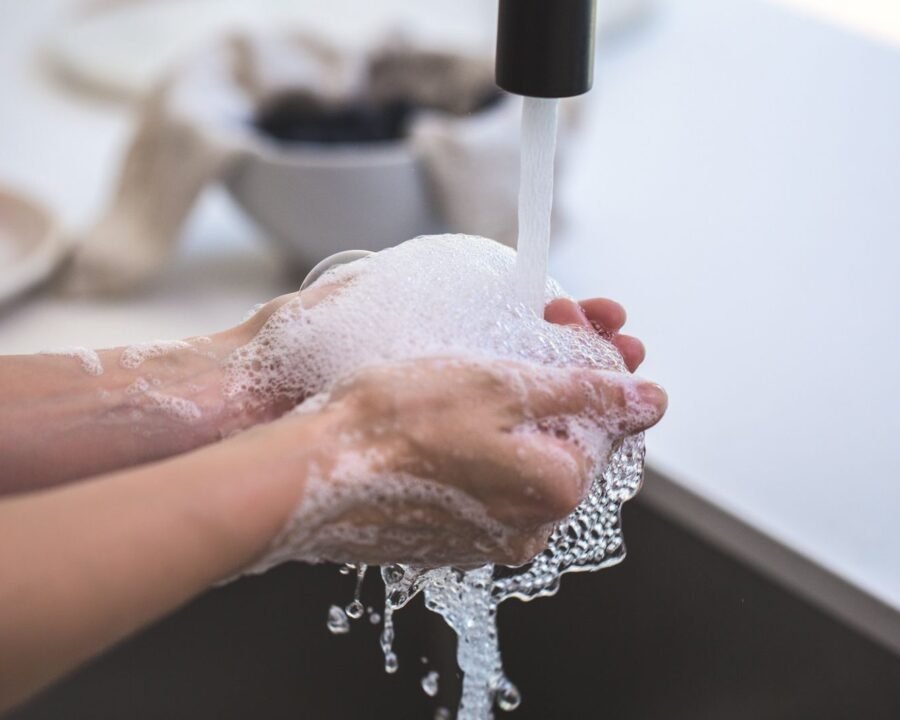
- Wash your hands thoroughly.
- Do not press the fluid back underneath the film.
- Do not cover the leaking edge with tape.
- Remove the compromised film under warm running water.
- Peel it slowly back over itself rather than pulling upward.
- Gently wash the tattoo using clean hands and lukewarm water.
- Use a mild, fragrance-free cleanser if recommended by your artist.
- Pat the tattoo dry with a clean disposable paper towel.
- Allow the skin to finish drying.
- Contact your artist if you are uncertain whether another film should be applied.
Saniderm states that leaking indicates a break in the adhesive seal. Once this happens, the covering is no longer providing its intended barrier. See the manufacturer’s official guidance for leaking tattoo film.
Is Fluid Under Second Skin Normal?
Fluid underneath an intact second-skin bandage can be expected during the earliest stage of tattoo healing.
A fresh tattoo may release:
- Clear or yellowish plasma
- Small amounts of blood
- Excess surface ink
- Lymph fluid
These materials can combine into a dark, cloudy or reddish pocket commonly called an “ink sac.” Its appearance can be dramatic, particularly over heavily saturated or colorful tattoos.
The important distinction is whether the fluid remains contained.
Fluid inside a properly sealed bandage and fluid leaking outside are not the same situation.
Weeping, Bleeding or Leaking: Which One Is Happening?
These three words get used interchangeably, but they describe different situations and only one of them needs action.
| What you see | What it means | What to do |
|---|---|---|
| Weeping under an intact film | The tattoo is releasing plasma and a little blood into the sealed pocket | Nothing. Leave the bandage alone. |
| Ink bleeding under the film | Excess surface pigment lifting off with the plasma, tinting the fluid | Nothing. The pigment in the dermis stays put. |
| Fluid escaping past an edge | The seal has failed and the tattoo is now exposed | Remove the bandage, wash, and either re-wrap or go bandage-free. |
The practical dividing line is the seal, not the volume of fluid. A bandage that looks alarmingly full but is still sealed on all sides is doing its job; a barely damp one with a lifted corner is not. Most manufacturers set the first bandage change at around the 24 hour mark, which is also when the plasma trapped inside stops being useful.
If the fluid is staying sealed under the film rather than escaping, you are looking at a different question entirely. See air bubbles and blood bubbles under second skin.
Why Is My Tattoo Leaking Fluid?
Tattooing creates thousands of small punctures in the skin. The body responds by sending fluid to the area during the initial healing process.
Some tattoos release more fluid than others. Factors can include:
- The tattoo’s size
- Heavy color saturation
- Dense blackwork
- The artist’s technique
- The placement on the body
- Movement and stretching
- Individual healing differences
- Pressure against the tattoo
Saniderm notes that tattoo weeping can continue for up to approximately 48 hours. Its official instructions explain that the fluid may contain plasma, blood and excess ink.
Fluid production itself does not necessarily mean something is wrong. The problem begins when excessive fluid weakens the adhesive and escapes.
Why Does Second Skin Start Leaking?
Excessive Fluid Accumulation
A large amount of plasma and ink can place pressure on the adhesive edges. Once the pocket reaches an edge, fluid may create a channel and begin leaking out.
Insufficient Border Around the Tattoo
The film needs enough clean, dry skin around the tattoo to create a reliable seal. If the adhesive ends too close to the tattooed area, fluid has less distance to travel before reaching an edge.
Movement and Stretching
Film placed over elbows, knees, shoulders, wrists, ankles or other highly mobile areas may lift as the skin bends and stretches.
Sweat
Heavy sweating can weaken the adhesive. Exercise also creates movement, friction and contact with shared surfaces.
If you recently exercised, read our guide explaining how long after a tattoo you can work out.
Clothing Friction
Tight waistbands, sleeves, socks, shoes and compression garments can roll or lift the edges of the film.
Water Entering the Film
Although many tattoo films are water-resistant, a lifted edge can allow shower water underneath. Once outside water enters, the original seal should no longer be considered reliable.
Skin Preparation
Adhesive may not bond properly when the surrounding skin is wet, oily or covered in too much moisturizer. Hair, wrinkles and uneven application can also interfere with the seal.
Should You Patch a Leaking Bandage?
No. Do not use household tape, additional pieces of film or glue to cover a leak.
A patch may stop visible dripping without restoring the clean environment that existed when the original covering was applied. If fluid escaped, contaminants may have entered through the same opening.
Patching can also trap moisture and debris against the tattoo.
The safer approach is to remove the compromised covering, clean the tattoo and decide whether a completely fresh application is appropriate.
Should You Puncture the Ink Sac?
No. Never puncture the fluid pocket. A sealed pocket that is not leaking is a different question from a broken seal — our guide to air bubbles and fluid pockets under second skin covers that case in full, and this page stays on what to do once fluid is actually escaping.
Creating a hole intentionally breaks the protective barrier and gives contaminants a path underneath the film. It may also introduce bacteria from the pin, needle or your hands.
Do not squeeze, massage or repeatedly press the fluid toward an edge. Leave an intact pocket alone unless it becomes excessive, begins leaking or your artist tells you to remove the covering.
How to Remove Leaking Second Skin
Use this method to reduce pulling and irritation:
- Wash your hands with soap and water.
- Enter a warm shower or allow warm water to soften the adhesive.
- Find an edge that is already loose.
- Pull the film slowly back over itself.
- Keep the film close and parallel to your skin.
- Move in the direction of hair growth when possible.
- Use additional warm water if the adhesive feels firmly attached.
- Continue gradually rather than ripping it off.
Do not pull the film straight upward like a wax strip. Saniderm’s removal guidance recommends peeling it back over itself.
How to Clean the Tattoo After a Leak
Once the film is removed:
- Rinse the tattoo gently with lukewarm water.
- Use clean fingertips rather than a washcloth, sponge or loofah.
- Apply a mild, fragrance-free cleanser if your artist recommends one.
- Gently remove the remaining plasma and surface ink.
- Rinse the cleanser away thoroughly.
- Pat the tattoo dry using a clean disposable paper towel.
- Do not rub or scrub the skin.
- Allow the tattoo to finish drying before applying anything else.
Cleveland Clinic recommends washing your hands before removing a tattoo covering and gently cleaning the tattoo afterward in its tattoo aftercare instructions.
Can You Apply New Second Skin After It Leaks?
Possibly, but do not automatically reapply it.
A fresh replacement may be appropriate when:
- Your artist recommends reapplication.
- The product instructions permit it.
- The tattoo is still within the appropriate application period.
- The tattoo has been cleaned properly.
- The skin is completely dry.
- There is no scabbing or significant irritation.
- You have a new, unused piece of tattoo film.
- You can create a clean seal around the entire tattoo.
Do not reuse the leaking film. Do not apply a replacement over dirty, damp or heavily moisturized skin.
If the tattoo has begun scabbing or peeling, or if you are unsure how to apply the product hygienically, contact your artist and continue with the aftercare routine they recommend.
Our guide explaining how long to leave second skin on a tattoo covers the difference between initial and replacement applications.
Leaking at awkward times
Second skin rarely fails at a convenient moment. The response is the same in each case — remove the compromised film, clean the tattoo, protect it — but the practical steps differ.
| Situation | What to do | What not to do |
|---|---|---|
| It leaks overnight | Remove the film when you notice it rather than sleeping on a broken seal. Wash your hands, take it off carefully, clean the tattoo, then use clean bedding and loose clothing | Do not sleep through it and deal with it in the morning, and do not press the tattoo against unwashed sheets |
| It leaks while you are out | Find a clean bathroom, wash your hands, remove the film carefully, rinse with clean lukewarm water, pat dry with a fresh paper towel, and keep it off dirty surfaces until you get home | Do not keep touching the leak with unwashed hands, and do not tape or patch it to get through the day |
| Only an outer edge is lifting | If the tattoo itself is still fully sealed and no fluid is escaping, it can usually stay on. Watch it — a lifting edge often becomes a leak | Do not re-stick the edge with tape or a second piece of film; it does not restore a sterile seal |
In all three cases, if you cannot reach your artist straight away, fall back on the open-healing routine they gave you — or the general routine in our tattoo aftercare guide — until you can ask whether another film should go on.
Can You Shower With a Leaking Bandage?
Do not continue wearing a film that is actively leaking.
Use the shower as a clean environment to remove the covering. Keep the water lukewarm and avoid directing a forceful stream at the fresh tattoo.
After the film is removed, wash gently and pat the tattoo dry. Our guide to showering after a tattoo provides detailed instructions.
Is Leaking a Sign of Infection?
Leaking film alone does not prove that a tattoo is infected. The fluid may simply be normal plasma, blood and excess ink escaping through a failed adhesive edge.
However, a broken seal means the tattoo is no longer protected as intended. Clean it promptly and monitor how the area changes.
Seek medical advice for:
- Rapidly spreading redness
- Pain that keeps becoming worse
- Increasing heat or substantial swelling
- Thick pus or unusual drainage
- Red streaks extending from the tattoo
- Fever or chills
- A strong unpleasant smell that remains after cleaning
- Widespread blistering or a severe rash
TattooPiece cannot determine whether a tattoo is infected from its appearance alone. When symptoms are concerning, consult a qualified healthcare professional.
When to contact your artist or a doctor
Leaking on its own is a bandage problem, not a medical one. It is worth separating the two, because the people you would call are different.
Contact your artist when
- The film failed within the first several hours and you are unsure whether to reapply.
- You want to know whether a fresh piece of second skin is appropriate for your tattoo, or whether to switch to open healing.
- The tattoo looks patchy, cloudy or unusually pale once the film is off and you are not sure whether that is normal healing.
- You removed the film much earlier than the instructions specified and want revised aftercare.
- You are simply unsure. Artists would far rather answer a message than see a preventable problem at a touch-up.
Seek medical care when
- Pain is increasing rather than easing after the first few days.
- Redness is spreading outward from the tattoo, or red streaks appear.
- The area feels unusually hot, or thick or foul-smelling discharge develops.
- You have a fever or chills.
- Open sores, blistering or an expanding rash appear.
These signs are not caused by the bandage leaking, and they are not something to wait out. TattooPiece is not a medical provider, and this page is general information rather than medical advice — if these symptoms appear, have the tattoo looked at.
How to Help Prevent Future Leaks
Some leaks cannot be prevented because different tattoos release different amounts of fluid. These practices may help protect the adhesive:
- Follow the artist’s application and removal schedule.
- Keep the edges clean and dry.
- Avoid touching or picking at the covering.
- Wear loose clothing.
- Limit excessive movement across the tattooed area.
- Avoid heavy exercise and sweating.
- Keep showers brief.
- Do not soak in a bath, pool or hot tub.
- Do not apply lotion around the adhesive edges.
- Contact your artist if the fluid pocket becomes excessive.
Frequently Asked Questions
Is a plasma bubble under second skin normal?
A contained pocket of plasma, excess ink and small amounts of blood can occur during the first day. Monitor the seal and follow your artist’s instructions. Do not puncture the pocket.
Should I remove second skin if it is leaking?
Yes. Fluid escaping indicates that the adhesive seal has been compromised. Remove the film safely, clean the tattoo and follow your artist’s instructions regarding a replacement.
Can I tape down a leaking edge?
No. Household tape does not restore the original clean seal and may trap contamination underneath the covering.
Can I drain the fluid and keep the film on?
No. Puncturing or draining the film intentionally breaks the barrier. Remove the entire compromised covering instead.
Can I put another second skin on afterward?
A clean replacement may be possible if your artist and the product manufacturer permit it. The tattoo must be properly cleaned and completely dry. Do not reapply film over scabbing, peeling or significantly irritated skin without professional guidance.
Did leaking ruin my tattoo?
A leak does not automatically ruin a tattoo. Remove the failed covering, clean the area and continue appropriate aftercare. Avoid picking, rubbing and unnecessary moisture while it heals.
Why is my second skin full of black liquid?
The dark liquid is often a mixture of excess surface ink, plasma and a small amount of blood. It can look nearly black over heavily saturated tattoos. The important issue is whether the film remains sealed.
The Bottom Line
Fluid collecting beneath intact second skin can be a normal part of early tattoo healing. Fluid leaking outside means the adhesive barrier has broken.
Do not puncture, drain or patch the film. Remove it slowly under warm water, clean the tattoo with clean hands, pat it dry and contact your artist if you are uncertain about applying a replacement.
Monitor the tattoo after removal. Seek medical help if you develop spreading redness, worsening pain, fever, pus, red streaks, substantial swelling or another concerning reaction.
This article provides general educational information and does not replace personalized instructions from your tattoo artist or medical care from a qualified healthcare professional.
This is one part of the full second skin process — see our complete second skin tattoo aftercare timeline for the whole picture, from application to removal.
Last reviewed 20 August 2026 by the TattooPiece Editorial Team. General information about tattoo aftercare, not medical advice.