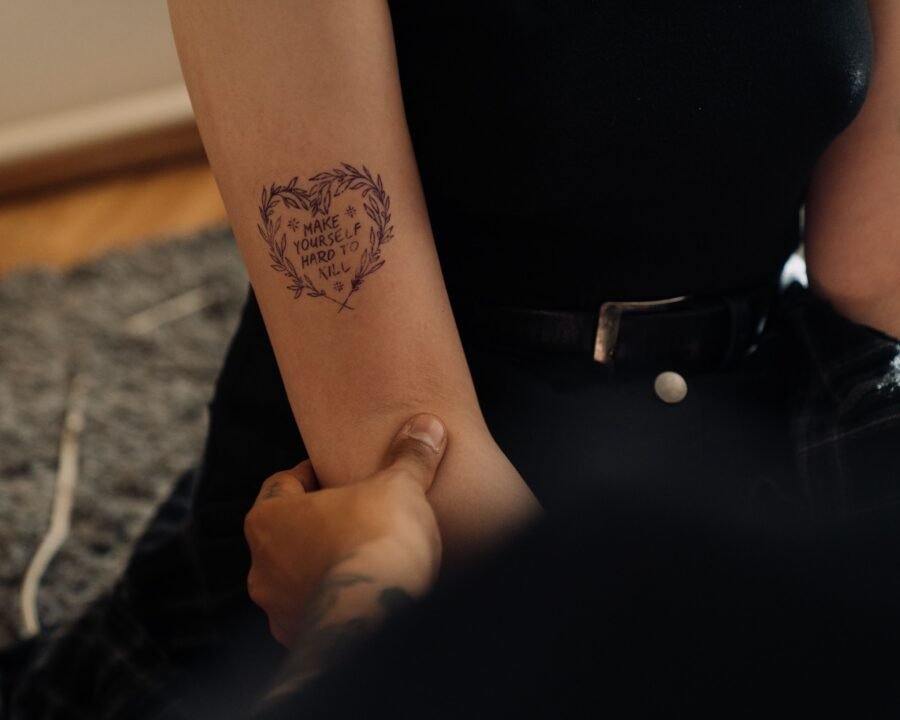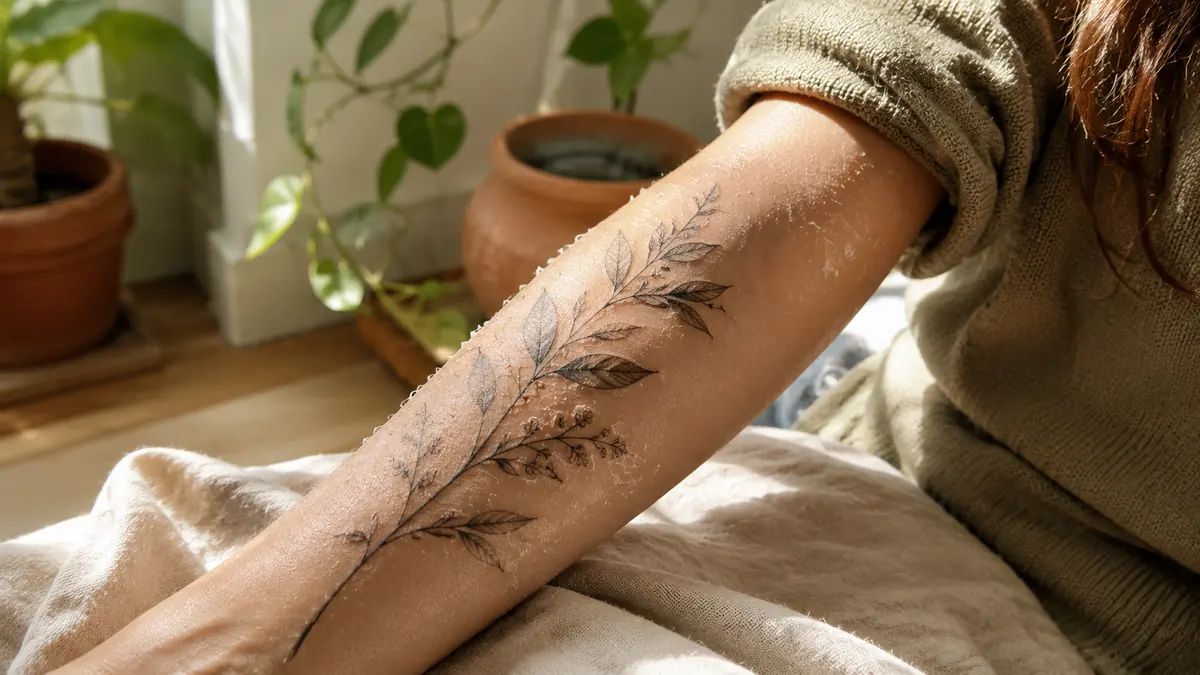
Tattoo peeling is usually a normal part of healing. It commonly begins several days after the appointment as the damaged outer layer of skin dries, flakes, and renews itself. The peeling should be light, gradually improve, and not be accompanied by worsening pain, expanding redness, fever, or unusual drainage. Hold off on sunscreen until peeling has finished — our guide covers when you can put sunscreen on a new tattoo. Softened scabs that lift early can also indicate the signs of over moisturizing a tattoo.
Do not pull, scratch, shave, or exfoliate peeling skin. Continue gentle washing and use only a thin layer of the moisturizer recommended by your tattoo artist. If symptoms become progressively worse instead of better, contact your artist and a healthcare professional.
Once peeling ends and the skin is fully closed, shaving becomes safe again — here’s when you can shave over a new tattoo.
When Does Tattoo Peeling Start?
Tattoo peeling often begins during the first week, although the exact timing varies. A small fine-line tattoo may begin flaking sooner and finish faster than a large, heavily shaded piece. Placement, skin type, clothing friction, climate, bandage type, and aftercare can also affect the timeline.
Before peeling begins, a fresh tattoo may look slightly red, swollen, shiny, or wet. A small amount of clear fluid, plasma, blood, or excess ink can appear during the early stage. As the surface begins closing, it may feel tight, dry, itchy, and lightly scabbed.
The Cleveland Clinic tattoo-aftercare guide explains that itching, flaking, and scabbing commonly occur during the first several weeks. Most people should notice less flakiness after approximately three weeks, although deeper layers of skin can continue healing for considerably longer.
For a complete timeline, read our guide to the tattoo healing stages.
Why Does a New Tattoo Peel?
A tattoo machine creates thousands of small punctures while depositing pigment beneath the skin. Your body responds by repairing the injured area and replacing damaged surface cells. The old outer layer dries and falls away as new skin develops underneath it.
This process can resemble peeling after mild sun exposure, but tattooed skin requires more careful treatment. Pulling away flakes before they detach naturally can irritate the area, reopen parts of the surface, and interfere with healing.
Some flakes may appear to contain color. This does not normally mean that all the tattoo ink is falling out. A mixture of dried fluid, dead surface cells, and excess pigment can make the peeling skin look dark or colored. The important pigment is placed deeper than the outer layer that flakes away.
What Does Normal Tattoo Peeling Look Like?
Normal tattoo peeling is generally light and should improve with time. Common characteristics include:
- Thin flakes of dry or colored skin
- Mild or moderate itching
- Light scabbing
- Temporary tightness or dryness
- A slightly cloudy or dull appearance
- Gradual improvement each day
- No expanding redness or increasing pain
A healing tattoo can temporarily look less bright after the flakes fall away. The new surface may appear shiny, cloudy, or slightly wrinkled while it continues settling. Avoid judging the final result until the tattoo has had sufficient time to heal.
Our article about why a new tattoo becomes itchy explains how to manage itching without scratching or damaging the skin.
Normal Peeling Versus Possible Warning Signs
| Usually associated with normal healing | Contact a professional about |
|---|---|
| Thin, light flakes | Thick discharge or pus |
| Mild itching | Pain that keeps increasing |
| Small, dry scabs | Redness that continues expanding |
| Temporary dryness | Skin that becomes increasingly hot |
| Gradual daily improvement | Fever, chills, or feeling unwell |
| Slightly dull-looking ink | Painful bumps, blisters, or a spreading rash |
This comparison cannot diagnose an infection or allergic reaction. According to the FDA’s tattoo-safety guidance, a tattoo that does not appear to be healing, or develops redness, bumps, a rash, or fever, should be discussed with the tattoo artist and a healthcare professional.
How Should You Care for a Peeling Tattoo?
Wash It Gently
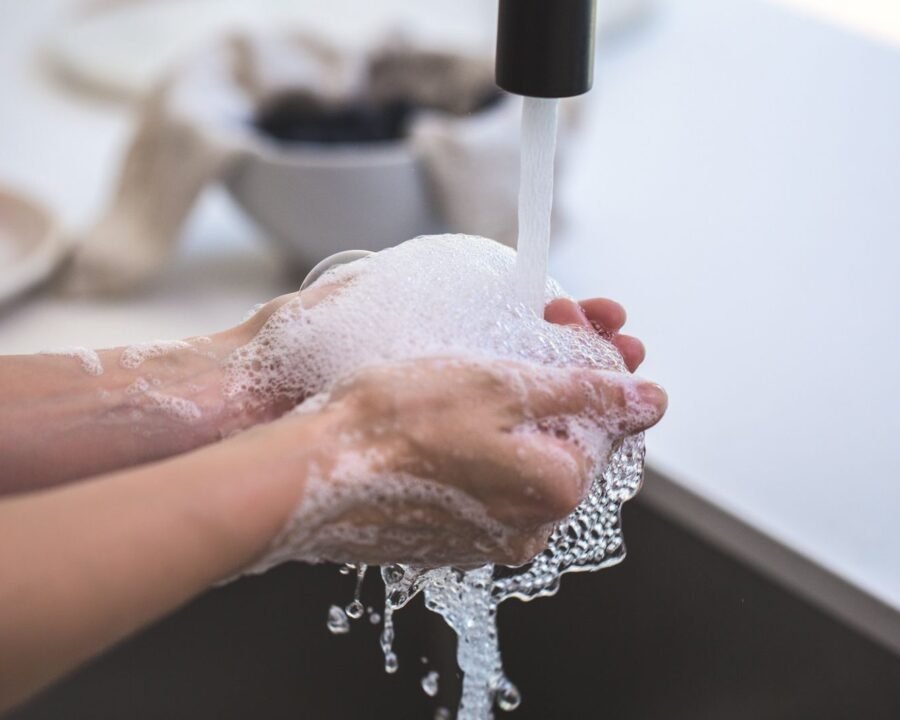
Wash your hands before touching the tattoo. Use lukewarm water and a mild, fragrance-free cleanser according to your artist’s instructions. Clean the skin gently with your fingertips rather than a washcloth, sponge, or body scrub. We cover which soaps meet that description in a dedicated guide.
Rinse away cleanser carefully and pat the area dry with a clean paper towel. Do not rub the tattoo. Read our complete instructions for showering after a tattoo.
Apply Only a Thin Layer of Moisturizer
If your artist recommends moisturizing, use a light, fragrance-free product in a thin layer. The skin should feel comfortable rather than wet, sticky, or heavily coated. Applying more product does not make the tattoo heal faster.
The American Academy of Dermatology recommends a water-based lotion or cream when tattooed skin feels dry. Follow your artist’s product instructions because recommendations can differ according to the covering and healing method being used. See the AAD’s guidance for caring for tattooed skin.
Avoid covering the tattoo in a thick layer of petroleum jelly unless a tattoo artist or healthcare professional specifically instructs you to do so. Our guide explains the concerns surrounding Vaseline on a new tattoo.
Reduce Friction and Irritation
Wear clean, loose, breathable clothing whenever possible. Tight sleeves, waistbands, socks, and rough fabrics can repeatedly rub against peeling skin and catch loose flakes.
Avoid unnecessary touching and keep pets, dirty surfaces, and unwashed bedding away from the healing tattoo. Do not reapply a removed adhesive covering unless your artist specifically instructs you to use a replacement.
What Should You Avoid While the Tattoo Peels?
Do not:
- Scratch or pick the tattoo
- Pull off loose flakes or scabs
- Shave over the healing area
- Use exfoliating scrubs, acids, or retinoids
- Apply strongly fragranced products
- Soak in baths, pools, hot tubs, lakes, or oceans
- Expose the healing tattoo to direct sunlight
- Wear clothing that repeatedly sticks to the tattoo
- Apply a thick layer of ointment or moisturizer
Picking may remove skin before it is ready to detach. If a loose flake catches on clothing, resist pulling it. Continue normal gentle care and allow it to fall away naturally.
How Long Does Tattoo Peeling Last?
Visible peeling commonly lasts approximately one to two weeks, but there is no exact schedule that applies to everyone. Larger tattoos, areas with frequent movement, heavily saturated color, and certain placements may take longer to settle. Colour-dense work in styles like neo-traditional is the clearest example of this.
The overall trend matters more than an exact number of days. Flaking, tenderness, redness, and itching should become less noticeable over time. A tattoo can continue healing beneath the surface even after the visible peeling stops.
Contact your artist if you are uncertain about the progress. Send a clear photograph if the artist offers remote aftercare guidance, but seek healthcare assistance for symptoms that may indicate an infection or significant reaction.
Is It Normal If a Tattoo Does Not Peel?
Not every tattoo produces obvious flakes. A small tattoo may shed such fine pieces of skin that you barely notice them. Differences in skin, placement, technique, covering, and aftercare can all affect how visible the peeling becomes.
A tattoo does not need to peel dramatically to heal correctly. Do not intentionally dry the tattoo, scrub it, or change your routine to make it peel.
Can You Moisturize a Peeling Tattoo?
You can generally moisturize a peeling tattoo when instructed by your artist, but use a small amount of a suitable fragrance-free product. If the tattoo stays shiny, sticky, or wet for a long time, you may be applying too much.
Stop using a product and seek appropriate guidance if it causes burning, a spreading rash, blisters, or painful bumps. Individual reactions can occur even with products commonly described as gentle.
When Should You Contact a Healthcare Professional?
Contact a qualified healthcare professional if you notice:
- Redness that expands beyond the tattoo
- Pain or swelling that becomes progressively worse
- Thick, yellow, green, or foul-smelling drainage
- Skin that feels increasingly hot
- Fever, chills, or weakness
- Red streaks extending from the tattoo
- A widespread or persistent rash
- Painful blisters or raised bumps
- Symptoms that improve and then suddenly worsen
When in doubt, getting appropriate professional advice is safer than attempting to diagnose the problem from photographs or social media comments.
The Bottom Line
Tattoo peeling is generally expected during healing. Light flakes, mild itching, small dry scabs, and temporary dullness can all occur as the surface renews itself. Let the skin shed naturally, wash gently, moisturize lightly when recommended, and avoid scratching, soaking, sunlight, and friction.
Pay attention to the direction of the symptoms. Normal healing should gradually improve. Worsening pain, expanding redness, unusual drainage, fever, or a significant rash require professional attention.
This article provides general educational information and does not replace personalized advice from a tattoo artist or qualified healthcare professional.