Choosing a tattoo style is about more than finding an image you like. Each style uses its own approach to line weight, color, shading, composition, and detail. Those choices affect how the tattoo looks from a distance, how much space it needs, and how it may change as the skin ages.
Before choosing, collect examples from artists rather than copying one finished tattoo. Look for a specialist whose healed work matches the style you want. Our tattoo ideas guide can help you develop the subject before selecting the visual style.
1. American Traditional Tattoos
American traditional tattoos are recognized by bold black outlines, a limited color palette, strong contrast, and simplified imagery. Roses, eagles, daggers, ships, snakes, skulls, and swallows are common subjects. The designs are intentionally readable and usually avoid tiny details that would disappear from a distance.
This style works especially well for individual statement pieces and collections built over time. It can fit many placements, although the design needs enough room for its outlines and solid color areas.
Want the full picture? Our dedicated american traditional tattoo style guide covers its history, classic motifs, and why the style holds up so well over time.
2. Neo-Traditional Tattoos
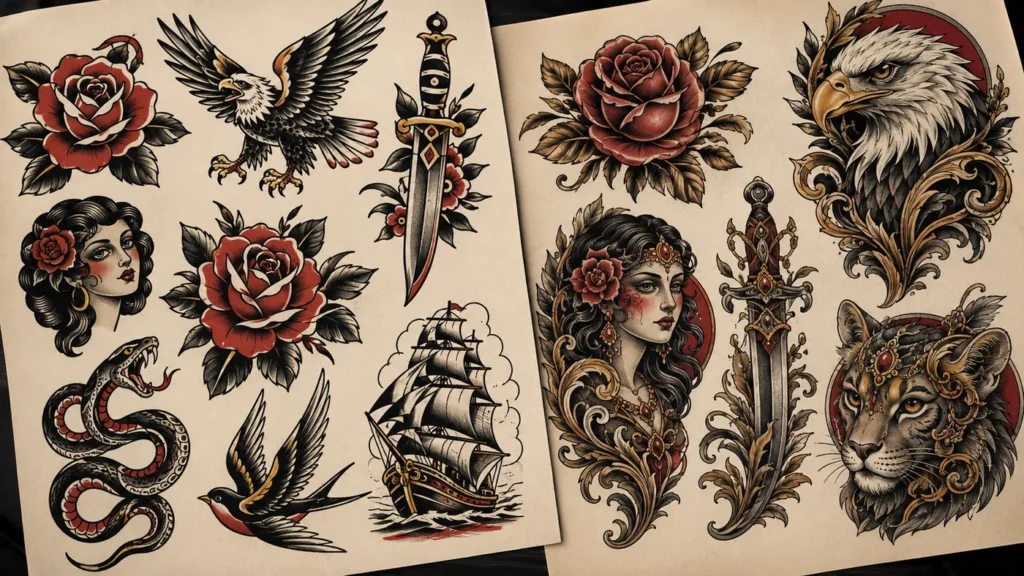
Neo-traditional tattooing develops the foundations of American traditional work with broader colors, more elaborate shading, decorative framing, and greater depth. The outlines usually remain strong, but the artwork may incorporate realistic faces, animals, flowers, jewels, and Art Nouveau-inspired shapes. We break the style down fully — including how it ages — in our neo-traditional tattoo guide.
Choose neo-traditional when you want a bold tattoo with richer detail and a more dramatic composition. Review healed portfolio photographs because complex color blending can look different after the tattoo settles.
3. Japanese Tattoos
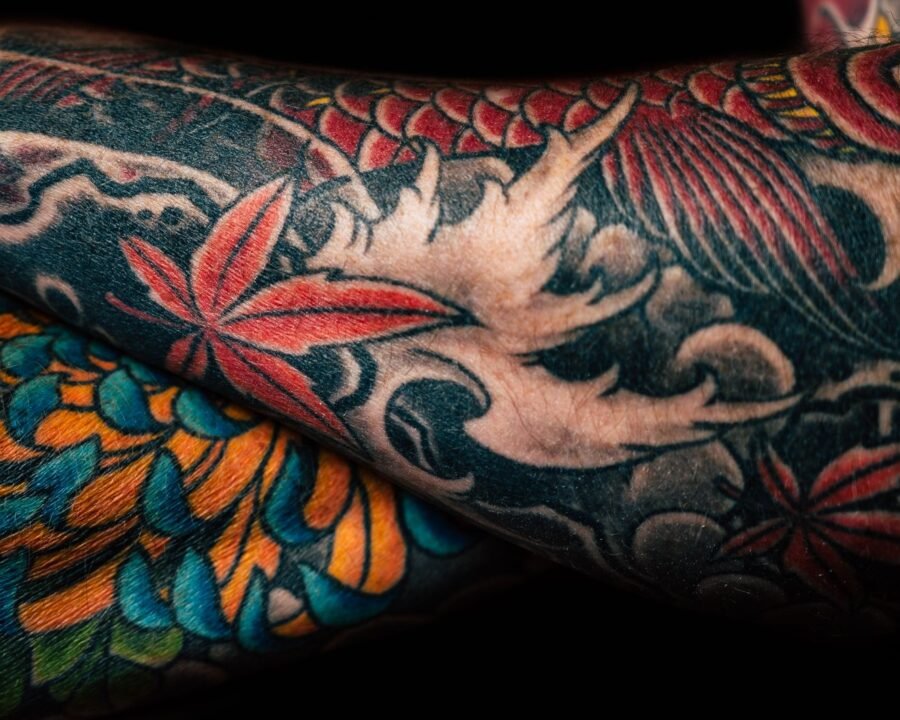
Japanese-style tattooing often uses large, flowing compositions designed around the movement of the body. Dragons, koi, tigers, snakes, peonies, chrysanthemums, waves, clouds, wind bars, and mythological figures may be connected into one unified scene.
Sleeves, back pieces, chest panels, and leg projects are common because the style benefits from space. Ask an experienced artist about symbolism, background elements, and how the complete composition will flow rather than selecting isolated imagery without context.
4. Realism Tattoos
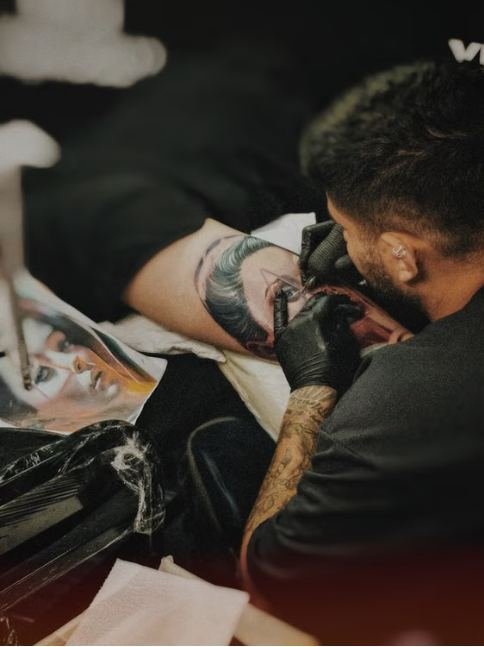
Realism attempts to recreate the appearance of a photograph or physical subject using smooth shading, accurate proportions, controlled contrast, and detailed textures. Portraits, animals, statues, landscapes, and cinematic imagery are popular subjects.
Realistic tattoos require enough size to preserve recognizable details. Look closely at healed work, not only fresh photographs, and choose an artist who specializes in either black-and-grey or color realism.
5. Micro-Realism Tattoos
Micro-realism applies realistic detail to a much smaller space. These tattoos can feature portraits, architecture, animals, paintings, or landscapes rendered with delicate lines and compact shading.
Small scale creates limitations. Extremely fine details and closely packed tones may soften together as the tattoo ages. Ask the artist which details should be simplified and whether increasing the design size would improve its long-term readability.
6. Fine-Line Tattoos
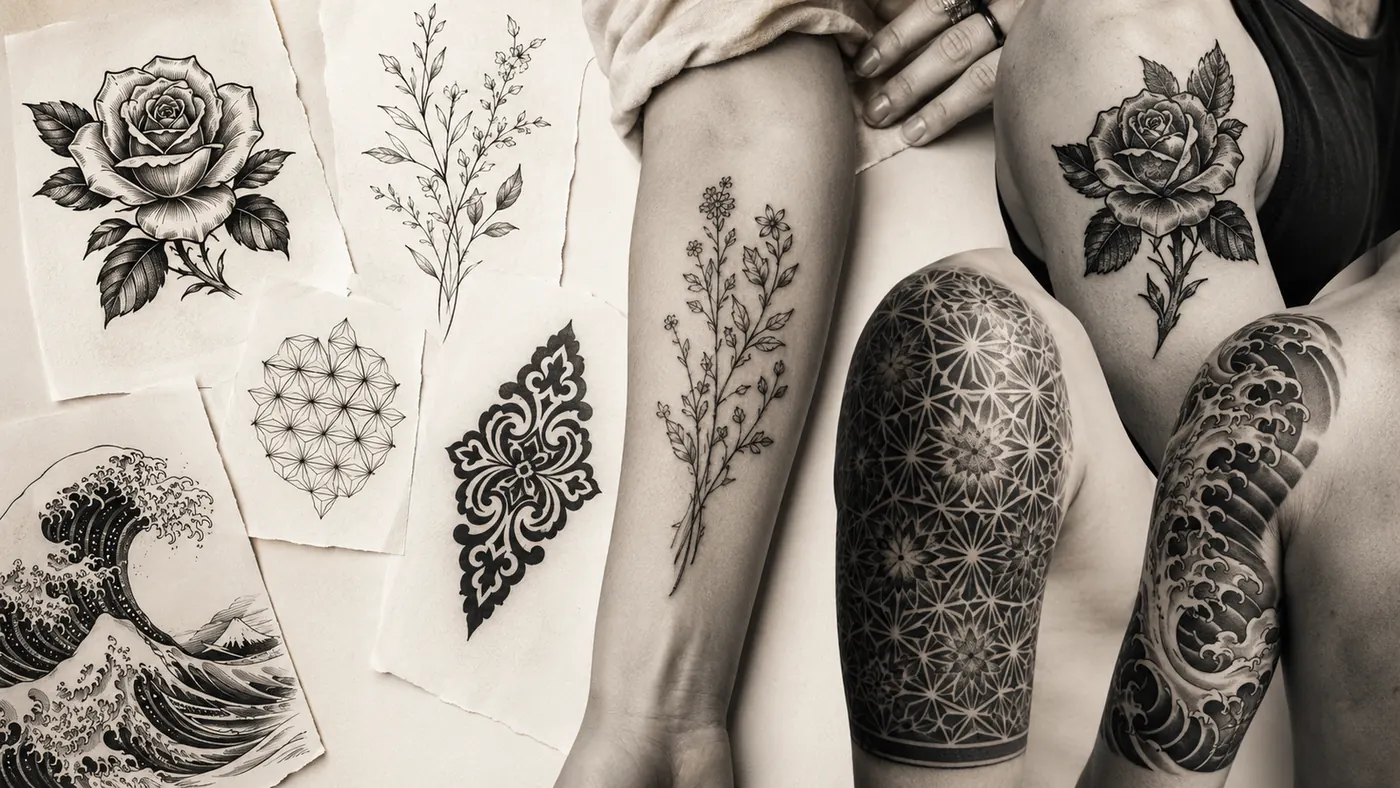
Fine-line tattoos use thin, controlled lines to create light and elegant designs. Botanical illustrations, delicate animals, scripts, symbols, and simplified portraits are common choices. The style can feel subtle even when the design covers a larger area.
Fine-line does not automatically mean tiny. A slightly larger design can preserve spacing and clarity better than compressing every detail. Choose an artist whose portfolio includes healed fine-line work and discuss whether the placement experiences heavy friction or sun exposure.
For a closer look at this style — its history, healing timeline, and how to choose subjects that age well — see our full fine line tattoo style guide.
7. Minimalist Tattoos
Minimalist tattoos communicate an idea using very few visual elements. A small silhouette, geometric mark, single-line drawing, date, or carefully chosen symbol may carry personal meaning without requiring complex shading.
Simple designs still require precision. Uneven spacing or an unclear shape can be obvious when there are no decorative elements to hide mistakes. Avoid shrinking the design so far that separate lines merge together.
8. Blackwork Tattoos
Blackwork describes tattoos created primarily with black ink. The category can include solid silhouettes, botanical pieces, abstract compositions, negative-space designs, geometric patterns, and large areas of saturated black.
Strong contrast makes blackwork visually powerful, but large solid sections require careful planning. Ask how negative space will separate the forms and how the design will follow the contours of the chosen body area.
For sub-styles, healing advice for heavy saturation, and how to vet an artist, see our complete blackwork tattoo style guide.
9. Cultural and Indigenous Tattoo Traditions
Many tattoo traditions carry cultural, spiritual, genealogical, or community meaning. They should not be treated as a collection of generic patterns. The Smithsonian explains that Indigenous tattooing has long communicated identity, social organization, ancestry, and belief, while Te Papa documents the specific cultural history and practice of Māori tā moko. Smithsonian, Te Papa
Research the tradition, understand whether a motif is appropriate for you, and work with an artist connected to or deeply educated in that practice. Avoid copying sacred, status-based, or identity-specific markings without understanding their significance.
10. Geometric Tattoos
Geometric tattoos use repeated shapes, precise lines, symmetry, pattern, and negative space. Designs may be purely abstract or may transform animals, plants, and natural forms into structured compositions.
Placement is especially important because the body is curved and constantly moving. Straight lines and circles must be adapted to the anatomy. Our tattoo placement guide explains how to test a design from several angles before approving the stencil.
11. Ornamental Tattoos
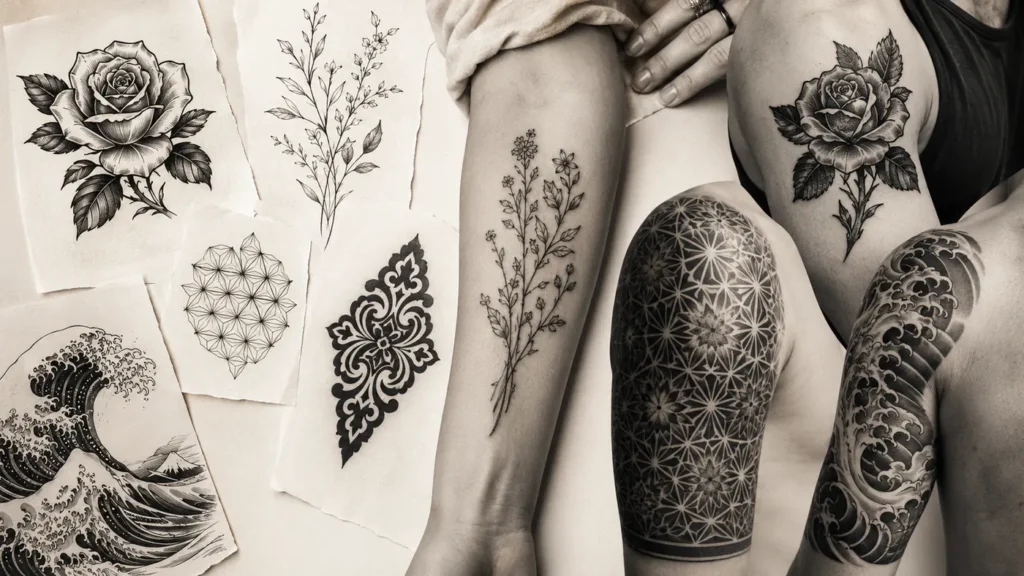
Ornamental tattooing takes inspiration from decorative arts, jewelry, architecture, lace, and symmetrical pattern work. Designs are often placed along the sternum, spine, shoulders, hands, or lower back to emphasize the body’s natural structure. If the sternum appeals, that placement has its own guide covering pain and healing.
The strongest ornamental pieces are designed for the specific person and placement. Ask the artist to create an original composition rather than reproducing another client’s custom tattoo.
12. Watercolor Tattoos
Watercolor tattoos imitate painted washes, color splashes, gradients, and brush-like edges. Some use little visible outlining, while others combine watercolor effects with a stronger black framework.
Examine healed examples before committing. Color contrast, design size, placement, and the use of structural lines can influence how clearly the composition remains readable over time.
13. Illustrative Tattoos
Illustrative tattooing combines tattoo techniques with the appearance of drawing, engraving, printmaking, comics, or storybook art. It can use clean outlines, cross-hatching, textured shading, or expressive shapes.
This category is broad, so the artist’s personal style matters greatly. Choose based on an entire portfolio rather than asking an artist to imitate a different illustrator exactly.
14. New School Tattoos
New school tattoos use exaggerated proportions, bold outlines, intense colors, dimensional shading, and cartoon-like energy. Characters, animals, graffiti-inspired forms, and surreal subjects are frequently pushed into playful or dramatic expressions.
The style benefits from room for color and movement. A successful piece should remain organized despite its exaggerated shapes, so discuss the visual focal point and background before finalizing it.
15. Patchwork Tattoos
Patchwork describes a collection of separate tattoos arranged across an arm, leg, or larger body area rather than connected into one continuous background. Individual pieces may share one style or combine several related approaches.
Plan the empty space from the beginning. Random placement can leave awkward gaps that are difficult to fill later. Decide whether you want consistent line weight, color, subject matter, or spacing to make the collection feel intentional.
How to Choose the Right Tattoo Style
Start with the subject and the feeling you want the tattoo to communicate. Then compare artists who interpret similar subjects in different ways. Save examples of line weight, shading, color, scale, and composition rather than collecting designs to copy.
Consider visibility, available space, clothing, sun exposure, and how the design moves with your body. A detailed realism piece and a minimalist symbol cannot always use the same size or placement successfully.
Choose the artist before finalizing every detail. A specialist can explain what should be simplified, enlarged, repositioned, or redesigned for the skin. Review healed photographs and confirm that the artist follows appropriate hygiene practices.
Questions to Ask Your Tattoo Artist
Ask whether the artist regularly works in your chosen style, whether they can show healed examples, how large the design should be, and which placements support the composition. Discuss the expected number of sessions, approximate cost, color choices, and whether future additions should be considered.
Before the appointment, confirm the artist’s preparation instructions. Afterward, follow their guidance and use our tattoo aftercare guide for general educational information.
Final Thoughts
The best tattoo style is not simply the one receiving the most attention online. It is the style that suits your subject, placement, preferred level of visibility, and chosen artist’s strengths. Take time to compare healed work, ask informed questions, and commission an original design that can remain clear and meaningful for years.