The best tattoo ideas combine a subject you genuinely connect with, an artistic style you enjoy, and a placement that suits the design. Instead of copying an existing tattoo, use references to communicate your preferred mood, subject, line weight, and composition, then let an experienced artist create an original design for your body.
This guide explores eight tattoo ideas and explains how to choose the right size, style, placement, and artist for your next piece.
1. Fine-Line Botanical Tattoo.
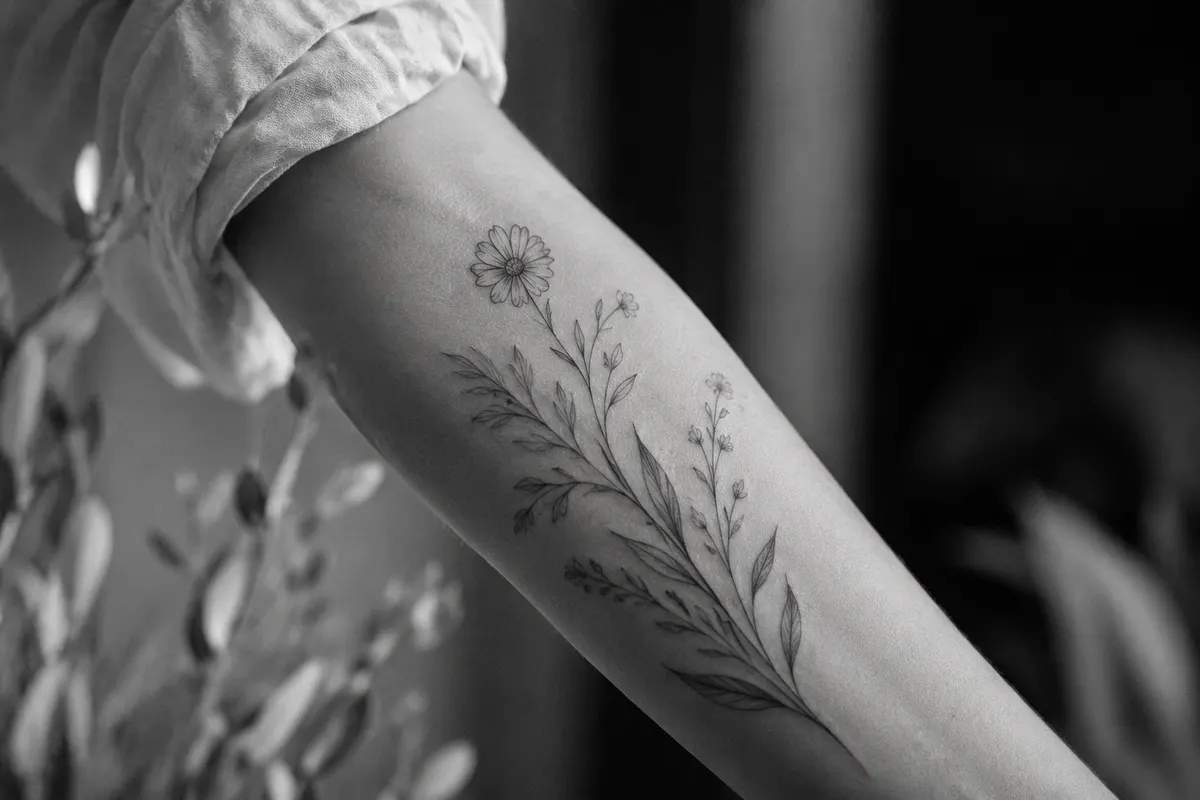
Fine-line botanical tattoos use delicate outlines to depict flowers, leaves, herbs, branches, and other natural forms. A botanical design can follow the shape of an arm, shoulder, ribs, thigh, or ankle without requiring a heavy composition.
Choose a plant connected to a memory, person, location, season, or personal quality. You could combine a birth flower with a plant from your hometown, or ask the artist to arrange several meaningful species into one original composition.
Fine lines require thoughtful spacing and an artist experienced with this style. Extremely tiny details may become less distinct as the tattoo ages, so discuss scale and long-term readability before finalizing the stencil.
2. Celestial Tattoo
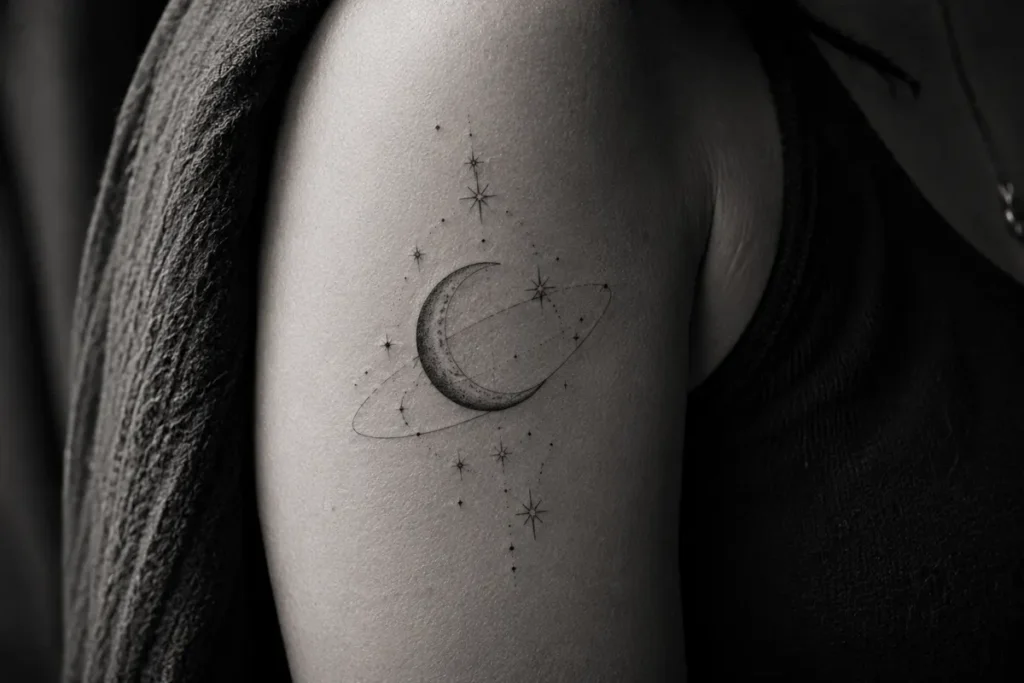
Celestial tattoo ideas can feature the moon, stars, planets, eclipses, constellations, or imagined maps of the night sky. These elements can work as a single minimal symbol or as part of a larger ornamental composition.
A celestial design may represent guidance, curiosity, transformation, time, or a connection to a particular place and moment. A constellation connected to an important date can make the concept more personal without requiring text.
Consider whether you prefer scientific accuracy, decorative symbolism, or a fantasy-inspired design. That decision will help your artist choose the appropriate line work, shading, and scale.
3. Animal Tattoo
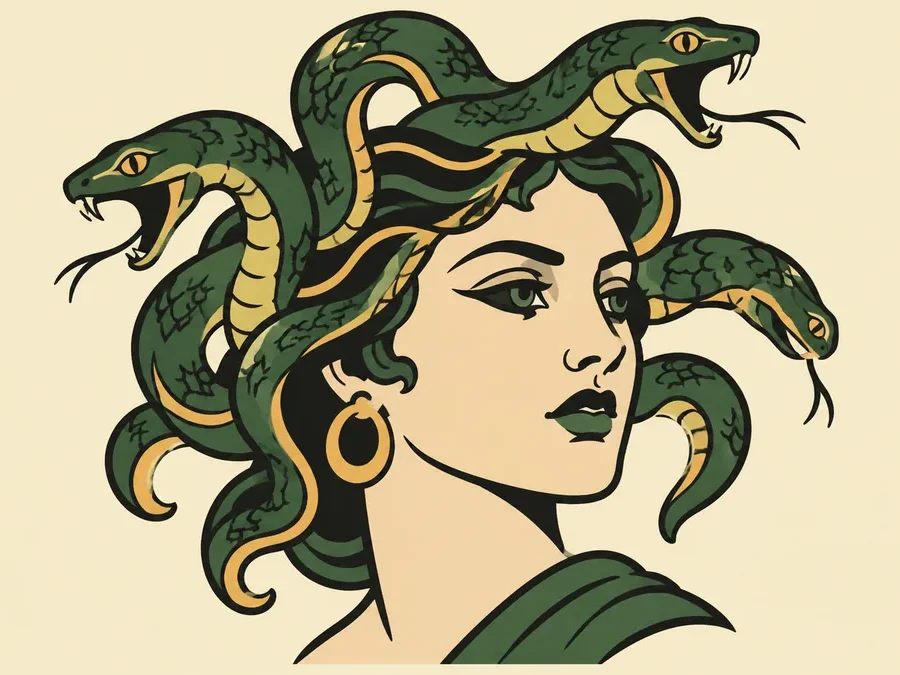
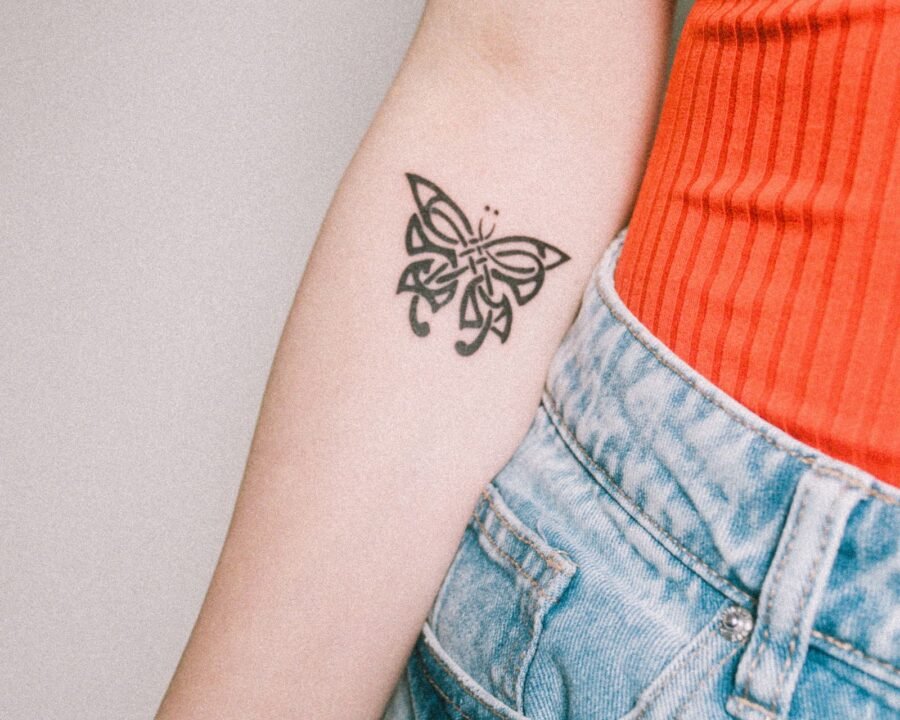
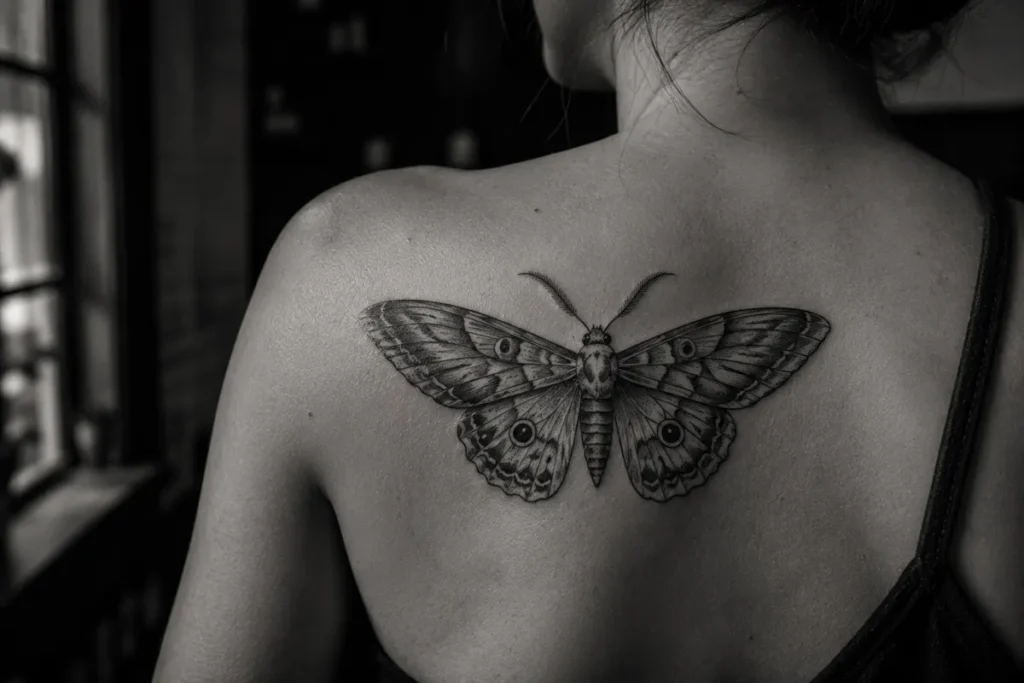
Animal tattoos can celebrate a favorite species, a personal memory, cultural symbolism, or a quality you admire. Birds can suggest movement or freedom, moths transformation and resilience, wolves loyalty, and snakes renewal. These meanings are not universal, so choose an interpretation that feels personal to you. Butterflies are the classic example — our guide to butterfly tattoo meaning covers the symbolism behind the most popular animal design of all.
An animal can be rendered in many styles, including realism, fine line, traditional, geometric, illustrative, and blackwork. Bring references showing the animal’s anatomy, pose, and mood rather than asking the artist to duplicate someone else’s tattoo.
Think about how much detail the design needs. A realistic portrait generally requires more space than a simplified silhouette or symbolic outline.
4. Minimal Symbol Tattoo
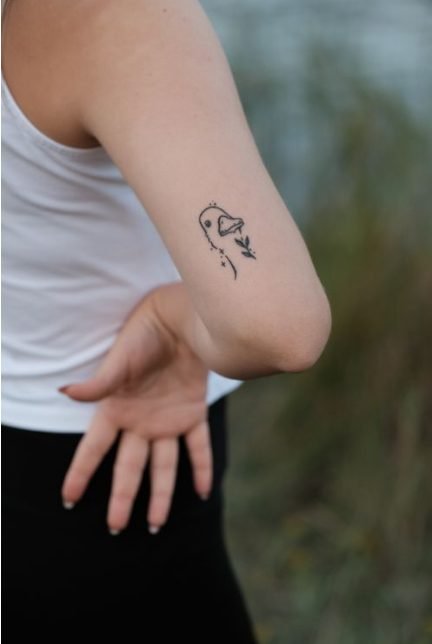
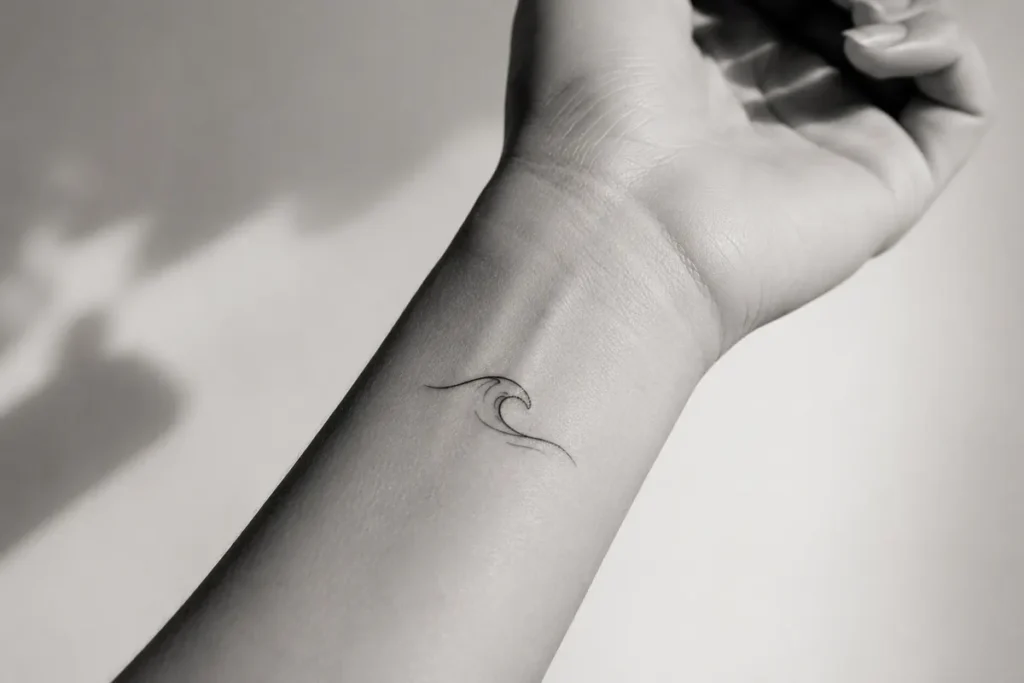
A small symbol can carry personal meaning without requiring a large or highly detailed design. Possible subjects include a wave, flame, key, mountain, compass, abstract mark, number, or shape connected to your story.
Simple does not mean careless. Small tattoos still require balanced proportions, clean placement, and enough space between lines to remain readable. Ask the artist whether your chosen design should be simplified or enlarged.
Before selecting a symbol from another language, religion, or culture, research its context carefully. Avoid using a symbol only because it looks attractive when you do not understand its meaning.
5. Ornamental Tattoo
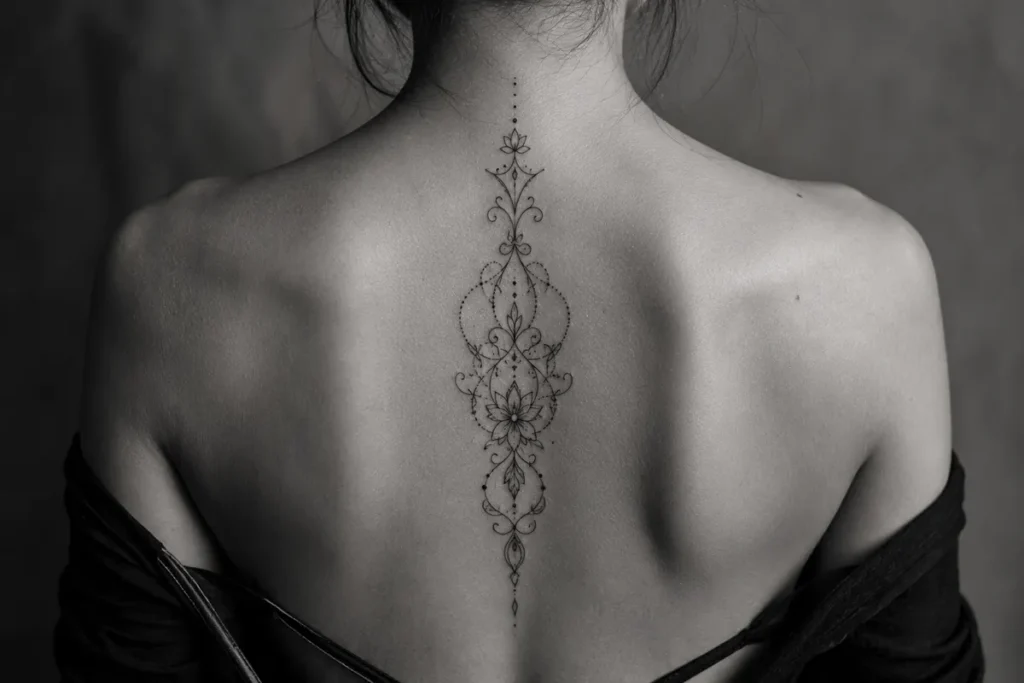
Ornamental tattoos use symmetry, decorative lines, jewelry-inspired forms, and repeating patterns. They work especially well along the sternum, spine, neck, hand, and upper back, where the design can respond to the body’s natural structure.
Placement and stencil alignment are especially important for symmetrical work. Small differences can become noticeable when a design is centered along the spine or sternum. Choose an artist whose portfolio demonstrates consistent symmetry and smooth line work.
An ornamental composition can stand alone or frame another subject such as a flower, moon, eye, animal, or gemstone.
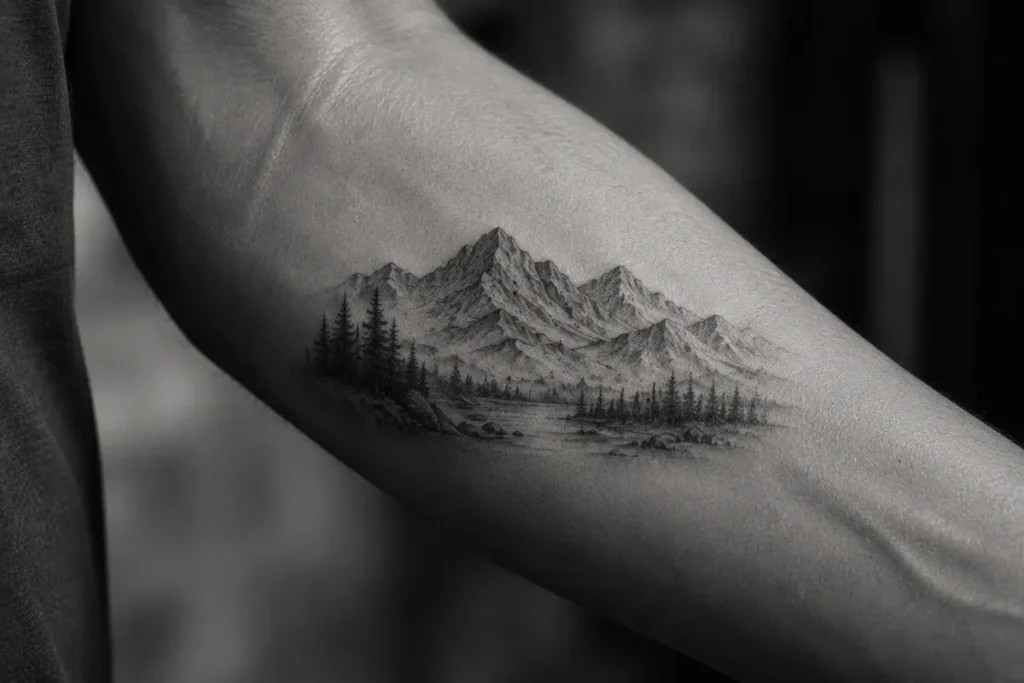
6. Micro-Realism Tattoo
Micro-realism recreates a detailed subject at a relatively small scale. Portraits, animals, architecture, landscapes, and meaningful objects can all become micro-realism tattoos.
The challenge is preserving readability as the tattoo ages. Details that look sharp in a fresh photograph may soften over time. An experienced artist may simplify textures, increase contrast, or recommend a larger size than you originally imagined.
Review healed examples in the artist’s portfolio, not only photographs taken immediately after tattooing. Healed work gives you a better idea of how their small-scale detail settles into the skin.
7. Bold Blackwork Tattoo
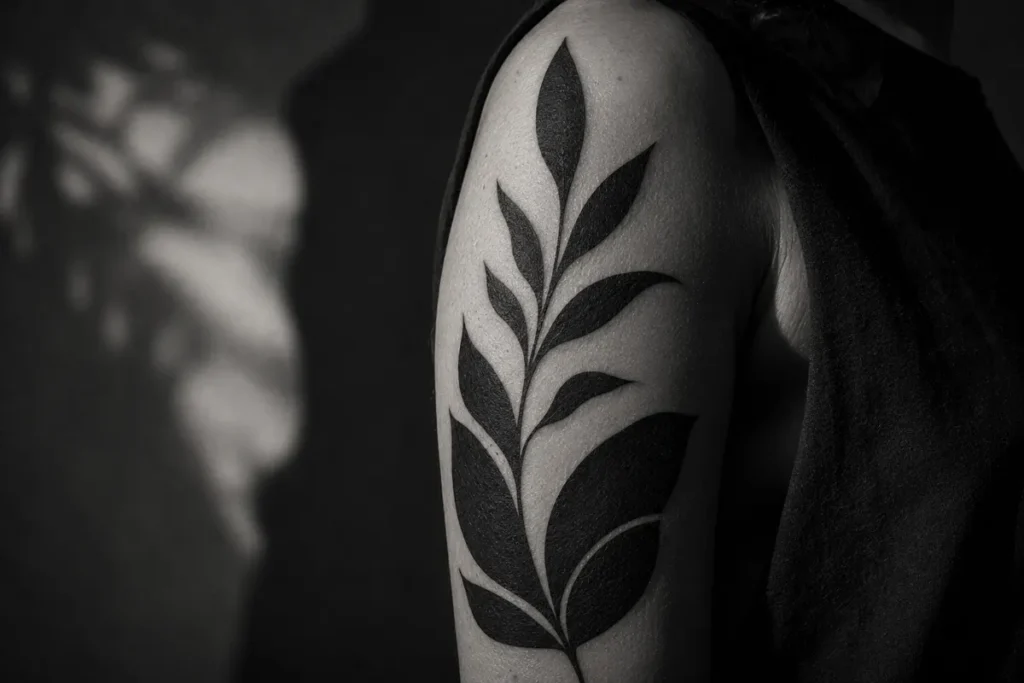
Blackwork uses strong lines, solid black areas, pattern, and negative space to create high-impact designs. It can range from geometric and botanical pieces to abstract compositions, heavy ornamental work, and large body projects.
Solid black areas create strong contrast, but they require deliberate composition. Negative space prevents the design from becoming visually flat and can help important shapes remain readable.
Consider how a bold design relates to nearby tattoos and the natural lines of your body. Large blackwork pieces may require multiple sessions, so discuss the expected process with your artist.
8. Patchwork Tattoo Collection
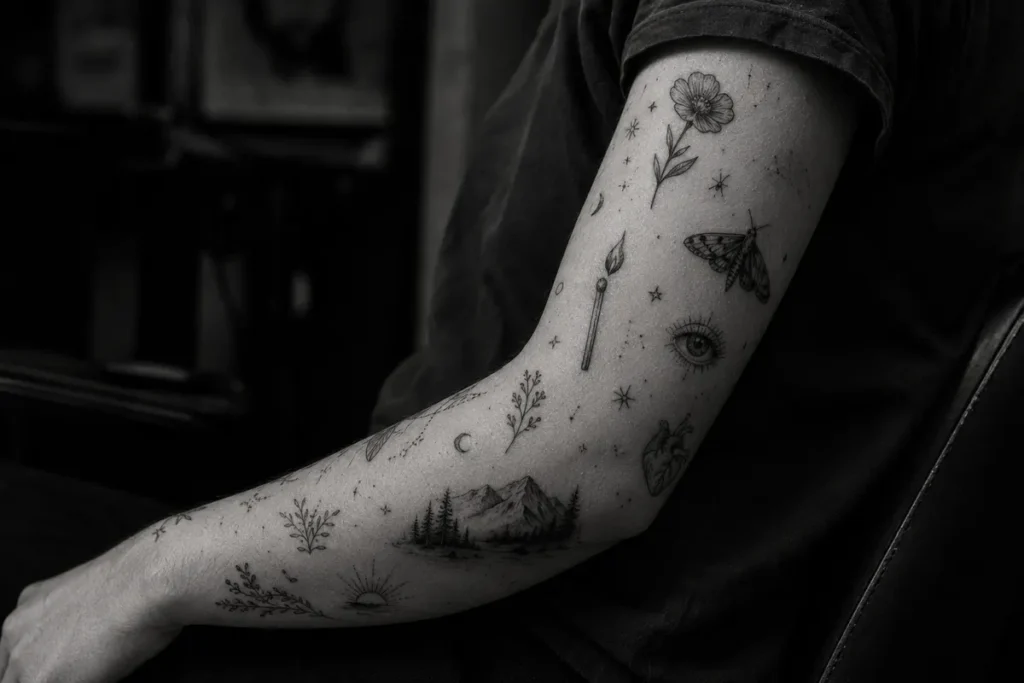
A patchwork collection is built gradually from several separate tattoos rather than one connected sleeve. Each piece can represent a different memory, subject, or interest while sharing a consistent style, line weight, color palette, or theme.
Planning the empty space between tattoos helps a patchwork collection feel intentional. Ask your artist to consider future additions before filling a central or highly visible area with the first design.
You do not need to plan every future tattoo immediately, but maintaining a loose visual direction can prevent awkward gaps and inconsistent scale later.
Choosing the Right Tattoo Idea
Start With the Subject
Write down subjects, memories, places, objects, and visual themes that genuinely interest you. Do not worry about designing the finished tattoo yourself. Your goal is to identify the idea and emotional direction.
Choose an Artistic Style
Compare fine line, traditional, neo-traditional, realism, illustrative, ornamental, blackwork, and geometric styles. Save examples because of their composition and mood, not because you intend to copy them. The neo-traditional style has its own guide if that direction appeals.
Consider the Placement
Choose an Appropriate Size
A design needs enough space for its important details. Making a complex concept extremely small can reduce readability. Ask the artist which details should be removed or how much the design should be enlarged.
Find the Right Artist
Choose an artist based on demonstrated experience with your preferred style. Review consistent portfolios, healed work when available, hygiene practices, and communication. A talented realism artist is not automatically the right choice for ornamental or traditional work.
Ask for an Original Composition
References help communicate your preferences, but another person’s custom tattoo should not be copied. Tell the artist which elements you like and allow them to create a new composition that fits your body.
Questions to Ask Before Committing
Would I still connect with this subject if it stopped being trendy?
Does the design need more space to remain readable?
How visible do I want the tattoo to be?
Does this artist specialize in the style I selected?
How will the design interact with body movement and clothing?
Could I add more tattoos around it later?
Have I considered the appointment and healing process? Do I know what a piece this size typically costs?
Planning does not end when the design is selected. Read our tattoo aftercare guide and tattoo healing stages before your appointment so you understand the recovery process.
Tattoo Safety Matters Too
The Bottom Line
Strong tattoo ideas are personal, visually clear, suited to their placement, and developed with an artist who understands the chosen style. Use inspiration to identify what you enjoy, but ask for an original design rather than copying another tattoo.
Take time to consider the subject, style, scale, placement, visibility, artist, and healing process. A thoughtful decision is more valuable than rushing to follow a temporary trend.