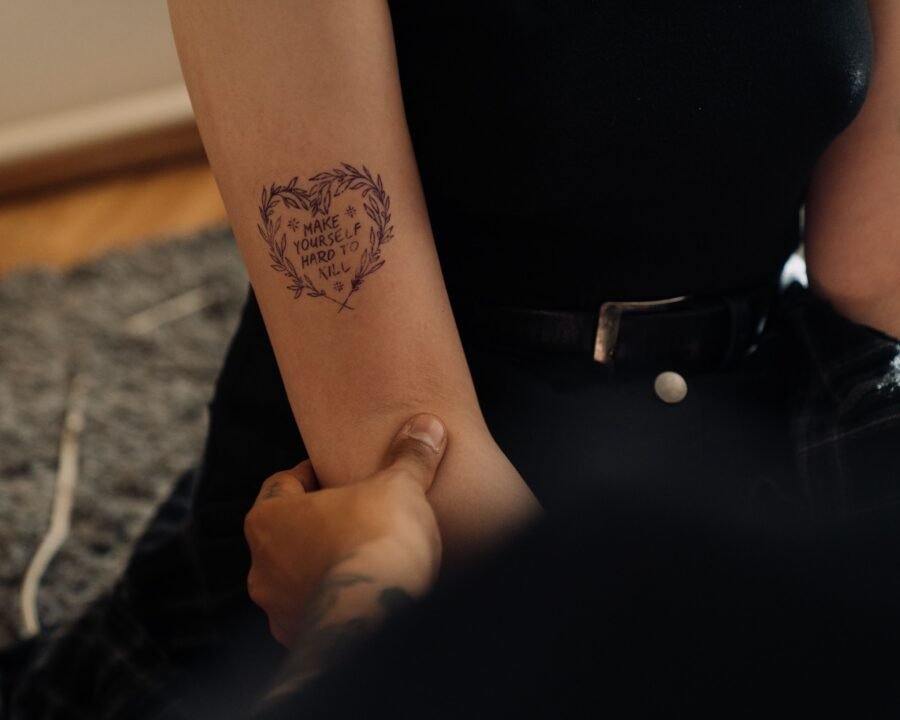
The best soap for a new tattoo is a plain, fragrance-free liquid cleanser — and the honest answer is that dozens of products qualify. There is no single winning bottle. What matters far more is checking the label of the exact product you buy, because most of the brands people ask about sell both suitable and unsuitable versions under the same name. Soap is one of only two products most people need — see the full aftercare shopping list.
This guide answers the product-level questions directly: the specific soaps people ask about, what green soap actually is, and why brand recommendations mislead more often than they help. For the underlying criteria in depth, our companion guide to choosing a mild soap for tattoo aftercare covers label reading, washing technique, and frequency.
Why Brand Recommendations Usually Mislead
Ask five people which soap to buy and you will get five brand names. The problem is that almost every major brand sells a range, and the range spans exactly the traits that matter here. The same brand often offers a heavily fragranced bar, a moisturising body wash with botanical extracts, and a fragrance-free sensitive-skin cleanser. Only the third is appropriate for a healing tattoo.
So “use Brand X” is bad advice even when the person giving it is right about the product they personally used. The reliable instruction is a label test rather than a brand: pick up the bottle, and if it lists fragrance, parfum, essential oils, exfoliating particles, or active acids, put it back. If it says fragrance-free and reads like a short, boring ingredient list, it will do.
Note the distinction between “unscented” and “fragrance-free” too. Products are sometimes labelled unscented while still containing masking fragrance to neutralise a raw ingredient smell. Fragrance-free is the stronger claim.
Soap Types Compared for a Healing Tattoo
Rather than ranking brands, it is more useful to compare the categories people actually choose between.
| Soap type | Suitable for a healing tattoo? | What to know |
|---|---|---|
| Fragrance-free liquid cleanser | Yes — the default choice | Gentle, pump-dispensed, no fragrance. What most studios mean when they say “mild soap”. |
| Fragrance-free sensitive-skin bar | Usually fine | Meets the criteria, but the bar itself sits wet between uses. Keep it dry, or use a fresh bar. |
| Antibacterial hand or body wash | Sometimes, if your artist asks | Not needed by most people, and some actives are drying. Follow your studio’s instruction. |
| Castile soap (unscented) | Often acceptable | Simple oil-based formula. Choose the genuinely unscented variant, and dilute per label — concentrated Castile is strong. |
| Green soap | No, not for home aftercare | A studio product used during tattooing, usually diluted. Not what most artists send you home with. |
| Scented body wash or shower gel | No | Fragrance is the single most common irritant on healing skin. |
| Exfoliating or scrub washes | No | Physical particles disturb a surface that is trying to close. |
| Medicated acne washes | No | Salicylic acid, benzoyl peroxide, and similar actives are far too aggressive here. |
| Artisan or “natural” soaps | Usually no | Botanical and essential-oil content is common, and often exactly what to avoid. |
The Specific Questions People Ask
Dove, Cetaphil, CeraVe and similar
These come up constantly, and the answer is the same for all of them: the brand is not the deciding factor, the variant is. Each of these makes at least one fragrance-free, gentle cleanser that meets the criteria, and each also makes scented products that do not. Check the front label for “fragrance-free” and scan the ingredient list for parfum before buying.
Antibacterial soaps like Dial
Antibacterial washes are the most debated item in tattoo aftercare. The practical position: most people do not need one, because clean hands and clean water do the work. Some studios do specifically request an antibacterial wash, and following your artist is reasonable — they see how their clients heal. Where antibacterial soap goes wrong is overuse, since some actives dry skin that is already stressed. Our mild soap guide covers the antibacterial question in more depth.
Green soap
Green soap deserves its own answer because searches for it are often based on a misunderstanding. It is a vegetable-oil-based cleanser used inside studios during the tattooing process, typically diluted heavily in a squeeze bottle, to clean skin and wipe away excess ink and plasma as the artist works. It is a professional-use product, not a home aftercare product, and buying a bottle because you saw your artist using one is a common and avoidable mistake.
Buying Once, Correctly
One bottle of fragrance-free liquid cleanser will cover the entire healing period for most tattoos. There is no need for a tattoo-branded product at a premium price unless you want one, and there is no benefit to switching cleansers partway through — if anything, switching makes it harder to identify the cause if your skin reacts.
- Buy a pump or squeeze bottle rather than a bar where you can, so nothing sits wet between washes.
- Choose fragrance-free over unscented when both are offered.
- Keep the ingredient list short. Long lists mean more chances of an irritant.
- Do not buy green soap for home use.
- Ask your artist what they recommend before the appointment, so you already have it when you get home.
Once you have the soap, technique matters as much as product. Wash with clean fingertips rather than a cloth or sponge, use lukewarm rather than hot water, and pat dry — the full routine is in our complete aftercare guide, and the timing question of when you can first shower is covered in how long after a tattoo you can shower.
When Soap Is Not the Problem
If a healing tattoo becomes increasingly red, painful, hot, or starts producing pus, changing soap is not the answer. Those are signs to speak to a healthcare professional rather than adjust a product. The FDA’s tattoo safety guidance notes that a tattoo which is not healing properly, or develops a rash, bumps, or fever, should be discussed with both the artist and a healthcare professional.
Mild irritation right after switching to a new product is different, and usually means that product does not suit you. Stop using it, go back to plain lukewarm water and clean hands while you sort out a replacement, and avoid adding several new products at once — that makes the cause impossible to identify. Similar logic applies to moisturiser, which our guide to how often to moisturise a new tattoo covers.
FAQ
Can I use Dove soap on my tattoo?
It depends entirely on which Dove product you pick. Several Dove bars and body washes are fragranced, which is the trait to avoid on healing skin. Dove does make fragrance-free sensitive-skin versions, and those meet the usual criteria. Read the label of the specific variant rather than trusting the brand name.
What soap should you not use on a new tattoo?
Avoid anything scented or labelled with essential oils, anything exfoliating or scrubby, and heavily medicated washes containing acids or benzoyl peroxide. Bar soaps that sit in a shared, wet dish are also worth skipping early on, simply because the bar itself collects bacteria between uses.
Do I need antibacterial soap for a new tattoo?
Usually not. A plain fragrance-free cleanser plus clean hands and clean water does the job for most people, and some antibacterial actives are drying on skin that is already healing. Follow your artist first, since some studios do specifically ask for an antibacterial wash.
Is green soap good for tattoo aftercare at home?
Green soap is what many artists use during the tattooing session itself, diluted, to clean and lubricate skin. It is not usually what studios recommend for home aftercare, and some formulations are stronger than a healing tattoo needs. Buy the cleanser your artist recommends instead.
What do tattoo artists usually recommend for washing a new tattoo?
Most recommend an unscented, gentle liquid cleanser, applied with clean fingertips rather than a cloth, and rinsed with lukewarm water. Specific brand preferences vary by studio and often reflect what the artist has seen heal well, which is a reasonable basis to follow.
The Bottom Line
The best soap for a new tattoo is whichever fragrance-free, gentle, non-exfoliating cleanser you will actually use consistently. Skip the brand debate, read the label of the specific variant in your hand, avoid green soap at home, and only reach for antibacterial washes if your artist asks for one. One bottle, bought before the appointment, is the whole shopping list.
This article provides general educational information and does not replace personalized instructions from your tattoo artist or medical care from a qualified healthcare professional.