Solid black, bold contrast, and zero reliance on color — the blackwork tattoo style is one of the most graphic, high-impact looks in modern tattooing. It spans everything from delicate dotwork patterns to large-scale pieces that cover significant areas of skin in dense, saturated black. If you want a tattoo that reads as pure shape and contrast rather than a picture, this is the style built around exactly that idea.
What Defines the Blackwork Tattoo Style
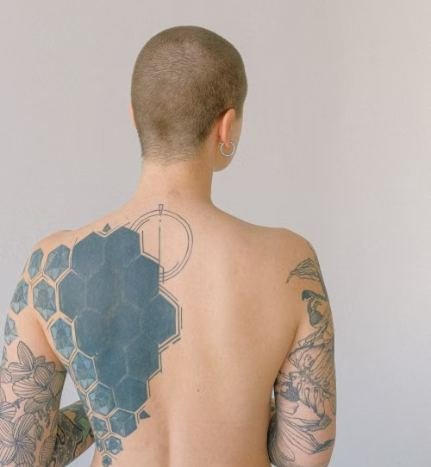
Blackwork is an umbrella term for any tattoo executed entirely in black ink, with no color. Beyond that single defining rule, the style covers a wide range of looks: bold geometric shapes, dense dotwork, ornamental patterning, and large solid-fill “blackout” sections that cover significant portions of skin. What unifies all of it is that contrast, negative space, and the black ink itself do all the visual work — there’s no color to lean on for depth or interest.
Sub-Styles Within Blackwork
A few recognizable approaches fall under the blackwork umbrella:
- Dotwork — patterns and shading built entirely from small dots, often used for mandalas, geometric shapes, or soft gradient shading without any solid line
- Geometric blackwork — precise linework built from shapes, symmetry, and repeating patterns, often blending mathematical precision with bold contrast
- Tribal-influenced blackwork — bold, flowing black shapes inspired by historic tribal tattooing traditions
It’s worth noting that “tribal-influenced” work deserves real care and respect. Traditions like Polynesian tā moko, pe’a, and malu, and Southeast Asian sak yant tattooing from Thailand and Cambodia, carry deep cultural, spiritual, and sometimes sacred significance specific to the communities they come from — they aren’t interchangeable with generic “tribal” designs. If you’re drawn to imagery rooted in a specific cultural tradition, the most respectful approach is to seek out artists trained within that tradition and understand the meaning and protocol behind the specific marks, rather than treating the visual style as a generic aesthetic to copy.
Because heavy blackwork is almost always multi-session work, it is priced by the hour rather than by the piece. In our dataset of published rates from 41 U.S. studios, the median published hourly rate is $160, with most shops falling between $150 and $250 per hour — a useful baseline when budgeting a large blackwork project.
Pain and Session Length
Blackwork sessions, particularly ones involving large solid-fill areas, tend to run toward the more intense end of the pain scale. Heavily saturating skin with ink — going over the same area repeatedly to achieve a fully solid black fill — is one of the more demanding processes in tattooing, both for the pain involved and the length of the session. Dotwork and fine geometric linework tend to be more moderate, closer to standard linework in intensity, since they don’t require the same dense saturation as a full blackout piece. Larger pieces are frequently broken into multiple sessions to manage both the physical toll and the healing process in between.
Healing and Aftercare for Heavy Saturation
Heavily saturated blackwork — especially large blackout sections — puts more stress on the skin than a typical linear tattoo, which makes proper healing especially important. Skin that’s been worked over repeatedly to achieve full black saturation is more prone to complications like blowout (where ink spreads beneath the skin) if aftercare is rushed or the piece wasn’t executed at a safe depth. Our guide to tattoo blowout covers what it looks like and how to avoid it, which is particularly relevant for dense blackwork.
Standard aftercare fundamentals still apply — keeping the area clean, avoiding sun exposure, and not picking at scabbing — but with heavier pieces, expect a longer and sometimes more intense healing window. Our full tattoo aftercare guide walks through the healing timeline in detail. The American Academy of Dermatology’s guide to caring for tattooed skin also recommends keeping fresh tattoos out of direct sun and away from tanning beds, since UV exposure can both slow healing and accelerate fading — a concern for any tattoo, but especially one built around deep, even black saturation.
How to Choose an Artist
Not every artist who’s skilled at color or fine detail work is equally experienced with solid black saturation or precise geometric symmetry — both of which are technically demanding in their own right. Look specifically for a portfolio of healed blackwork pieces (fresh photos can hide uneven saturation that shows up later), ask how they handle large solid-fill sections, and if you’re drawn to culturally specific imagery, ask directly about the artist’s training and background in that tradition rather than assuming any blackwork specialist can execute it appropriately.
Frequently Asked Questions
Is the blackwork tattoo style more painful than color tattoos?
It can be, particularly for large solid-fill pieces, since achieving dense, even black saturation requires more passes over the same skin than most color or linework tattoos. Dotwork and fine geometric blackwork tend to be closer to standard linework in intensity.
Does blackwork fade faster than colored tattoos?
Generally, no — solid black ink tends to hold up very well over time compared to lighter colors, which are often more prone to fading. This is one of the practical advantages of the style alongside its bold visual impact.
Can blackwork be combined with other tattoo styles?
Yes. It’s common to see blackwork elements paired with fine line detailing, or bold black shapes used as a foundation for other styles layered on top. The unifying rule is simply the absence of color within the blackwork portion of the design.
Is tribal-style blackwork the same as traditional cultural tattooing?
No. Generic “tribal” blackwork designs are a distinct aesthetic from specific cultural traditions like Polynesian tā moko or Southeast Asian sak yant, which carry deep spiritual and cultural significance. If you’re interested in imagery from a specific tradition, seek out artists trained within that culture rather than treating the visual style as generic.
Blackwork’s appeal comes down to its confidence — there’s no color to soften a design, just bold contrast and deliberate use of negative space. Whether you’re drawn to intricate dotwork or a large-scale solid piece, finding an artist with genuine, healed-portfolio experience in the specific sub-style you want makes all the difference in how it looks now and years down the line.
This article provides general educational information about tattoo styles and healing. It does not replace personalized advice from your tattoo artist or a qualified healthcare professional.