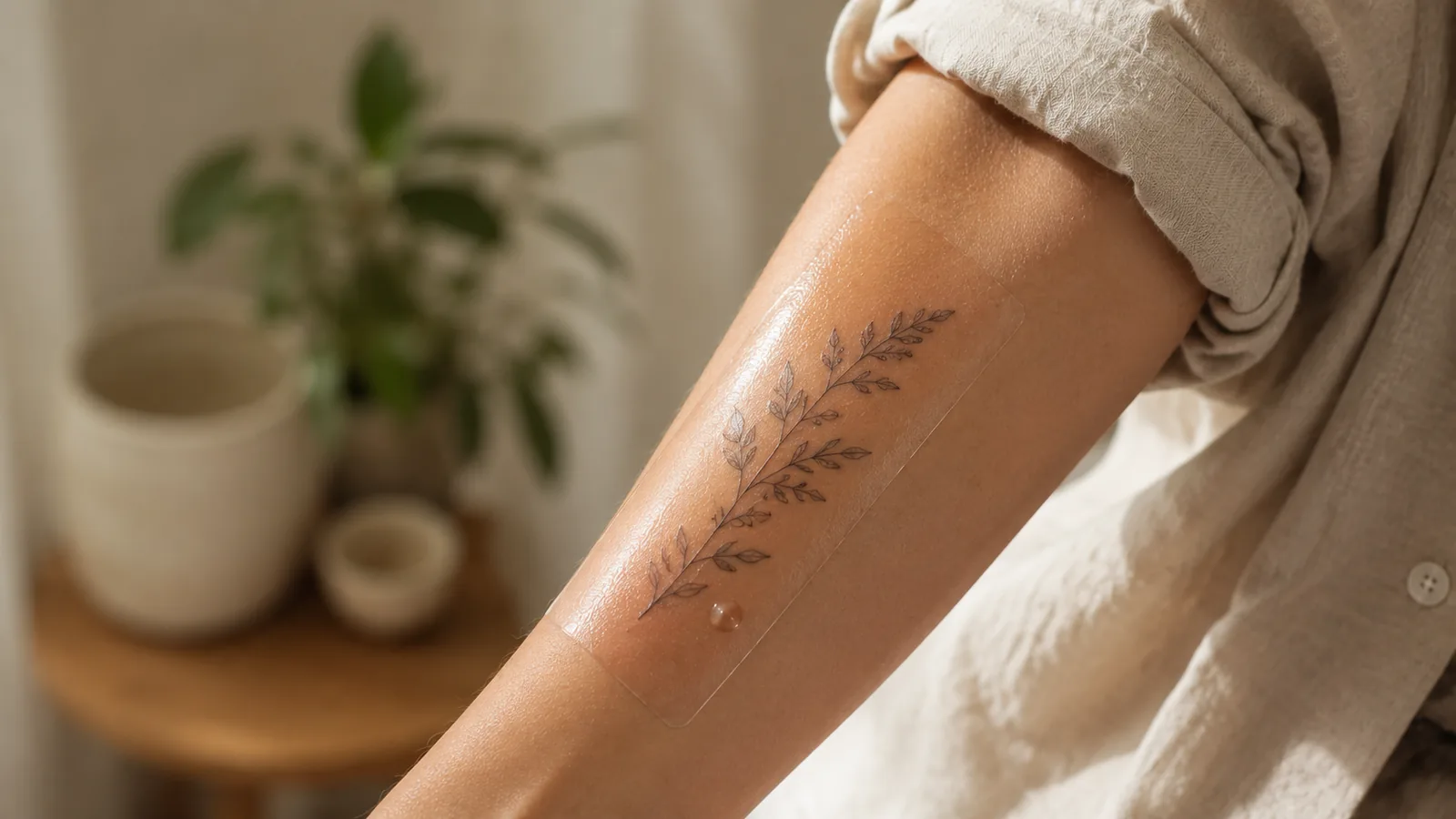
Air bubbles under second skin tattoo film are not automatically dangerous. Small pockets of trapped air may remain after application without affecting the tattoo, provided the film is intact, every edge remains sealed and nothing has punctured the covering.
The situation changes if water enters beneath the film, fluid leaks through an open edge, the tattoo becomes exposed or someone punctures the bubble. Those conditions can compromise the protective seal and require advice from your tattoo artist.
Are Air Bubbles Under Second Skin Tattoo Film Normal?
Small, stable air bubbles can happen during application, particularly on curved or frequently moving areas such as the arm, knee, ankle or shoulder. A bubble is usually less important than the condition of the surrounding seal.
Check that there is an unbroken adhesive border around the entire tattoo. If all edges remain firmly attached and the film contains no holes, a small pocket of air may simply remain in place until the bandage is removed.
Do not repeatedly press, scratch or manipulate it. Contact your artist if the bubble is large, increasing or positioned beside a lifting edge.
Quick Decision Guide
| What you see | Likely situation | What to do |
|---|---|---|
| Small clear bubble with sealed edges | Trapped air from application | Leave it alone and monitor the seal |
| Dark or reddish fluid bubble | Plasma, blood and excess pigment | Often expected early; monitor the edges |
| Water entered during a shower | Seal has probably failed | Contact your artist and prepare to remove it |
| Film has a hole or puncture | Barrier is compromised | Remove it according to artist instructions |
| Bubble reaches an open edge | Fluid can enter or escape | Treat it as a leaking bandage |
| Increasing pain, heat or spreading redness | Possible complication | Remove as directed and seek professional advice |
Air Bubble or Fluid Pocket?
A clear, dry-looking pocket that appeared immediately after application is more likely to be trapped air. It may stay the same size and move slightly when the surrounding skin bends.
A fluid pocket usually develops as a fresh tattoo releases plasma, small amounts of blood and excess surface pigment. It may appear dark brown, reddish or nearly black beneath the transparent film. This can look alarming without necessarily indicating that tattoo ink is being lost.
The American Academy of Dermatology explains that soreness and clear fluid can occur after tattooing as part of early healing. Review its guidance on tattoo skin reactions.
If fluid escapes from the bandage, use our second skin leaking guide.
Blood Bubbles Under Second Skin: When Dark Fluid Is Normal
A blood bubble under second skin is a pocket of plasma, blood and loose surface pigment collecting between the film and the tattoo. It is the most common reason a sealed bandage suddenly looks dark red, brown or almost black, and on its own it is not a sign that something has gone wrong.
The pooling is heaviest in the first 24 to 48 hours, while a fresh tattoo is still weeping. Gravity concentrates it at the lowest edge of the bandage, which is why a calf or forearm piece often looks far bloodier than a shoulder tattooed the same day.
Saniderm advises leaving a blood-filled first bandage in place for the full 24 hours as long as the seal is still intact, then removing it, washing the tattoo and applying a fresh piece. Its guidance on a bandage filled with blood notes that the plasma in that fluid is only useful for about 24 hours. The exception is a broken seal: once fluid is escaping, the film is no longer acting as a barrier and should come off.
Blood bubble or blister?
A blood bubble sits between the film and the skin, and it shifts when you press gently on the bandage. A blister sits in the skin itself and stays put once the film is off. Blisters can follow friction, an over-stretched bandage or a reaction to the adhesive, and they are worth showing to your artist rather than treating at home.
If fluid is escaping the edges instead of staying sealed, that is a different problem with a different fix. See second skin leaking after a tattoo for what to do next.
Should You Pop Air Bubbles Under Second Skin?
Do not puncture the film with your fingernail, a household needle or another unclean object. Creating a hole changes the seal and may create a route for contamination.
Bandage manufacturers and tattoo artists may use different procedures for managing bubbles during professional application. Follow the instructions for the exact product your artist used rather than attempting an improvised repair.
If a bubble concerns you, send your artist a clear photograph. They can advise whether the film should remain, be replaced under clean conditions or be removed so you can begin normal aftercare.
Can You Push the Air Bubble Out?
Avoid repeatedly pushing a bubble across the tattoo. Doing so may irritate tender skin, move healing fluid toward the adhesive edge or cause the film to lift.
An artist may smooth the film during its initial application, but manipulating an already-worn bandage at home is different. Once the film has been exposed to daily activity, touching and clothing, leaving a small sealed bubble alone is generally safer than forcing it toward an edge.
When Should You Remove the Second Skin?
Remove the covering according to your tattoo artist’s instructions when:
- The film has been punctured or torn.
- Part of the tattoo is exposed.
- Water has entered beneath the film.
- Fluid is escaping through an open edge.
- The adhesive is causing intense itching, bumps or blisters.
- Redness is spreading beyond the expected area.
- Your artist confirms that the seal has failed.
Do not remove an otherwise secure covering only because a small bubble looks strange. Wearing times differ between brands, tattoo styles and artists. Read How Long to Leave Second Skin on a Tattoo before changing the schedule.
How to Remove Compromised Film Safely
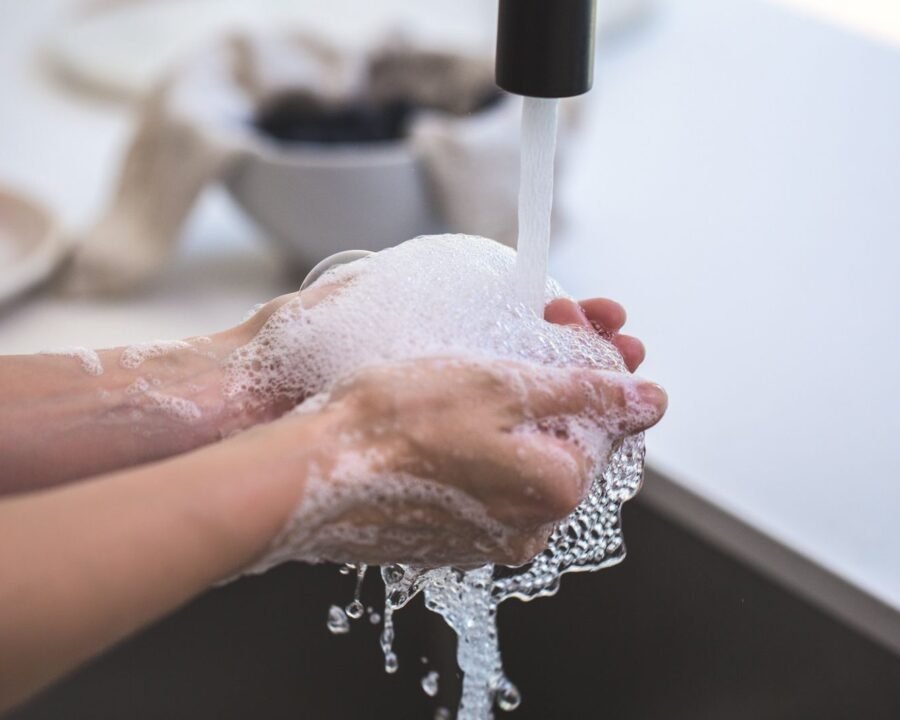
Wash your hands and use clean, lukewarm running water to help release the adhesive. Lift one corner and stretch the film slowly back across the skin instead of pulling it directly upward.
After removal, wash the tattoo gently with lukewarm water and a mild fragrance-free cleanser. Do not scrub it. Pat it dry with a clean disposable paper towel and follow the moisturizing instructions supplied by your artist.
SecondSkin’s official application and removal instructions recommend pulling the film slowly back across the skin while supporting the surrounding skin.
If the covering detached unexpectedly, follow our guide for when second skin comes off early.
What If the Bubble Appeared After Showering?
A bubble that appears after showering may still be normal fluid moving beneath the covering. However, if the material inside looks like clear shower water and an edge has lifted, assume the seal may be compromised.
Second skin is generally water-resistant, but prolonged soaking and forceful water pressure can weaken its edges. Avoid directing the shower stream at the covering and never soak it in a bath, pool or hot tub.
Learn how to wash safely in Can You Shower After a Tattoo?.
Why Do Air Bubbles Form?
Common causes include:
- Air trapped during application
- Applying one large piece over a curved body area
- Movement at the knee, elbow, wrist or ankle
- Wrinkles forming when the skin changes position
- Insufficient smoothing during application
- Sweat or moisture weakening the adhesive
- Tight clothing pulling at the film
- Plasma collecting beneath the covering
Not every bubble can or needs to be prevented. Maintaining an intact border around the tattoo is more important than making the film look perfectly flat.
Can Air Bubbles Ruin a Tattoo?
A sealed air bubble does not pull pigment out of the skin. Tattoo pigment is placed below the surface, while the bubble sits between the outer skin and the adhesive film.
Problems are more likely to result from a broken seal, aggressive removal, scratching, excessive moisture or ignoring signs of irritation. Avoid judging the tattoo while fluid and adhesive film distort its appearance.
Your tattoo may temporarily look cloudy or dull during healing. Consult our tattoo healing stages guide before assuming the design has been damaged.
Warning Signs to Watch For
Contact your artist if the film develops holes, repeated leaking, extensive lifting or a reaction around the adhesive.
Seek medical advice if you experience:
- Pain that becomes worse instead of improving
- Spreading or rapidly increasing redness
- Significant warmth or swelling
- Thick yellow or green discharge
- An unpleasant odor
- Red streaks extending from the tattoo
- Fever or feeling generally unwell
- Blisters or a severe adhesive reaction
The FDA’s tattoo-safety guidance recommends contacting a healthcare professional when a tattoo is not healing normally or develops a rash, bumps or fever.
Irritation that spreads onto skin the needle never touched is a different signal again. That pattern points to a reaction to the bandage adhesive rather than anything happening under the film.
Frequently Asked Questions
Are small air bubbles under second skin okay?
They are usually less concerning when the film is intact, every edge remains sealed and the tattoo has not been exposed.
Should second skin be completely flat?
A smooth application is preferable, but minor wrinkles and bubbles can occur on curved or moving areas. The integrity of the seal is the main concern.
What if an air bubble reaches the edge?
Check whether the edge has opened. If air or fluid can move through the edge, contact your artist and treat the film as compromised.
Can I patch a hole in second skin?
Do not place household tape over the tattoo. Ask your artist whether a product-approved patch or complete removal is appropriate.
Are dark bubbles under second skin normal?
Dark fluid often contains plasma, small amounts of blood and excess surface pigment. Monitor the seal and contact your artist if the fluid leaks or develops an unusual odor.
What if my artist punctured the bubble?
Ask the artist to explain whether the opening was properly resealed using the bandage manufacturer’s approved method. A film left with an open hole no longer provides a complete barrier.
Should I leave second skin on if my tattoo has bled?
Yes, provided the seal is unbroken. Blood and plasma collecting under an intact film is expected in the first day. Saniderm directs wearers to leave that first bandage on for 24 hours, then remove it, wash the tattoo and reapply.
Does a blood bubble mean I am losing ink?
Not usually. The dark colour comes largely from plasma, blood and pigment sitting on the skin surface rather than pigment pulled out of the dermis. Ink placed at the correct depth is not carried away by that fluid.
The Bottom Line
Air bubbles under second skin tattoo film are often harmless when they are small and the covering remains completely sealed. Do not puncture or continually push them around. Focus on whether the tattoo is exposed, water has entered, fluid is leaking or the adhesive is causing a reaction. When uncertain, send your tattoo artist a photograph and follow their product-specific instructions.
This article provides general educational information and does not replace advice from your tattoo artist or a qualified healthcare professional.
This is one part of the full second skin process — see our complete second skin tattoo aftercare timeline for the whole picture, from application to removal.