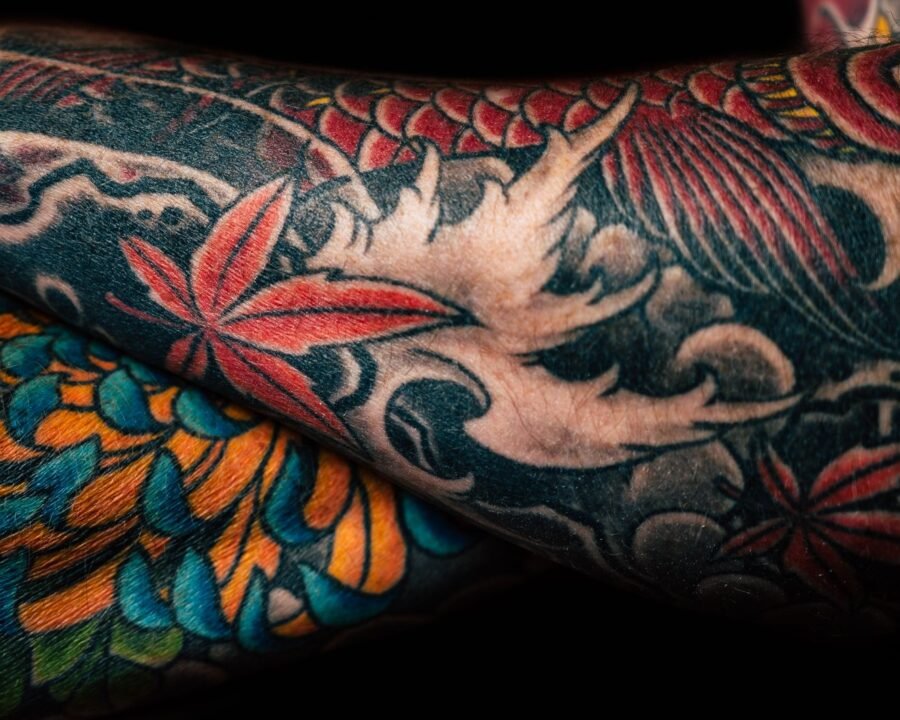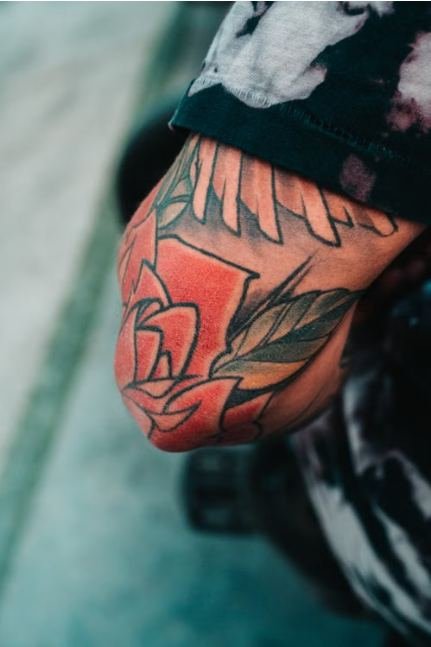
The american traditional tattoo style is defined by bold black outlines, flat saturated colour drawn from a small palette, and a fixed canon of subjects: anchors, roses, eagles, swallows. It reads clearly from across a room and ages better than almost any other style, which is why century-old designs still look sharp.
Those designs have stayed recognizable for over a hundred years, and the style is having as much of a moment today as it did in sailor-town parlors a century ago. If you like the structure of the style but want more colour and detail, its direct descendant is the neo-traditional tattoo style.
History and Origins of the American Traditional Tattoo Style
American Traditional traces back to early 20th-century tattoo culture built around U.S. Navy port cities, where sailors got tattooed as souvenirs, superstition, and identity markers between deployments. The style’s visual language — thick black outlines, a small and highly saturated color palette, and bold, simplified imagery — developed partly out of necessity. Early tattoo machines and inks were less refined than today’s equipment, and thick, high-contrast lines held up far better on skin over decades than fine detail ever could.
Norman “Sailor Jerry” Collins is widely credited as one of the style’s most influential figures, refining the bold-line, flat-color approach in Honolulu through the mid-20th century and blending American motifs with Japanese tattooing influences he encountered through servicemen stationed in the Pacific. His work — alongside earlier tattooers like Charlie Wagner and Bert Grimm — helped cement the visual vocabulary that still defines the style today: anchors for stability, swallows for a safe return home, roses and pin-up figures, eagles, daggers, and ships. According to the Wikipedia entry on Sailor Jerry, his techniques and imagery directly influenced the generation of tattoo artists who revived and popularized the style from the 1970s onward.
Classic American traditional flash is frequently small, bold, and finished in a single sitting — which usually puts it at a shop’s minimum rather than an hourly rate. Across the 41 studios in our published pricing dataset, the median shop minimum is $100, so a palm-sized traditional piece rarely costs less than that no matter how quick it is.
Defining Characteristics
A handful of features make American Traditional instantly recognizable:
- Heavy, unbroken black outlines that anchor every element of the design
- A limited, high-saturation color palette — classically red, green, yellow, and blue, applied as flat, solid fills rather than blended shading
- Simplified, bold imagery designed to read clearly at a glance rather than replicate photographic detail
- Minimal fine detail or gradient shading, which keeps the design legible even decades after it’s applied
Classic Motifs and Meanings
Traditional imagery carries symbolic weight rooted in its sailor-culture origins, even if most people today choose a motif simply because they like how it looks:
- Anchors — stability, a safe harbor, or a connection to naval service
- Swallows — traditionally earned after a sailor traveled 5,000 nautical miles, symbolizing a safe return home
- Roses — classic beauty and love, often paired with banners or daggers
- Eagles — strength, freedom, and American identity
- Pin-up figures — a nod to mid-century Americana and popular culture of the era
- Ships and nautical stars — navigation, safe passage, and guidance
Why It Ages So Well
Because of the heavy black outlining and solid color saturation, American Traditional sessions can run on the more intense side of the pain scale — packing in flat color takes more passes over the same skin than a single fine outline does. But the tradeoff is longevity: thick lines and bold color blocks are specifically suited to holding their shape as skin ages, stretches, and naturally loses elasticity. Where fine, delicate work is prone to blurring and fading within years, a well-done traditional piece can still look sharp and legible decades later, making it one of the most durable tattoo styles available.
Placement Guidance
Traditional pieces tend to suit larger, fleshier areas — the outer arm, shoulder, calf, or upper back — where there’s enough space for the bold lines and color blocks to sit clearly without feeling cramped. If you’re mapping out where a piece like this might work best on your body, our small tattoo placement ideas guide and full tattoo placement guide both cover how placement affects pain, visibility, and long-term aging — all relevant considerations before committing to a design this bold.
How to Choose an Artist
Not every tattoo artist specializes in traditional work, and clean line consistency matters enormously in a style built entirely around bold outlines and flat color. Look for a portfolio full of healed (not just fresh) traditional pieces, confirm the studio follows proper licensing and sterilization standards, and ask specifically about their experience with flat color saturation, since uneven fill is one of the most common traditional-style mistakes. If this is your first tattoo altogether, our first tattoo tips guide covers the basics of vetting a shop and preparing for your appointment.
Frequently Asked Questions
What makes a tattoo “American Traditional” specifically?
The combination of bold black outlines, a limited palette of flat, saturated colors (classically red, green, yellow, and blue), and simplified, high-contrast imagery is what separates American Traditional from other bold styles like Neo-Traditional or Blackwork. It’s defined as much by technique and restraint as by any specific subject matter.
Does an American Traditional tattoo hurt more than other styles?
It can run more intense than fine line or lightly shaded work, since heavy outlining and solid color fill both require repeated passes over the same skin. Placement still matters more than style — fleshier areas are more tolerable than bony or thin-skinned spots regardless of the tattoo’s design.
Why do American Traditional tattoos age better than other styles?
Thick outlines and solid color blocks hold their shape well as skin naturally stretches and ages, unlike thin lines or soft color gradients, which are more prone to blurring and fading. This is one of the main reasons the style has remained popular for over a century — it was built for durability from the start.
Can American Traditional designs be personalized, or are they always the classic motifs?
While anchors, roses, and swallows remain the style’s signature imagery, many traditional artists today create custom compositions within the same bold-outline, flat-color technique. The defining feature is the execution style, not a strict requirement to use only historic motifs.
American Traditional has survived nearly a century of changing tattoo trends for a simple reason: it was built to last, both visually and on skin. If you want a tattoo that stays bold, legible, and recognizably itself decades from now, it’s hard to beat this style’s combination of thick lines, saturated color, and time-tested imagery.