Picking a design is the fun part. Picking the right style is what actually determines how your tattoo looks in five years, how much it hurts, and how long you’ll spend in the chair — which is exactly why we built this tattoo styles guide. Instead of scrolling through hundreds of unrelated photos, you can use this overview to compare the major tattoo styles side by side, understand where each one came from, and figure out which approach fits your skin, your pain tolerance, and your long-term commitment level.
Below we break down seven of the most requested tattoo styles working in shops today: Fine Line, American Traditional, Blackwork, Neo-Traditional, Realism, Japanese (Irezumi), and Watercolor. For three of the most foundational styles — Fine Line, American Traditional, and Blackwork — we’ve also published deep-dive guides you can jump into for more detail once you’ve narrowed things down here.
How to Choose a Tattoo Style That Fits You
Before you fall in love with a specific style, it helps to think about a few practical factors: your skin tone and how it holds ink, how much detail you want packed into the piece, your realistic pain tolerance, and how often you’re willing to sit for touch-ups over the years. A tiny fine line wrist tattoo and a full Japanese back piece are both valid choices, but they come with very different time, cost, and healing commitments.
If this is your very first tattoo, it’s worth reading our first tattoo tips guide before booking anything — it covers placement, aftercare, and how to vet a shop, all of which matter just as much as the style you pick. Once you’ve got the basics down, use the comparisons below to shortlist two or three styles you like, then book consultations with artists who specialize in them. Every style listed here has its own dedicated specialists, and portfolio quality varies enormously from artist to artist even within the same style.
Fine Line Tattoo
Fine line tattoos use a single needle (or very small needle groupings) to create delicate, thin, precise lines instead of the thicker, bolder strokes used in most other styles. The look is minimalist and often includes small script, botanical line art, tiny portraits, or delicate ornamental designs. The style exploded in popularity over the last decade thanks to social media, where its understated, almost sketch-like aesthetic photographs beautifully.
Because the needle work is lighter and outlines are thin rather than heavily saturated, many people find fine line tattoos less painful than bold blackwork or traditional pieces, though thin lines are also more prone to blowing out or blurring over time if placed on high-friction areas or done by an inexperienced artist. Sessions tend to be shorter for small pieces. Fine line suits people who want something subtle, minimalist, or their very first tattoo. For a full breakdown of what to expect, read our dedicated fine line tattoo style guide.
American Traditional Tattoo
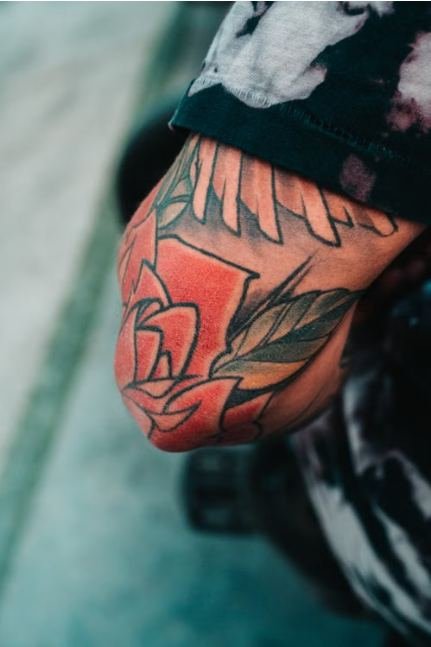
American Traditional — sometimes called “Old School” — is defined by bold black outlines, a limited and highly saturated color palette (classically red, green, yellow, and blue), and iconic imagery like anchors, swallows, roses, pin-up figures, and eagles. The style traces back to early 20th-century sailor and military tattoo culture in U.S. port cities, with artist Norman “Sailor Jerry” Collins widely credited as one of its most influential figures for refining the bold-line, flat-color approach that still defines the genre today.
Because of the heavy black outlining and solid color saturation, sessions can run on the more intense side of the pain scale, but the tradeoff is longevity — the thick lines and bold color blocks are specifically designed to hold up well over decades, spreading and fading far more gracefully than fine, delicate work. It’s a strong pick for anyone who wants a tattoo that will still look sharp in 30 years. Get the full history and design details in our American Traditional tattoo style guide.
Blackwork Tattoo
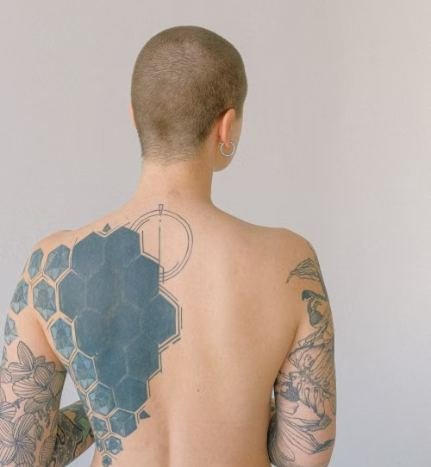
Blackwork is an umbrella term for tattoos done entirely in solid black ink, ranging from bold tribal-inspired shapes and geometric patterns to intricate linework, mandalas, and large-scale “blackout” pieces that cover significant areas of skin in solid black. There’s no color in true blackwork — the contrast, shading, and negative space of the skin itself do all the visual work.
Sessions covering large solid-black areas tend to be more painful and take longer than a typical linear tattoo, since heavily saturating skin with ink is one of the more intensive processes in tattooing. On the plus side, solid black holds up extremely well over time compared to lighter colors, and it rarely needs touch-ups for fading. Blackwork suits people who want bold, high-contrast, graphic pieces and who don’t mind a longer, more demanding session. Read more in our full blackwork tattoo style guide.
Neo-Traditional Tattoo
Neo-Traditional builds directly on American Traditional’s bold outlines but adds far more dimensional shading, a richer and more varied color palette, and ornamental detail borrowed from Art Nouveau and Art Deco design — think jewel tones, filigree, and decorative framing around portraits of animals, flowers, and figures. It emerged as artists in the later 20th century pushed traditional tattooing toward more illustrative, painterly compositions while keeping the strong lines that make traditional work age well.
Pain and session length sit roughly between classic Traditional and full Realism, since the extra shading and color blending take more time than flat traditional color blocks. Neo-Traditional is a great fit for people who love the boldness of Old School tattoos but want more artistic depth and detail in the final piece.
Realism (Photorealism) Tattoo
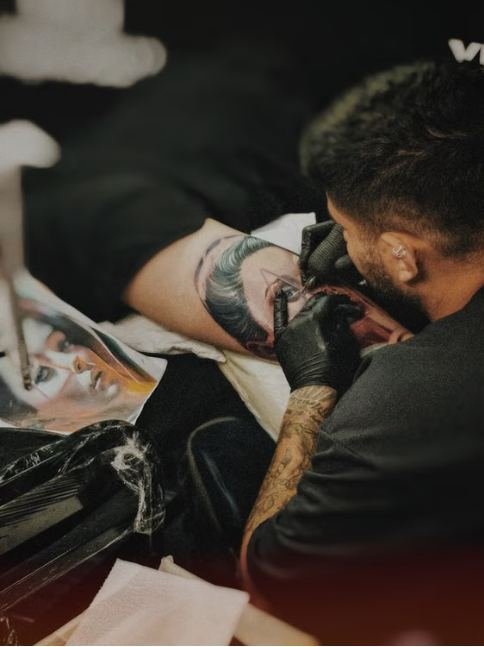
Realism, sometimes called photorealism, aims to replicate a photograph directly on skin — portraits, animals, nature scenes, and objects rendered with smooth gradients, fine shading, and (in color realism) blended tones rather than hard outlines. It’s one of the most technically demanding tattoo styles, requiring an artist skilled in shading, contrast, and proportion to pull off convincingly.
Because realism relies so heavily on shading and blending rather than a single outline pass, sessions are typically longer, and larger pieces often require multiple sittings spread across weeks or months. Pain tends to run moderate to high, especially over heavily shaded areas. This style suits people with patience for a longer project who want a portrait, memorial piece, or nature scene that looks close to a photograph.
Japanese Tattoo (Irezumi)
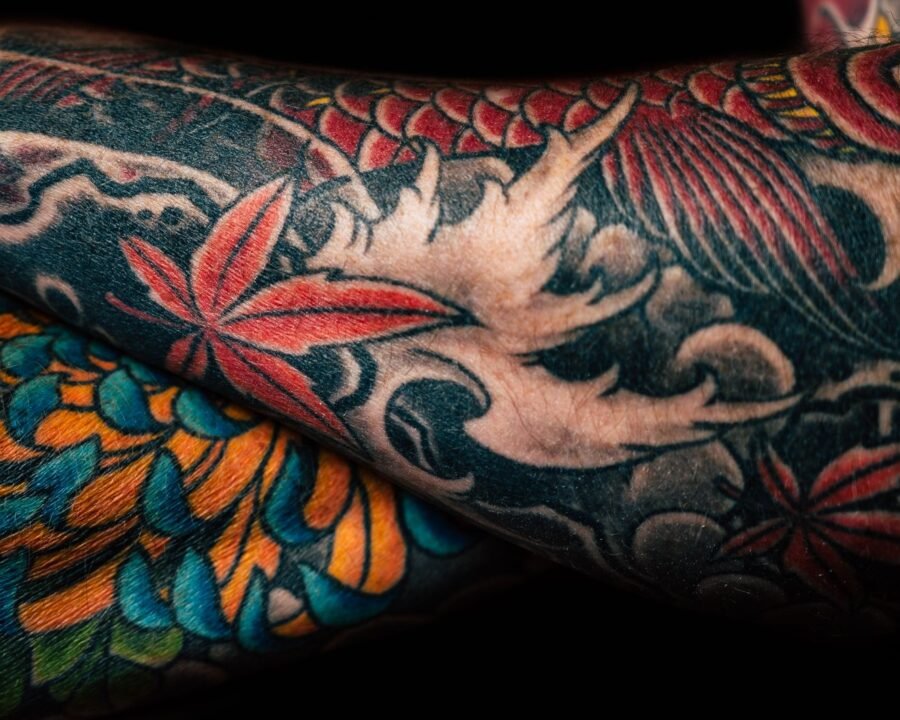
Japanese traditional tattooing, known as Irezumi, is one of the oldest continuous tattoo traditions in the world, with roots reaching back centuries. Its imagery is instantly recognizable: koi fish, dragons, phoenixes, cherry blossoms, and waves, often connected by background elements like clouds or wind bars into a single flowing composition. Historically, Irezumi carried a complicated cultural legacy in Japan — used punitively to mark criminals during parts of the Edo period, later associated with the Yakuza, and only in recent decades embraced more widely as fine art both in Japan and internationally. Traditionally the designs were applied by hand using a technique called tebori, though most contemporary Japanese-style tattoos are now done with modern machines.
Full Irezumi pieces are often designed as large-scale body suits meant to be built over months or years, which makes this one of the bigger time and pain commitments on this list. Smaller single-motif pieces are far more approachable if you love the imagery but aren’t ready for a full sleeve or back piece.
Watercolor Tattoo
Watercolor tattoos aim to recreate the soft splashes, color washes, and blended gradients of watercolor paintings, frequently skipping the bold black outline that anchors most other styles. The look is dreamy and painterly, often layered over or around a more traditional line-based subject. It’s a relatively contemporary style that gained traction in the 2000s as tattoo artists began experimenting with fine art painting techniques on skin.
Because watercolor relies on lighter color saturation and often has no heavy black outline to hold the shape in place as skin ages, these tattoos are more prone to fading and blurring over time than bolder styles, and many people choose to get touch-ups more frequently to keep the colors vibrant. Watercolor suits people who want something soft, artistic, and painterly, and who are comfortable with a bit more long-term maintenance.
Tattoo Styles Guide Comparison at a Glance
Use this quick comparison to see how the styles in this tattoo styles guide stack up against each other on pain, upkeep, and who they tend to suit best.
- Fine Line — Pain: Low to moderate. Commitment: Low upkeep, but touch-ups possible on high-friction areas. Best for: Minimalists, first tattoos, delicate designs.
- American Traditional — Pain: Moderate to high. Commitment: Very low; bold lines age well. Best for: Anyone wanting a tattoo that lasts decades with minimal fading.
- Blackwork — Pain: Moderate to high (more for large solid areas). Commitment: Low; solid black holds up well. Best for: Bold, graphic, high-contrast designs.
- Neo-Traditional — Pain: Moderate. Commitment: Low to moderate. Best for: Fans of Traditional who want more color depth and ornamentation.
- Realism — Pain: Moderate to high. Commitment: Moderate; may need occasional touch-ups on shaded color. Best for: Portraits, memorial pieces, highly detailed art.
- Japanese (Irezumi) — Pain: High, especially for large-scale pieces. Commitment: High; often built over multiple sessions or years. Best for: Large-scale, symbolic, narrative pieces.
- Watercolor — Pain: Low to moderate. Commitment: Higher; more prone to fading over time. Best for: Soft, painterly, artistic designs.
Frequently Asked Questions
Which tattoo style hurts the least?
Generally, styles that use thinner lines and less ink saturation — like Fine Line and lighter Watercolor work — tend to be less painful than styles requiring heavy black saturation or extensive shading, like Blackwork blackout pieces or large Realism portraits. That said, pain is highly individual and also depends heavily on placement, so even a “gentler” style can hurt more over a bony or sensitive area.
Which tattoo style lasts the longest without fading?
Bold, high-contrast styles with thick outlines and saturated color, especially American Traditional and solid Blackwork, tend to age the best over decades. Styles that rely on thin lines or soft, low-saturation color blending, like Fine Line and Watercolor, are more prone to fading or blurring and often need touch-ups sooner.
Can two tattoo styles be combined in one piece?
Yes. Many artists blend elements of multiple styles — for example, Neo-Traditional pieces already combine bold American Traditional outlines with more painterly shading, and it’s common to see Blackwork elements paired with fine line detailing or Watercolor splashes layered around a traditional subject. If you like two styles, bring reference images of both to your consultation and ask your artist whether a hybrid approach would work for your idea.
How do I find an artist who specializes in a specific style?
Look through artist portfolios (usually on Instagram or a shop’s website) specifically for recent work in the style you want, rather than judging a shop by its general reputation alone. Most professional tattoo artists focus on one or two styles rather than being equally strong across all of them, so a portfolio full of Realism portraits is a good sign for a Realism piece, but it doesn’t necessarily mean that same artist is the right pick for a Japanese Irezumi sleeve.
Finding Your Style
There’s no single “best” tattoo style — only the one that fits the image in your head, your pain tolerance, and how much long-term upkeep you’re willing to commit to. Use this tattoo styles guide as a starting point, then dig into the dedicated guides linked above for Fine Line, American Traditional, and Blackwork to go deeper on the styles that caught your eye. Tattooing has a long, well-documented history across cultures — if you’re curious about where these traditions come from more broadly, Smithsonian Magazine’s overview of the worldwide history of tattoos is a great place to keep exploring.