The best Day of the Dead tattoo ideas start with understanding what the holiday is actually about. Día de Muertos is not a Mexican version of Halloween. It is a celebration of family members who have died, built around altars, marigolds, candles and shared meals, and its imagery carries real meaning for the people who keep the tradition alive. This guide covers 16 design ideas, what each symbol traditionally represents, how to choose a style and placement that will age well, and how to wear the imagery with respect.
If you are still exploring what kind of tattoo you want in general, browse our 20 tattoo ideas for your next piece first. If you are drawn to darker seasonal imagery, our Halloween tattoo ideas guide covers a different tradition with different symbols. For winter seasonal designs with a similar quiet, memorial feeling, our Christmas tattoo ideas include candles and stars that carry that same personal weight.
What Day of the Dead Means (and Why It Matters for Your Tattoo)
Day of the Dead, or Día de Muertos, is a holiday observed mainly in Mexico and, to a lesser extent, in other parts of Latin America and the United States. It is typically observed on November 1 and 2. According to Encyclopaedia Britannica, it honors deceased loved ones and treats death familiarly, without fear and dread. Its roots go back to the Indigenous peoples of Mesoamerica, who saw death as a continuation of life rather than an end. When Spanish colonizers arrived in the 16th century, these beliefs blended with the Catholic observances of All Saints’ Day and All Souls’ Day.
UNESCO recognizes the Indigenous festivity dedicated to the dead as part of the Intangible Cultural Heritage of Humanity. Families guide the souls of relatives home with flower petals, candles and offerings, and place their favorite dishes on home altars and graves.
That context matters for a tattoo. Many people choose Day of the Dead imagery to remember someone they have lost, to honor Mexican heritage, or both. If the tradition is not part of your own background, the respectful approach is to learn what the symbols mean, avoid treating them as a costume, and work with an artist who understands the style.
Classic Day of the Dead Tattoo Ideas
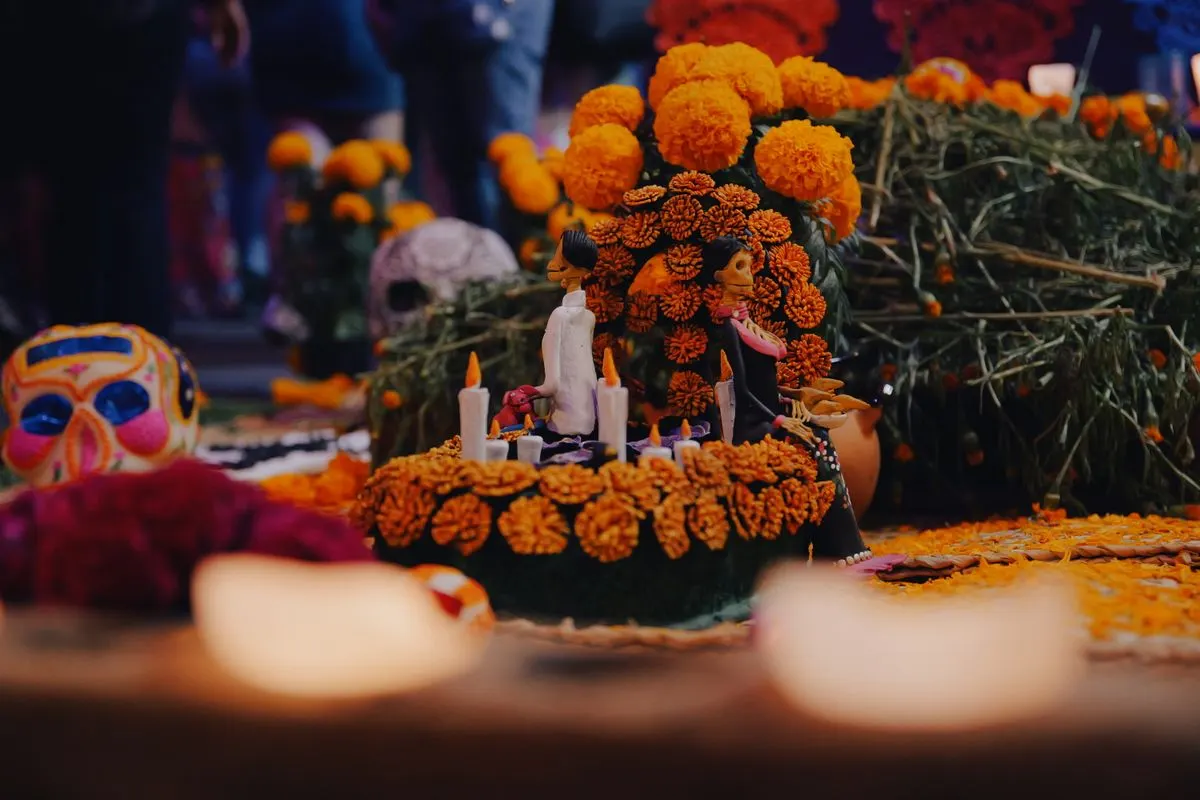
These Day of the Dead tattoo ideas come directly from the objects and figures you would see on an ofrenda, the altar families build for the holiday. Each one can stand alone as a small tattoo or combine into a larger piece.
1. Sugar Skull (Calavera)
Decorated sugar skulls, or calaveras, are the most recognizable symbol of the holiday. On real altars they are molded from sugar paste and sometimes inscribed with the name of the person being remembered. As a tattoo, a sugar skull can carry the same idea: the forehead is a natural place for a name, a date or a flower that meant something to that person. Bold outlines and a limited color palette help the details stay readable as the tattoo ages.
2. La Catrina
La Calavera Catrina, the elegant skeleton in a wide plumed hat, began as a satirical print by Mexican printmaker José Guadalupe Posada in the early 20th century. Britannica notes that Posada’s skeletons depicted people from every class and occupation, a reminder that death comes for everyone regardless of status. The figure was later named “Catrina” and popularized by artists including Diego Rivera. A Catrina tattoo works well as a portrait-style piece on the thigh, upper arm or back, where there is room for the hat, flowers and facial detail.
3. Marigolds (Cempasúchil)
Bright orange and yellow marigolds are among the most recognizable features of Day of the Dead altars. Their color and scent are traditionally believed to help guide spirits back to the world of the living. A marigold tattoo is one of the most wearable choices on this list because it reads as a beautiful botanical piece all year. A single bloom works on the wrist or ankle, while a trailing stem of marigolds can follow the forearm or collarbone.
4. Candles
Candles represent fire on the ofrenda and light the path for returning spirits. A candle tattoo is simple, symbolic and adaptable: a single lit candle in fine line, a cluster of candles in black and gray, or a candle framed by marigolds. It also suits people who want a remembrance tattoo without skulls.
5. Papel Picado
Papel picado is the cut tissue-paper banner that hangs over altars and streets. Its intricate cut-out patterns are believed to let the soul pass through, and it represents wind on the ofrenda. Because papel picado is a pattern rather than a single object, it works well as a band around the arm or as a border framing another design. Ask your artist to keep the cut-out shapes bold enough to stay crisp.
6. Ofrenda Altar Scene
A full altar scene, with candles, marigolds, a framed photo and a sugar skull, is a larger, more personal piece. Some people include a portrait of their loved one or an object that belonged to them. This kind of design needs space, so the back, thigh or a half sleeve is usually the best fit.
7. Pan de Muerto and Offerings
Ofrendas often include favorite foods of the person being remembered, along with pan de muerto, a special bread made for the season. Food offerings are an unusual tattoo subject, which is exactly why they can feel personal: a small illustration of your grandmother’s favorite dish or drink says far more about her than a generic skull.
Day of the Dead Tattoo Ideas for Remembrance
Because the holiday is about honoring the people we have lost, it lends itself naturally to memorial tattoos. These ideas focus on the person rather than the costume.
8. Name or Date in a Sugar Skull
Following the tradition of inscribing a name on a sugar skull, you can place a loved one’s name, initials or dates within the design. Keep lettering large enough to remain legible over time, as fine script can blur.
9. Portrait Catrina or Catrín
A Catrina, or her male counterpart, the Catrín, can be drawn in the likeness of a loved one, with clothing, jewelry or a hairstyle that reflects who they were. Portrait work depends heavily on the artist’s skill, so review their healed portfolio before you book.
10. Marigold Path
Families sometimes lay marigold petals along the path from the cemetery to the home to guide souls back. A line of petals running along the spine, forearm or down the leg turns that gesture into a quiet, meaningful design.
11. Photo Frame with Candles
A simple empty frame flanked by candles and flowers mirrors the photographs placed on home altars. You can leave the frame empty, add a symbol, or include a small portrait.
Modern and Minimal Day of the Dead Tattoo Ideas

Not every Day of the Dead tattoo has to be large or colorful. These smaller, more modern takes suit a first tattoo or a subtle placement.
12. Fine Line Sugar Skull
A minimal outline of a sugar skull with just a few decorative elements, such as a flower on the forehead and dots around the eyes, keeps the symbol recognizable without heavy shading. Fine line work is delicate, so keep the design simple enough to stay readable as it ages.
13. Single Marigold
One small marigold on the wrist, behind the ear or on the ankle is one of the simplest and most versatile choices. Orange ink adds warmth, while a black-and-gray version reads as a classic botanical.
14. Blackwork Calavera
A sugar skull rendered entirely in black, with bold patterns in place of color, has a striking graphic look. Heavy black also tends to hold up well over time.
15. Hummingbird and Marigold
A hummingbird hovering over a marigold adds movement and color, and the pairing is a popular choice for remembrance pieces. Birds and flowers carry different meanings in different families and regions, so if the symbolism matters to you, ask your artist or someone from the tradition what it means to them before you commit.
16. Monarch Butterfly
Monarch butterflies migrate thousands of miles to the mountain forests of central Mexico, arriving around the beginning of November, according to WWF. Because their arrival coincides with the holiday, many people pair monarchs with marigolds in Day of the Dead designs. A monarch adds color and movement, and our butterfly tattoo meaning guide goes deeper into what butterflies symbolize.
Choosing a Style
The same symbol looks very different depending on the style:
- Traditional Mexican folk art: bright colors, symmetrical patterns and floral decoration, closest to the look of real sugar skulls and papel picado.
- Black and gray realism: soft shading and lifelike detail, especially popular for Catrina portraits and memorial pieces.
- Neo-traditional: bold lines, rich color and decorative frames. A good fit for framed sugar skulls and Catrinas.
- Fine line or minimalist: light, delicate outlines suited to small placements.
- Blackwork: solid black shapes and patterns with a strong graphic effect.
Best Placements for Day of the Dead Tattoos
Placement depends on size and detail. A Catrina portrait or an altar scene needs a broad, flat area, while a single marigold or a fine line skull can fit almost anywhere.
| Design | Good placements | Why |
|---|---|---|
| Catrina portrait | Thigh, upper arm, back | Room for facial detail and the hat |
| Sugar skull | Forearm, calf, shoulder | Flat areas keep symmetry intact |
| Single marigold | Wrist, ankle, behind the ear | Small and easy to hide or show |
| Marigold path | Spine, forearm, side of the leg | Follows the natural line of the body |
| Altar scene | Back, half sleeve | Needs space for several elements |
Pain and healing also depend on placement. Our tattoo placement guide compares the most popular spots.
How to Wear Day of the Dead Imagery Respectfully
Day of the Dead symbols are part of a living cultural tradition. A few simple principles help you get a tattoo you can wear with confidence:
- Learn what the symbols mean. Knowing why marigolds, candles and calaveras appear on altars makes the design more meaningful and easier to explain when people ask.
- Do not treat it as a costume. A sugar skull is not a generic Halloween skull. Avoid mixing it with unrelated horror imagery.
- Make it personal. Including a loved one’s name, favorite flower or a detail from their life connects the tattoo to the original purpose of the holiday.
- Choose an experienced artist. Look for artists whose portfolios include Day of the Dead or Mexican folk art styles, and ask them for an original drawing rather than copying another person’s tattoo.
Getting Tattooed Around Day of the Dead: Practical Tips
Many people book these tattoos in the weeks before November. A few practical points help:
- Book early. Artists who specialize in the style can be busy in October.
- Bring references, not a copy. Collect images of the elements you like, then let your artist create an original design.
- Plan aftercare around celebrations. Avoid face paint, tight costumes or adhesives over a fresh tattoo. Cleveland Clinic recommends washing a new tattoo gently with mild, fragrance-free soap, moisturizing it and wearing loose, breathable clothing while it heals. Our tattoo aftercare guide covers each step.
- Watch for warning signs. Some redness and flaking are normal, but fever, spreading redness or pain that keeps getting worse are reasons to see a healthcare professional.
Frequently Asked Questions
What does a Day of the Dead tattoo symbolize?
Most Day of the Dead tattoos symbolize remembrance of loved ones who have died and an acceptance of death as part of life. Specific symbols add meaning: marigolds guide spirits home, candles light the way, and sugar skulls often carry the name of the person being honored.
Is a sugar skull tattoo cultural appropriation?
Opinions differ. Many people from Mexican and Mexican American communities welcome respectful interest in the tradition, while objecting to its use as a costume or generic spooky imagery. Learning what the symbols mean, making the design personal and working with an artist who knows the style are good ways to show respect.
What is the difference between La Catrina and a sugar skull?
A sugar skull, or calavera, is a decorated skull based on the sugar skulls placed on altars. La Catrina is a specific figure, an elegant skeleton in a wide hat, that began as a satirical print by José Guadalupe Posada and later became a Day of the Dead icon.
Where should I put a Day of the Dead tattoo?
Large portrait pieces such as a Catrina fit best on the thigh, upper arm or back. Smaller designs like a single marigold or a fine line skull work well on the wrist, ankle, forearm or behind the ear.
Are Day of the Dead tattoos only for people of Mexican heritage?
Anyone can get one, but people of Mexican heritage often have a direct personal connection to the tradition. If it is not part of your background, approach it with curiosity and respect, and focus on what the imagery means rather than how it looks.
Can I combine Day of the Dead and Halloween imagery?
It is possible, but they are different traditions with different meanings. Many artists recommend keeping them separate so each design stays clear and respectful.
The Bottom Line
The best Day of the Dead tattoo ideas honor the tradition behind the imagery. Choose symbols you understand, make the design personal, and work with an artist who can draw an original piece in a style that will age well. Whether it is a single marigold or a full Catrina portrait, the most meaningful tattoos remember a person, not just a holiday.
Sources: Encyclopaedia Britannica, Day of the Dead; Encyclopaedia Britannica, José Guadalupe Posada; UNESCO, Indigenous festivity dedicated to the dead; Cleveland Clinic, Tattoo Aftercare Tips From a Dermatologist.