Choosing a mild soap for tattoo aftercare comes down to three things: no fragrance, no exfoliants, and no antibacterial actives you do not need. Almost any gentle, fragrance-free liquid cleanser meets that bar, and the expensive tattoo-branded washes are not doing anything the cheap ones cannot. If you want the product-level answers instead — Dove, Castile, antibacterial washes, green soap — see which soaps actually work for a new tattoo.
This is one of the most common questions new clients ask, and the answers online are contradictory because a lot of them are repeating advice that regulators revisited years ago. Here is what actually matters, and what does not.
What Makes a Good Mild Soap for Tattoo Aftercare
A suitable soap is fragrance-free, dye-free, free of exfoliating particles or acids, and gentle enough to use two or three times a day without drying the skin. Liquid is easier to control than a bar. Cost and branding are irrelevant. A basic unscented cleanser from a pharmacy shelf will do the job.
What to Look For on the Label
- Fragrance-free, not unscented. These are different claims. Unscented products can still contain masking fragrance. Fragrance-free means none was added.
- No dyes. Colorants add irritation risk and contribute nothing.
- No exfoliants. That means no scrubbing beads, no walnut shell, no glycolic, salicylic, or lactic acid, and no retinol.
- Liquid or foaming format. Easier to dispense with one hand and easier to keep clean between uses.
- A short ingredient list. Fewer additives means fewer things that can irritate broken skin.
What to Avoid
- Anything scented, including products labeled as lightly or naturally fragranced. Essential oils count as fragrance.
- Exfoliating body washes and scrubs, which physically lift skin that is not ready to come away.
- Bar soaps that sit wet in a shared shower and collect residue from other people and other body parts.
- Alcohol-heavy or astringent cleansers, which strip the skin and slow healing.
- Anything you have reacted to before. A healing tattoo is not the time to test tolerance.
Do You Need Antibacterial Soap?
Probably not, and the regulatory picture here is worth knowing because so much tattoo aftercare advice has not caught up with it.
In 2016 the US Food and Drug Administration issued a final rule barring 19 active ingredients, including triclosan and triclocarban, from over-the-counter consumer antiseptic washes. The reasoning was that manufacturers had not demonstrated either that the ingredients were safe for long-term daily use or that they worked better than plain soap and water at preventing infection. The FDA has also warned that antibacterial products can give people a false sense of security.
Three ingredients, benzalkonium chloride, benzethonium chloride, and chloroxylenol, were left on the market while further studies were carried out, which is why antibacterial soaps still exist on shelves. They are not harmful to use on a tattoo. They are simply not necessary, and the antibacterial versions of a product are often more drying than the plain version.
Plenty of experienced artists still recommend an antibacterial wash, and that advice will not damage your tattoo. But if your artist did not specify one, plain fragrance-free soap and clean running water is the evidence-backed default.
Bar Soap or Liquid Soap?
Liquid, for practical reasons rather than dramatic ones. The common claim that bar soap harbors dangerous bacteria overstates the evidence: studies looking at bacterial transfer from used bars have generally found little to no measurable transfer to the skin.
The real arguments for liquid are simpler. A bar in a shared bathroom picks up residue from other people and other body parts. It sits wet between uses. It is harder to dispense without touching. And most bar soaps on a household shelf are fragranced, which rules them out anyway. If the only thing available is a clean, fragrance-free bar kept for your own use, it will not ruin your tattoo.
How to Wash a New Tattoo
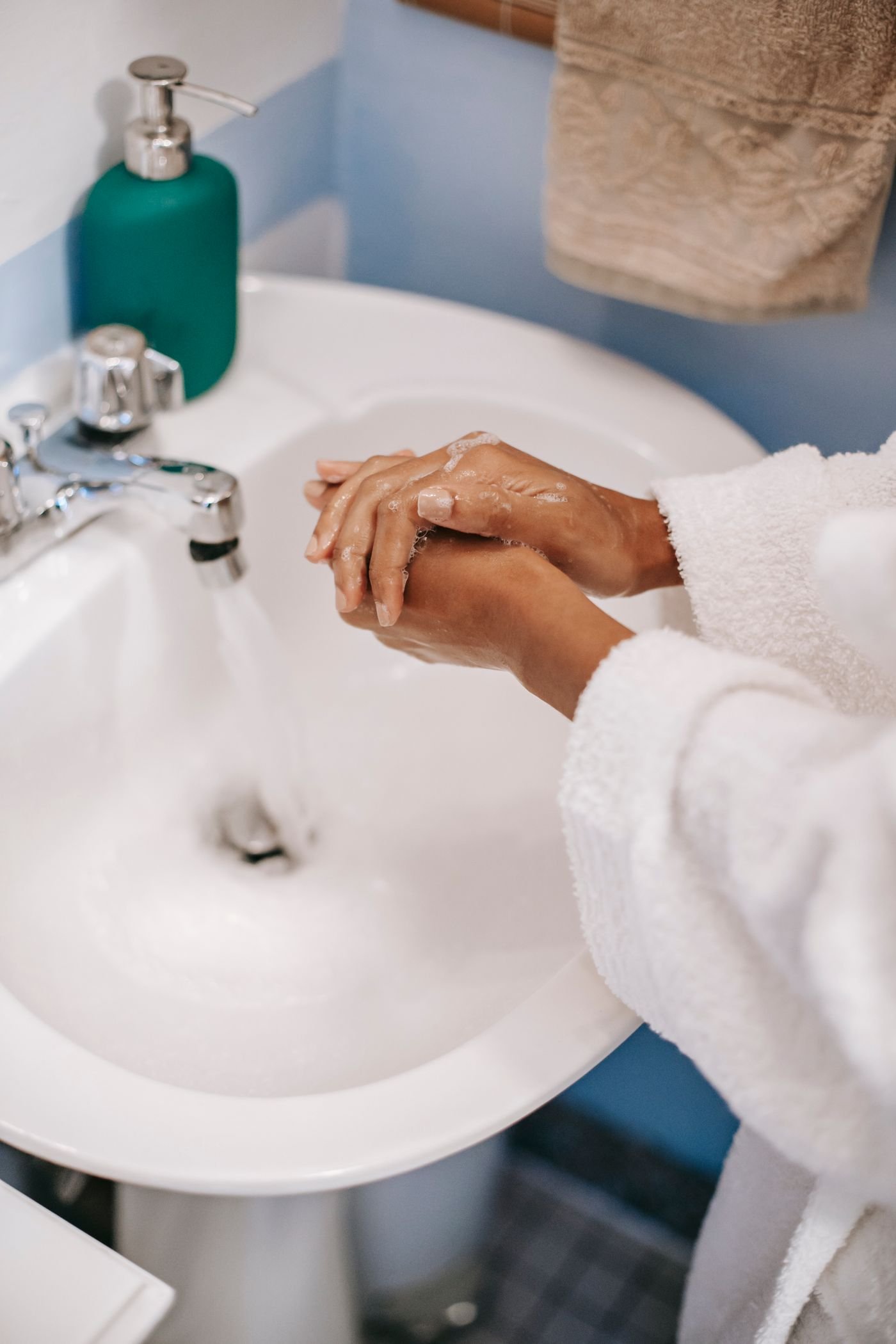
- Wash your hands thoroughly first. This matters more than which soap you use on the tattoo itself.
- Use lukewarm running water. Hot water increases irritation and swelling.
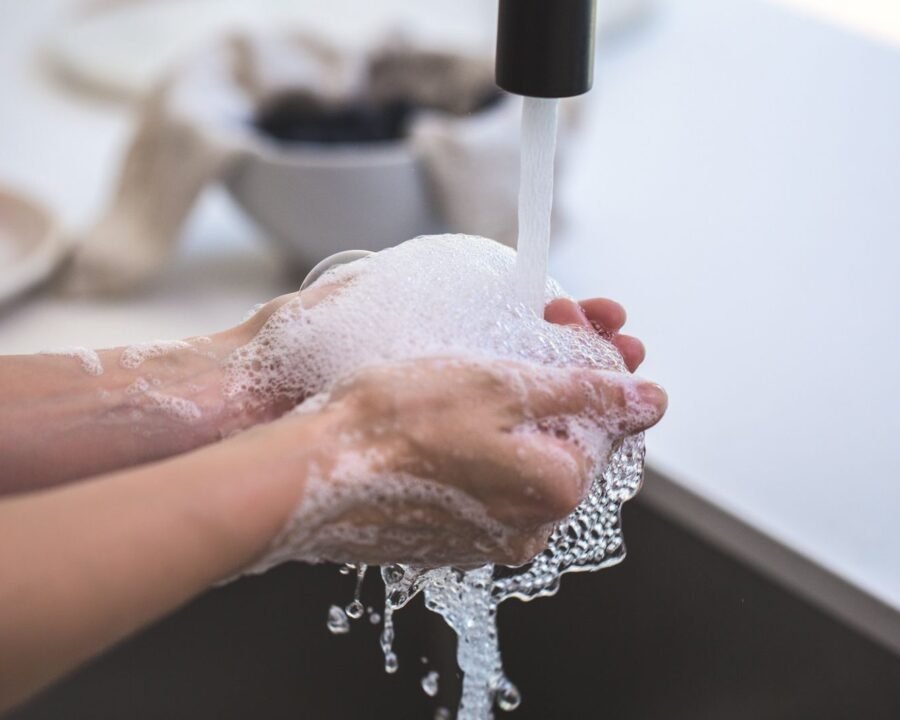
- Work a small amount of soap into a lather in your hands, then apply it to the tattoo with your fingertips only. No cloths, loofahs, or sponges.
- Clean gently in circular motions until any plasma, ink residue, or ointment is gone. The surface should feel clean rather than slippery.
- Rinse fully. Leftover soap film irritates healing skin.
- Pat dry with a clean paper towel, or let it air dry. Do not rub, and do not use a shared bath towel.
- Wait until the skin is completely dry before applying a thin layer of moisturizer.
For timing on that first wash and how soon you can get in the shower at all, see how long after a tattoo you can shower.
How Often to Wash a Healing Tattoo
Two to three times a day is the usual guidance for the first week or two, plus any time the tattoo gets visibly dirty or sweaty. More than that starts to dry the skin out without adding protection.
Washing and moisturizing are a pair, and the moisturizing half is where most people go wrong. A thin layer is the whole instruction. If you are unsure how much or how often, how often to moisturize a new tattoo covers it, and the signs of an over-moisturized tattoo explains what it looks like when you overdo it.
What About Second Skin?
If your tattoo is under adhesive film, you are not washing it at all while the film is on. You wash before applying it and again after removing it, using the same method above. The second skin aftercare timeline covers when that removal should happen.
When Can You Go Back to Normal Soap?
Once the surface has fully closed, which is usually somewhere around week three, normal body wash is fine again. The test is texture: if the tattooed skin still feels raised, glossy, or tender, stay on the gentle cleanser. Our week-by-week healing timeline sets out what each stage should look and feel like.
Frequently Asked Questions
Can I use Dove soap on my tattoo?
The fragrance-free sensitive skin version is generally fine. The standard Dove beauty bars and body washes are fragranced, which makes them a poor choice on a healing tattoo. Check the label for fragrance or parfum rather than relying on the brand name.
What is the best thing to wash a new tattoo with?
Clean hands, lukewarm running water, and a fragrance-free liquid cleanser. That combination is what the advice reduces to. No cloth, no sponge, no scrubbing, and no product with grit or acids in it.
Can I use antibacterial soap on a new tattoo?
Yes, it will not harm the tattoo, but it is usually unnecessary. The FDA removed the most common antibacterial actives from consumer washes in 2016 after manufacturers failed to show they outperformed plain soap and water. Plain fragrance-free soap is the simpler default unless your artist told you otherwise.
Can I use baby soap on a tattoo?
Often yes, provided it is genuinely fragrance-free. Many baby washes are formulated to be gentle but still contain added fragrance, so the label is what matters rather than the fact that it is marketed for babies.
Do I need a special tattoo aftercare soap?
No. Tattoo-branded washes are formulated sensibly, but they are meeting the same fragrance-free, non-exfoliating standard that inexpensive pharmacy cleansers already meet. If you like the product and it is within budget, there is no reason not to use it. There is also no penalty for not buying one.
What soap should I avoid on a new tattoo?
Anything fragranced, anything with exfoliating beads or acids, anything with alcohol high in the ingredient list, and shared bar soap that lives in a communal shower. Deodorant soaps and heavily perfumed body washes are the most common mistakes.
The Bottom Line
Fragrance-free, liquid, no exfoliants, applied with clean fingertips under lukewarm running water. That is the entire specification. Skip the antibacterial marketing unless your artist specifically asked for it, skip the tattoo-branded price premium if you would rather not pay it, and put the effort into washing gently and consistently instead. For everything around the wash itself, our full tattoo aftercare guide covers the rest of the routine.
This article provides general educational information and does not replace personalized instructions from your tattoo artist or medical care from a qualified healthcare professional.